
Contact Fumei
No.20 Jiuqiao Road, Shijiang Industrial Area, Jiujiang Town, Nanhai District, Foshan City, China.
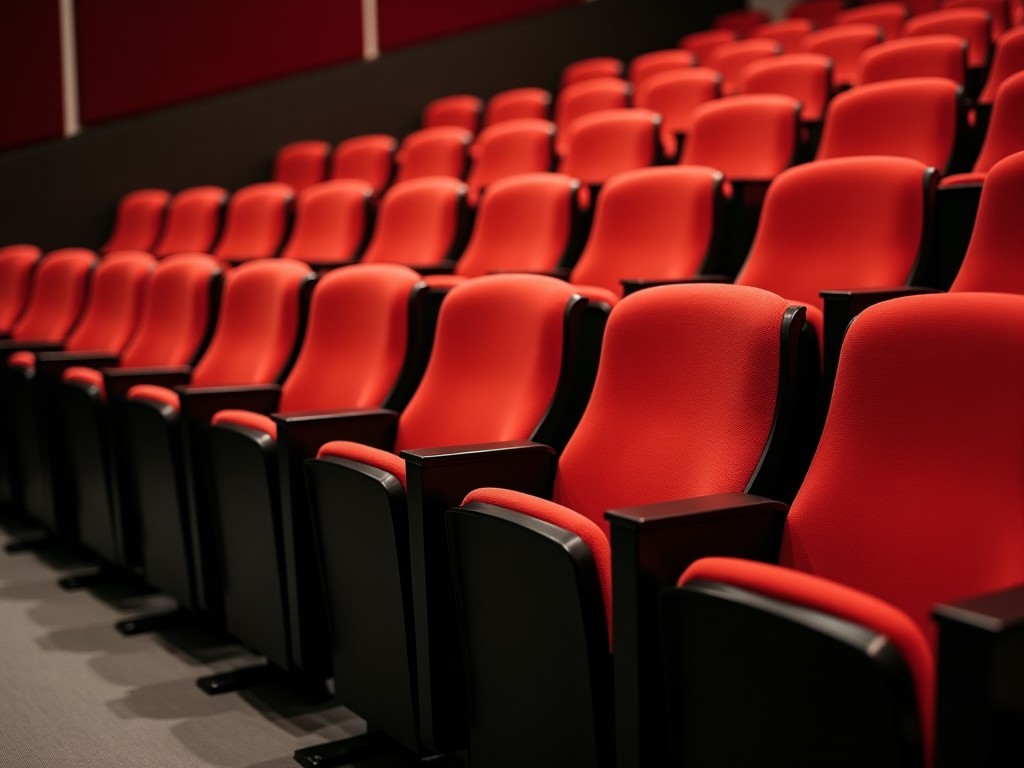
FM-2019 comfortable classroom chairs. Featuring steel frames, ergonomic molded foam, and slow-return damping. Ideal for university halls. OEM project supply.
Selecting fixed seating for auditoriums and lecture halls involves evaluating structural performance, occupant comfort over extended periods, and long-term maintenance requirements. Manufacturers must balance load-bearing capacity, fire safety compliance, and acoustic integration while accommodating diverse architectural constraints.
This page outlines key technical considerations for procurement engineers and facility planners when assessing seating systems for educational, governmental, and corporate assembly spaces. Focus areas include frame construction, mechanism durability, material selection, and installation tolerances.
The primary load path in auditorium seating transfers occupant and dynamic loads through the seat standards to the floor anchoring system. Frame materials typically use cold-rolled steel with minimum yield strength of 250 MPa, formed into C-channels or box sections to resist bending and torsion under uneven loading.
Anchor points are designed for concrete embedment or mechanical fastening to raised access floors, with pull-out resistance tested to 5 kN per anchor per international seating standards (e.g., BIFMA X5.1, EN 12727). Deflection limits are generally capped at L/360 under static load to prevent perceptible movement that could affect occupant comfort or sightlines.
Flip-up mechanisms rely on torsion springs or gas-assist dampers to return seats to the upright position with consistent force, typically between 8–12 N·m torque. Cycle life testing exceeds 100,000 operations without loss of return force or binding, verified through accelerated wear simulations.
Recline mechanisms, where specified, use ratchet or cam-based systems with incremental locking at 5° intervals. Wear surfaces are hardened steel or polymer bushings with lubrication-free design to minimize maintenance. Backlash is controlled to less than 1.5° to ensure stable positioning during use.
Seat and back cushions use molded polyurethane foam with density ranging from 45–65 kg/m³, providing compression set resistance under 5% after 1,000 hours at 70% ILD (Indentation Load Deflection). Foam formulations comply with CAL 117 or BS 5852 fire retardancy standards, limiting horizontal burn rate to under 40 mm/min.
Upholstery fabrics are selected based on Wyzenbeek abrasion resistance (minimum 100,000 double rubs) and colorfastness to light (Grade 4 or higher per AATCC 16). For spaces requiring acoustic control, perforated panels or absorptive backing materials are integrated behind upholstery to reduce mid-frequency reverberation without compromising fire safety.
Seating geometry is adapted to sightline requirements through adjustable standards height (typically 400–500 mm) and seat depth (450–520 mm), enabling compliance with ISO/TR 7250-1 anthropometric data for target user populations. Row curvature and rake angle are calculated per project to maintain C-value (vertical sightline clearance) above 80 mm for all occupants.
Optional features include integrated writing tablets (laminate or polypropylene, load-rated to 150 kg), power and data ports (USB-A/C, HDMI, Ethernet) with cable management conduits, and aisle lighting kits. All accessories are designed to maintain structural integrity and meet local accessibility codes (e.g., ADA, EN 17210).
Dimensional inspection follows ISO 128-20 standards, with critical features like hole spacing, bracket alignment, and mechanism pivot points held to ±0.5 mm tolerance. Welded joints undergo 100% visual inspection and 20% magnetic particle testing for stress concentrations.
Final assembly includes functional testing of 100% of mechanisms, load verification of anchors to 1.5x design load, and fabric inspection for color consistency and defect freedom. Packaging uses corner protectors and stretch film to prevent damage during transit, with unitized loads configured for containerized shipping.
| Parameter | Typical Range or Requirement | Notes |
|---|---|---|
| Frame Material Yield Strength | ≥250 MPa | Cold-rolled steel; higher grades available for long-span applications |
| Mechanism Cycle Life | >100,000 cycles | Flip-up and recline functions tested per BIFMA X5.1 |
| Foam Density | 45–65 kg/m³ | Molded polyurethane; compression set<5% after="" 1k="" hrs=""> |
| Fabric Abrasion Resistance | ≥100,000 Wyzenbeek double rubs | Applies to woven and vinyl upholstery options |
| Anchor Pull-Out Resistance | ≥5 kN per anchor | Tested in concrete ≥25 MPa compressive strength |
| Sightline C-Value | ≥80 mm | Calculated per ISO/TR 7250-1; ensures unobstructed view |
Lecture hall seating must support prolonged focus during academic sessions, where ergonomic design reduces fatigue-related distraction. Seat angles between 5°–10° recline and lumbar support depth of 40–60 mm help maintain neutral spine posture, minimizing muscle activation in the erector spinae over 90-minute periods.
In multi-use auditoriums, seating layouts accommodate transitions between didactic instruction, panel discussions, and ceremonial events. Retractable writing tablets and modular armrests allow quick reconfiguration without tools, while standardized mounting patterns enable future reupholstering or mechanism upgrades without floor modification.
For project-specific configurations, load calculations, or compliance documentation, contact our engineering team to discuss your auditorium or lecture hall seating requirements.
Request Technical Consultation







