
Contact Fumei
No.20 Jiuqiao Road, Shijiang Industrial Area, Jiujiang Town, Nanhai District, Foshan City, China.
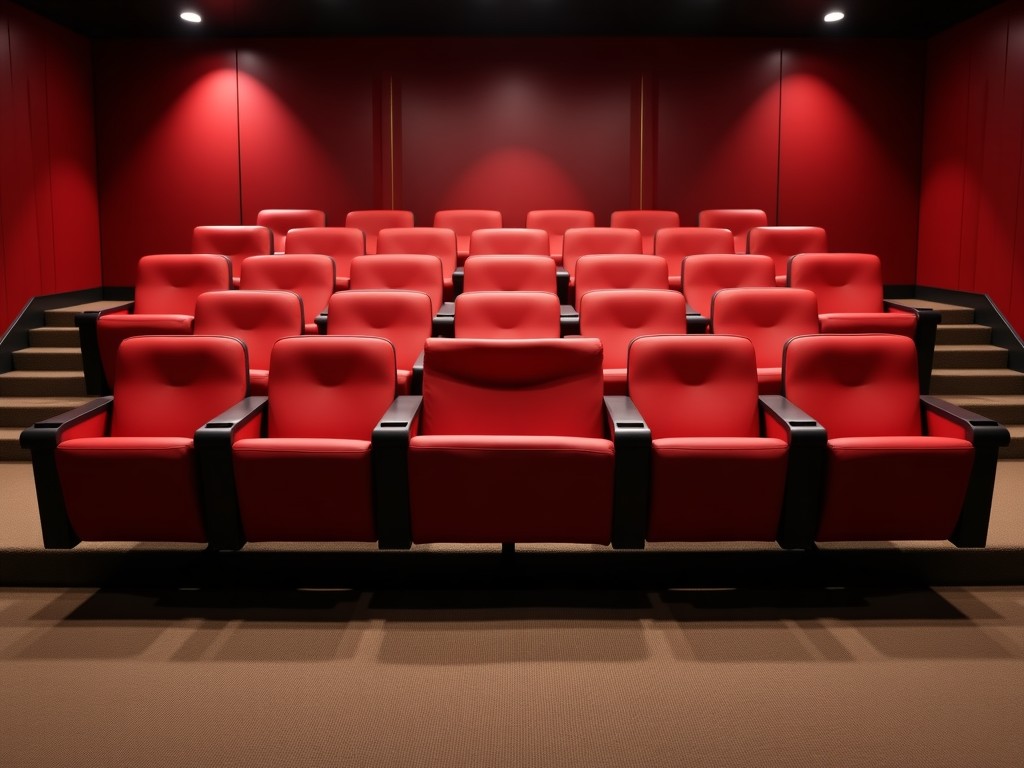
FM-2019 auditorium seating chairs. Featuring Q345 steel and fire-retardant foam. Ideal for university and lecture hall. Durable wholesale supplier from China.
Selecting auditorium seating requires understanding how structural design, material behavior, and manufacturing precision impact long-term performance in high-occupancy environments. This page explains the engineering considerations behind fixed seating systems produced in Chinese manufacturing facilities, focusing on measurable characteristics that influence durability, safety, and lifecycle cost.
The frame must resist cyclic loading from repeated sitting and standing while maintaining dimensional stability over decades. Steel frames constructed from cold-rolled Q235 or Q345 sections with minimum 2.0mm thickness provide yield strength ≥235 MPa, preventing permanent deformation under dynamic loads. Joint integrity is critical; robotic MIG welding with penetration depth ≥60% of material thickness ensures consistent shear resistance, reducing failure risk at stress concentrations like armrest mounts and leg brackets.
Load testing follows BIFMA X5.1 or EN 12727 standards, applying 1,100 N downward force on seat and 890 N on backrest for 100,000 cycles. Frames passing this test show<0.5mm residual="" deflection="">
Anthropometric data drives contour design; seat depth of 480±20mm accommodates 95th percentile male thigh length while preventing popliteal pressure. Backrest angle between 100°–110° supports lumbar curvature without inducing posterior pelvic tilt. High-resilience polyurethane foam (density 60–65 kg/m³, IFD 180–220 N at 25% compression) provides load distribution; indentation loss after 80,000 cycles remains<10%, per="" astm="" d3574.="">
Fabric abrasion resistance exceeds 100,000 Martindale cycles (EN ISO 12947-2), with pilling resistance grade 4–5. Flame retardancy meets CAL 117-2013 or BS 5852 ignition source 5, verified through vertical flame test (char length<40mm, afterflame="">
| Component | Typical Material | Key Property | Test Standard |
|---|---|---|---|
| Frame | Q235 Steel | Yield Strength ≥235 MPa | GB/T 700 |
| Frame | Q345 Steel | Yield Strength ≥345 MPa | GB/T 1591 |
| Seat Foam | HR Polyurethane | Density 60–65 kg/m³ | ASTM D3574 |
| Upholstery | Polyester Fabric | Abrasion >100k Martindale | EN ISO 12947-2 |
| Armrest | PP-GF30 | Flexural Modulus 4.5 GPa | ISO 178 |
Material selection balances cost, mechanical performance, and environmental compliance. Q345 steel offers higher strength-to-weight ratio, reducing frame mass by ~15% compared to Q235 for equivalent load capacity, beneficial in retrofit projects with limited structural support. Flame-retardant upholstery uses brominated or phosphorus-based additives; halogen-free alternatives are available upon request to meet stricter regional regulations like REACH or RoHS.
Production begins with CNC laser cutting of steel profiles (±0.1mm accuracy), followed by robotic bending to achieve precise fold angles. Welding uses pulsed MIG technology to minimize heat distortion; post-weld stress relief occurs via vibratory aging (30Hz, 15 minutes) to reduce residual stresses by ~40%. Powder coating applies 60–80µm epoxy-polyester hybrid film, cured at 180°C for 20 minutes, achieving adhesion strength >5MPa (ASTM D3359) and salt spray resistance >500 hours (ASTM B117).
Final assembly includes torque-controlled fastening (armrest bolts: 25±3 Nm) and functional testing: seat rotation smoothness (<5nm torque="" variation="">
Row curvature: radius adaptable from 5m to 20m based on venue geometry
Backrest height: 800mm–950mm adjustable in 25mm increments
Writing tablet: foldable laminate or ABS, load capacity 150kg
Numbering: laser-etched aluminum or molded plastic, UV-resistant
Power/data ports: optional flush-mounted USB-A/C and AC outlets
Customization follows modular design principles; standard interfaces allow reconfiguration without redesigning core structural elements. For example, changing backrest height requires only swapping the gas spring or adjusting the pivot point on a slotted bracket, preserving frame integrity. Lead time for custom features averages 2–4 weeks after drawing approval, depending on complexity and material availability.
Chairs are packaged in knock-down (KD) format to optimize container utilization; a standard 40ft HQ holds approximately 450–500 units depending on model and accessories. Each unit includes: frame sub-assembly, seat/back cushion, armrests, hardware kit (pre-sorted bolts/washers), and installation manual. Corner protectors (expanded polystyrene) and edge guards prevent damage during transit; stretch film wrapping secures palletized stacks.
Export packaging complies with ISPM 15 for wooden pallets; fumigation or heat treatment documentation accompanies shipments. Moisture barrier bags (desiccant included) protect internal components in high-humidity climates. Upon request, factory provides container loading supervision and third-party inspection reports (e.g., SGS, Bureau Veritas) to verify quantity and condition before departure.
Installation requires anchoring to concrete floor using M10 chemical bolts (embedment depth ≥90mm, pull-out resistance ≥15kN) or direct bolting to steel risers. Torque sequence follows a crisscross pattern to ensure even load distribution; final verification uses calibrated wrench (±3% accuracy). Clearance between backrest and preceding row must meet local fire code (e.g., 800mm minimum for NFPA 101).
Maintenance intervals: quarterly inspection of fasteners (retorque to spec), annual cleaning of mechanisms with silicone-free lubricant, and fabric spot cleaning using pH-neutral detergent. Wear indicators include foam compression set >15%, frame deflection >1mm under load, or fabric abrasion exposing backing yarn. Replacement parts remain available for ≥10 years post-production, supporting lifecycle extension.








