
Contact Fumei
No.20 Jiuqiao Road, Shijiang Industrial Area, Jiujiang Town, Nanhai District, Foshan City, China.
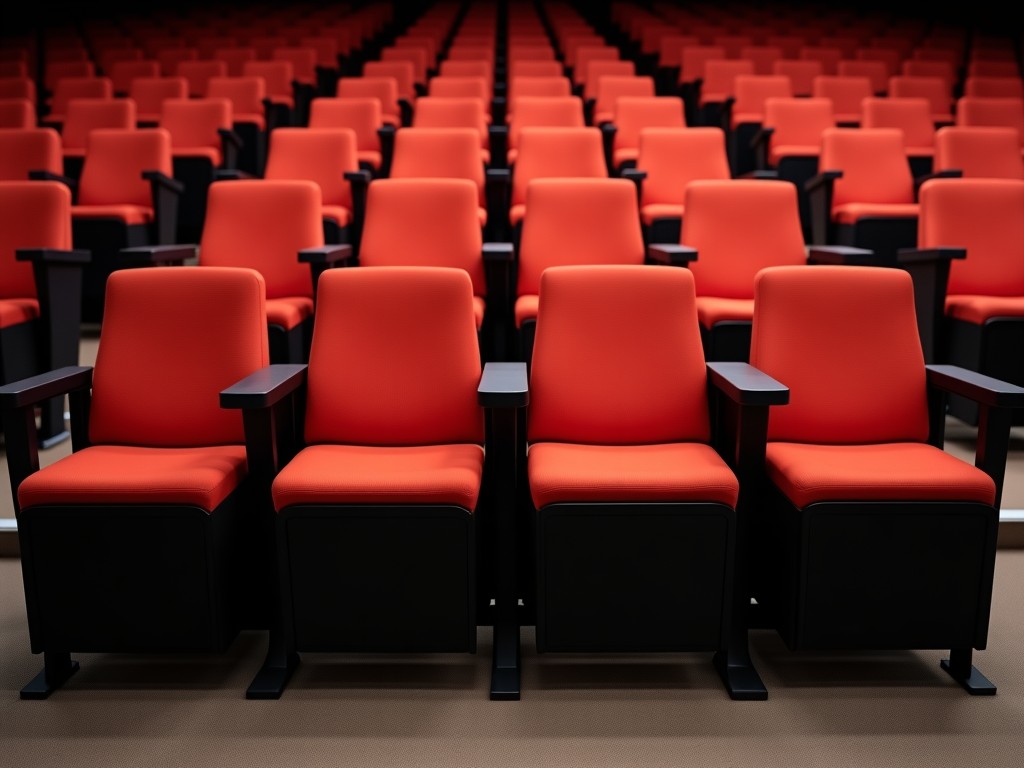
FM-2019 auditorium seating furniture. Featuring cold-rolled steel frame, fire-retardant fabric, and high-density foam. Durable educational furniture wholesaler.
Auditorium seating systems are engineered solutions designed to support prolonged occupant comfort, structural integrity, and spatial efficiency in performance venues, lecture halls, and conference centers. As a manufacturer specializing in these systems, our focus is on translating architectural and ergonomic requirements into durable, code-compliant seating configurations that maintain functionality over decades of use.
Unlike generic furniture, auditorium seating must accommodate dynamic load patterns, varying occupant demographics, and strict egress regulations while integrating acoustical, lighting, and HVAC considerations. This requires a holistic approach where frame design, mechanism reliability, material selection, and installation logistics are evaluated as interconnected systems rather than isolated components.
The primary load-bearing structure in auditorium seating is typically constructed from cold-rolled steel or extruded aluminum profiles, selected based on span requirements, weight constraints, and corrosion resistance needs. Frame geometry is engineered to transfer dynamic and static loads—including concentrated impact forces during sitting/standing cycles—directly to the floor anchoring system, minimizing deflection and preventing long-term deformation.
To ensure consistent performance across large installations, frames undergo finite element analysis (FEA) to validate stress distribution under worst-case loading scenarios, such as simultaneous occupant movement or seismic activity. Connection points use high-tensile bolts or welding procedures qualified to AWS D1.1 standards, with torque specifications documented for field installation to maintain joint integrity over time.
Modular frame designs allow for phased installation and future reconfiguration, accommodating changes in seat count or layout without requiring full system replacement. This adaptability reduces lifecycle costs and supports venues that host diverse event types, from symphonies to graduations, where seating density and sightline requirements vary significantly.
The reclining and returning mechanism is a critical failure point in auditorium seating if not designed for high-cycle durability. Our systems use precision-machined steel linkages with self-lubricating polymer bushings at pivot points, eliminating the need for regular maintenance while ensuring smooth, quiet operation over 25,000+ cycles—equivalent to 20+ years of use in a mid-sized venue.
Gas-assist or torsion-bar return systems are calibrated to provide consistent rebound force across the seat’s full range of motion, preventing sagging or incomplete return that could create tripping hazards or obstruct aisles. Force-torque testing is performed on sample mechanisms to verify return speed falls within 0.8–1.2 seconds, meeting both safety guidelines and user expectations for unobtrusive operation.
Anti-rattle features include nylon inserts in metal-to-metal contact zones and damping washers at spring endpoints, reducing noise transmission into the auditorium environment. These details are particularly important in venues where acoustic clarity is paramount, such as concert halls or theaters, where even minor mechanical noise can interfere with performance quality.
Upholstery materials are selected based on abrasion resistance, flame retardancy, and cleanability, with performance validated through standardized testing. Fabrics typically undergo Wyzenbeek abrasion testing (minimum 100,000 double rubs for heavy contract use) and comply with NFPA 260 or CAL 117 fire safety standards. Vinyl and polyurethane alternatives offer superior stain resistance and are preferred in food-service-adjacent lobbies or multi-use spaces.
Foam cushioning uses high-resilience (HR) polyurethane with a density of 2.5–3.0 lb/ft³ and IFD (indentation force deflection) ratings between 35–50 lb at 25% compression, ensuring long-term shape retention without bottoming out. Latex or memory foam options are available upon request for specialized comfort requirements, though they may require additional ventilation considerations in enclosed environments.
Armrests and exposed surfaces often utilize reinforced polypropylene or ABS plastic, chosen for impact resistance and UV stability in spaces with significant daylight exposure. These materials resist cracking, fading, and chemical degradation from cleaning agents, maintaining appearance and structural function throughout the product’s service life.
Seating dimensions—including seat width, depth, and row spacing—are not standardized but derived from sightline calculations, egress requirements, and accessibility regulations such as ADA or EN 17210. Seat width typically ranges from 19–22 inches, with wider options available for premium sections, while depth varies between 18–20 inches to balance legroom and circulation efficiency.
Customization extends to integrated features such as tablet arms, cup holders, power outlets, and assistive listening system interfaces. These are designed as modular add-ons that do not compromise structural integrity or mechanism function, with wiring routed through internal channels to prevent damage and ensure compliance with electrical codes like NEC or IEC 60364.
Finish options include powder-coated steel in RAL colors for corrosion protection and aesthetic alignment with interior design schemes. Anodized aluminum or brushed stainless steel alternatives are available for high-moisture or coastal environments, where salt spray resistance is a determining factor in material selection.
Quality assurance begins at incoming material inspection, where steel thickness, coating adhesion, and foam density are verified against material certificates and test reports. Dimensional checks are performed on critical components using calibrated gauges to ensure interchangeability and proper assembly fit-up, reducing field adjustment time and installation errors.
During production, each seating unit undergoes functional testing of the recline mechanism, return force verification, and load testing to 125% of rated capacity. Random sampling is supplemented by 100% inspection on critical welds and fasteners, with non-conforming parts segregated and traced back to specific process parameters for corrective action.
Prior to shipment, fully assembled sections are subjected to vibration and impact simulations to replicate transportation and in-service stresses. Packaging integrity is validated through drop tests and compression testing to ensure components arrive undamaged, particularly for international shipments where handling variability increases risk.
| Parameter | Typical Range / Option | Notes |
|---|---|---|
| Seat Width | 19–22 in | Wider options available for VIP sections |
| Seat Depth | 18–20 in | Balances legroom and aisle clearance |
| Backrest Height | 30–36 in | Dependent on lumbar support design |
| Frame Material | Cold-rolled steel / Extruded aluminum | Selected based on span and corrosion needs |
| Upholstery Abrasion Resistance | ≥100,000 Wyzenbeek double rubs | Heavy contract use classification |
| Mechanism Cycle Life | ≥25,000 cycles | Equivalent to 20+ years in mid-sized venue |
| Return Force | Calibrated to 0.8–1.2 sec return time | Ensures quiet, complete seat return |
| Fire Safety Compliance | NFPA 260 / CAL 117 / EN 1021-1-2 | Depends on regional regulatory requirements |
In concert halls and theaters, seating must support acoustic transparency—minimizing sound absorption and reflection disturbances—while providing unobstructed sightlines to the stage. Frame designs avoid bulky under-seat structures that could trap bass frequencies, and upholstery is selected for low sound absorption coefficients to preserve reverberation characteristics critical to musical clarity.
Lecture halls and conference centers prioritize high-density configurations with rapid reconfiguration capabilities. Seating here often includes integrated writing surfaces and power/data ports, requiring careful cable management to prevent tripping hazards and ensure long-term reliability of electrical connections under repeated use.
Multi-use venues such as civic centers or school auditoriums demand seating that withstands varied loading patterns—from static lectures to dynamic events like dances or assemblies. These systems emphasize impact-resistant materials, easy-to-clean surfaces, and adjustable mechanisms that accommodate diverse user groups without requiring specialized tools for adjustment.
For project-specific configurations, load calculations, or compliance verification, contact our engineering team to discuss your venue’s architectural, ergonomic, and regulatory requirements. We provide detailed technical documentation, including shop drawings, material data sheets, and installation guidelines, to support informed procurement decisions.
Request Technical Consultation







