
Contact Fumei
No.20 Jiuqiao Road, Shijiang Industrial Area, Jiujiang Town, Nanhai District, Foshan City, China.
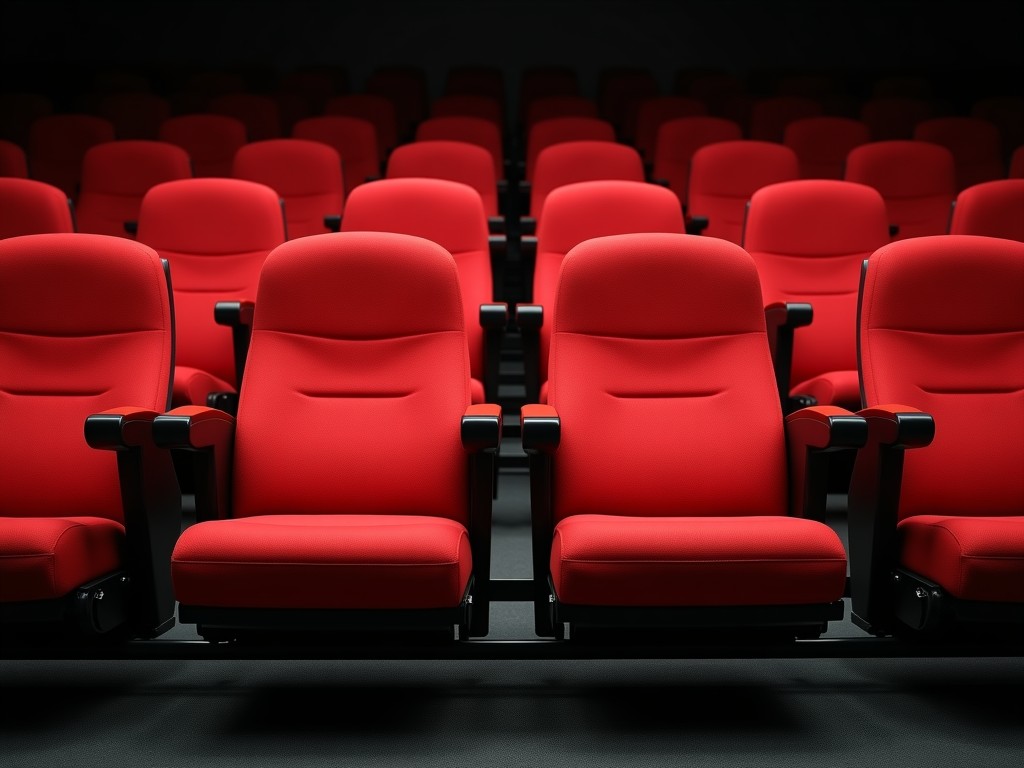
AM-102 higher education classroom furniture. Ideal for lecture hall, theater, and training room. Cost-effective durable seating manufacturer direct supply.
Selecting an auditorium seating system requires understanding how structural design, material behavior, and ergonomic principles interact to ensure long-term performance under variable loading conditions. This page explains the engineering considerations behind fixed and retractable seating systems used in performance venues, lecture halls, and multi-purpose auditoriums, focusing on technical specifications that influence safety, durability, and lifecycle cost.
The primary load-bearing structure of an auditorium seat transfers dynamic and static loads from occupants to the floor anchoring system through a defined load path. Frame geometry must resist overturning moments caused by forward-leaning postures while maintaining lateral stability under synchronous occupant movement. Engineers evaluate frame deflection limits using finite element analysis to ensure vertical displacement remains under 2mm under 1.5x design load, preventing perceptible wobble that affects user comfort and long-term fastener integrity.
Common frame materials include cold-formed steel channels (C100x50x20x2.5mm) or extruded aluminum alloys (6063-T5) for corrosion-prone environments. Steel frames typically achieve higher stiffness-to-weight ratios but require protective coatings such as hot-dip galvanizing (min. 55μm zinc) or powder coating (80-120μm thickness) to meet 25-year service life expectations in humid climates. Aluminum frames eliminate painting maintenance but necessitate larger cross-sections to match steel stiffness, increasing material cost by approximately 15-20% for equivalent load capacity.
Fixed seating systems utilize rigid floor-mounted standards with cantilevered seat and back assemblies, ideal for permanent installations where reconfiguration is not required. These systems minimize moving parts, reducing maintenance frequency to annual fastener torque checks and upholstery inspection. Load distribution is linear, allowing simpler foundation design—typically M12 chemical anchors spaced at 600mm intervals into reinforced concrete slabs with minimum 25MPa compressive strength.
Retractable and telescopic systems employ roller-guided carriages operating on precision-ground steel rails (hardened to 58-62 HRC) to enable vertical stacking or horizontal nesting. Mechanism reliability depends on rail straightness tolerance (<0.3mm over="" 3m="">
Seat pan dimensions are derived from population-specific anthropometric databases, with standard width ranging from 480mm to 520mm to accommodate 95th percentile hip breadth while maintaining egress compliance. Seat depth affects popliteal clearance; optimal range is 400-430mm to prevent pressure on the posterior knee joint during prolonged sitting. Forward seat tilt (0° to 8°) is often incorporated to promote pelvic rotation and reduce lumbar disc pressure, with angle adjustability requiring torsion bar mechanisms rated for 5,000 adjustment cycles.
Backrest height and contour are designed to support thoracic and lumbar regions independently. Lumbar support protrusion typically measures 25-35mm depth at L3-L4 level, adjustable via ratchet mechanisms or inflatable bladders in premium models. Headrest integration, when specified, extends backrest height to 950mm from seat pan and includes energy-absorbing padding (min. 25mm thick, 40kg/m³ density) to mitigate whiplash risk in forward-falling scenarios, though such features increase structural moment at the seat-back junction by approximately 18%.
Fabric selection prioritizes Martindale abrasion resistance ratings exceeding 100,000 cycles for heavy-use auditoriums, with vinyl and polyurethane-coated textiles achieving 200,000+ cycles due to their non-woven backing and surface hardness. Seam strength is tested per ASTM D5034, requiring minimum 850N tear resistance to prevent progressive failure under repeated flexing. Microbial resistance is evaluated via AATCC 147, particularly in humid climates, where antimicrobial treatments (e.g., silver-ion infused) inhibit bacterial growth without altering fabric breathability.
Flame retardancy compliance follows regional codes: CAL TB 117-2013 (California), BS 5852 (UK), or DIN 4102 B2 (Germany). Inherently flame-resistant fibers (modacrylic, aramid blends) maintain performance after repeated cleaning, whereas chemically treated fabrics require reapplication verification after 50 wash cycles. Smoke density and toxicity indices are increasingly specified in transit and educational projects, with maximum smoke production rate (SPR) limited to 100m²/s² and specific optical density (Ds) under 200 in flaming mode per ISO 5659-2.
Load transfer from seating standards to the substrate depends on anchor type, substrate condition, and edge distance. Chemical anchors (epoxyacrylate) are preferred for cracked concrete or retrofit applications, achieving characteristic tensile resistance of 25kN per M12 anchor in C25/30 concrete when installed per manufacturer guidelines with hole cleaning via blow-brush-blow method. Mechanical expansion anchors require minimum 5x anchor diameter edge distance to prevent concrete cone failure, often necessitating substrate thickening in shallow slabs.
Dynamic load amplification factors (typically 1.3-1.5 for rhythmic loading) are applied to static occupant weights (90kg per seat) to simulate worst-case scenarios like synchronized standing or seismic excitation. Anchor layout avoids alignment with concrete joint lines or reinforcement bars to prevent localized cracking. Corrosion protection for anchors in coastal environments includes duplex systems: hot-dip galvanizing plus epoxy coating, achieving >1,000hr salt spray resistance per ASTM B117.
| Feature | Fixed System | Retractable System | Telescopic System |
|---|---|---|---|
| Typical Use Case | Theaters, lecture halls | Multi-purpose halls | Sports arenas, convertible spaces |
| Deployment Mechanism | None (permanent) | Motorized or manual winch | Gravity-assisted or motorized |
| Storage Footprint | N/A | Vertical stack (1.2m high) | Horizontal nest (under stage) |
| Annual Maintenance | Fastener torque check | Rail lubrication, wheel inspection | Carriage alignment, cable tension |
| Max Reconfiguration Speed | Not applicable | 3-5 minutes per section | 60-90 seconds per row |
Incoming material verification includes mill test reports for steel yield strength (min. 345MPa for structural grades) and aluminum alloy composition spectrometry to confirm Mg-Si ratios within 0.4-0.6% and 0.6-0.9% respectively for 6063-T5. Dimensional inspections use coordinate measuring machines (CMM) with 0.01mm resolution to validate critical interfaces like hinge pin diameters and rack tooth profiles. Weld procedures follow ISO 15614-1, with 10% radiography or ultrasonic testing on load-bearing joints to detect subsurface discontinuities exceeding 2mm in length.
Functional testing simulates end-use conditions: cycle testing mechanisms at 10 loads per minute for 5,000 cycles, applying 1.2x rated load to detect premature wear. Upholstery seam fatigue is tested using a flexometer at 30 cycles/minute over 50,000 repetitions with 50N transverse load. Final assembly includes torque audits using calibrated wrenches (±3% accuracy) on all structural fasteners, with records maintained per ISO 9001:2015 clause 8.5.1 for traceability. Non-conforming parts are segregated and root-cause analyzed using 8D methodology before disposition.
Material selection influences recyclability at end-of-life. Steel components achieve >90% recovery rate in standard shredding and magnetic separation processes, while aluminum requires only 5% of primary production energy for remelting. Upholstery foams (polyurethane) are increasingly specified with water-blown or CO₂-blown formulations to eliminate HCFCs, and fabric backings may use recycled PET (rPET) content up to 65% without compromising abrasion resistance. Design for disassembly favors mechanical fasteners over permanent adhesives, enabling component separation with standard tools.
Volatile organic compound (VOC) emissions from adhesives and coatings are regulated under CARB or SCAQMD rules, with water-based adhesives (<50g>
Request Technical Specifications or Quotation








