
Contact Fumei
No.20 Jiuqiao Road, Shijiang Industrial Area, Jiujiang Town, Nanhai District, Foshan City, China.
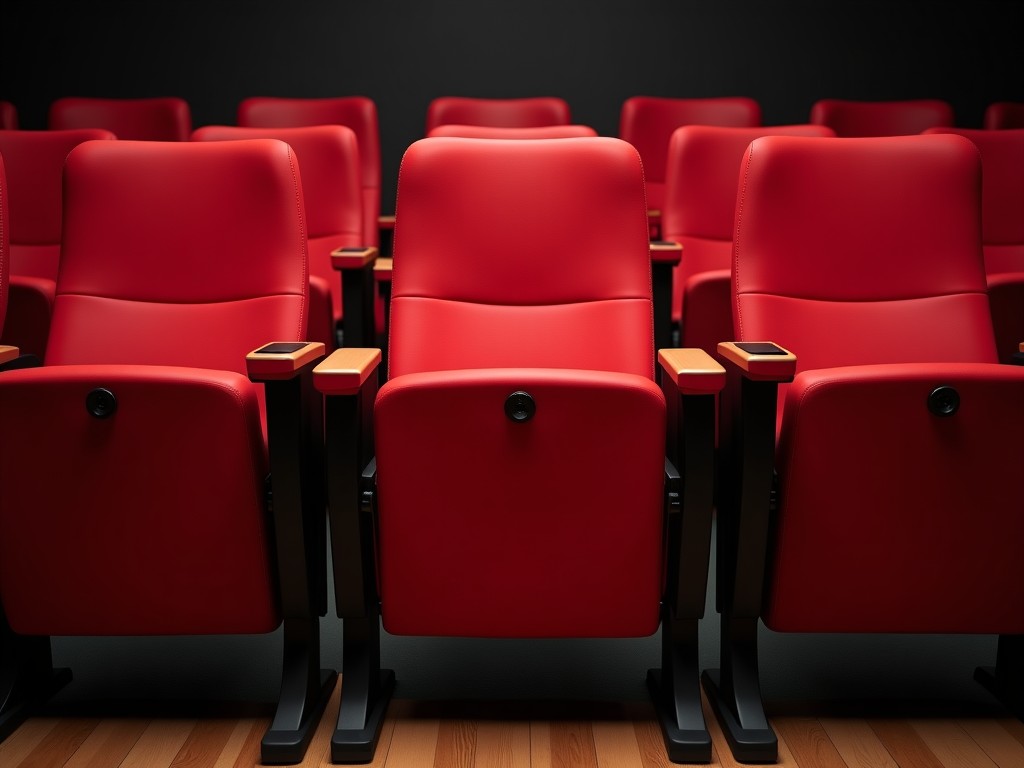
BF-1200 auditorium seating furniture. Featuring cold-rolled steel frame, high-density molded foam, and fire-retardant fabric. Factory-direct wholesale pricing.
Selecting auditorium seating involves balancing initial cost with long-term operational durability. Budget-friendly options are not defined by minimal material use but by optimized design that meets performance requirements without unnecessary complexity.
This page outlines the technical considerations for cost-effective auditorium seating, focusing on structural integrity, material efficiency, and lifecycle value for institutional buyers.
Each section explains engineering trade-offs that reduce upfront expense while maintaining safety, comfort, and service life expectations.
The primary cost driver in auditorium seating is the load-bearing frame. Economical designs use cold-formed steel channels with consistent wall thickness (typically 1.2–1.5 mm) rather than extruded or welded box sections, reducing material weight and fabrication steps.
Frames are engineered to meet ANSI/BIFMA X5.1 standards for static and dynamic loads, with finite element analysis validating stress distribution under 110 kg seat load plus 20% impact factor. Bolted connections replace welding where possible, lowering labor cost and enabling field disassembly for maintenance.
Symmetrical left/right frame modules allow inventory standardization, reducing SKU complexity and simplifying replacement part logistics.
Seat cushions use molded polyurethane foam with density ranging from 28–32 kg/m³, selected for compression set resistance (<5% 80="" after="">
Outer shells are typically polypropylene copolymer, injection molded with uniform wall thickness (2.5–3.0 mm) to avoid sink marks and warping. Ribbed structural patterns on the underside increase flexural stiffness by 18–22% compared to flat panels, allowing thinner material use.
Upholstery fabrics are chosen based on Martindale abrasion resistance (minimum 30,000 cycles for contract use) and flame spread ratings (NFPA 701 or CAL 117), with vinyl or polyester blends offering the best cost-to-durability ratio for high-traffic venues.
Budget-conscious installations often utilize surface-mounted pedestal systems instead of recessed concrete anchors. Pedestal bases are stamped steel with powder-coated finish, distributing load over a 180 mm diameter plate to prevent point loading on finished floors.
Leveling is achieved via adjustable threaded stems (±15 mm range) with lock nuts, accommodating floor tolerances without shimming. This eliminates the need for costly floor preparation or grouting while maintaining stability under uneven loading.
For retrofit projects, universal mounting brackets adapt to existing anchor patterns, reducing demolition and reinstallation costs.
Cost optimization focuses on material utilization efficiency rather than substituting lower-grade inputs. Steel frames receive a zinc-rich primer followed by polyester powder coating (60–80 µm thickness), providing corrosion resistance equivalent to hot-dip galvanizing in indoor environments at lower application cost.
Plastic components use recycled polypropylene content (up to 30% post-industrial) without compromising impact strength (Izod notched ≥40 J/m), verified through batch testing. Foam scrap from molding is granulated and reused in non-structural underskirt layers.
These practices reduce raw material waste by 15–20% compared to conventional methods, directly lowering unit cost while supporting sustainability reporting requirements.
| Component | Standard Specification | Customizable Range |
|---|---|---|
| Seat Width | 480 mm | 450–520 mm (in 10 mm increments) |
| Backrest Height | 380 mm | 350–420 mm |
| Frame Material | Cold-rolled steel, 1.2 mm | 1.0–1.8 mm, stainless steel available |
| Upholstery | Polyester, 280 g/m² | Vinyl, wool blend, FR-treated |
| Armrest | Optional, polypropylene | Wood, aluminum, retractable tablet |
| Finish Color | Black RAL 9005 | Any RAL or Pantone |
Values represent typical production standards. Custom dimensions require validation against load-bearing calculations and ANSI/BIFMA compliance.
Each production lot undergoes dimensional verification on critical interfaces (seat-to-frame, backrest pivot, floor mounting) using CMM or calibrated fixtures, with tolerance limits of ±0.5 mm for metal-to-metal contacts and ±1.0 mm for plastic components.
Dynamic fatigue testing simulates 10 years of use (80,000 cycles) at 110 kg load with 10% overload increments every 20,000 cycles. Inspections focus on joint loosening, frame deflection (>2 mm triggers redesign review), and upholstery seam integrity.
Random samples are subjected to flame spread and smoke density tests (ASTM E84) to confirm compliance with local fire codes, with documentation provided per shipment.
These seating systems are commonly selected for school auditoriums, community centers, and places of worship where utilization frequency is moderate (2–5 events per week) and budget cycles constrain capital expenditure. The modular design allows phased installation across semesters or fiscal years.
In multi-use spaces, the ability to reconfigure rows via removable center aisles or adjustable rake brackets supports adaptive reuse without replacing the entire system. This extends service life beyond the initial purpose-built intent.
For temporary installations such as event halls or exhibition pods, the knockdown frame design enables rapid assembly (under 8 minutes per unit with two operators) and compact storage, reducing labor and logistics costs compared to fixed installations.
For technical inquiries, customization requests, or project-specific load calculations, contact our engineering team to discuss your auditorium seating requirements.
Request Technical Consultation







