
Contact Fumei
No.20 Jiuqiao Road, Shijiang Industrial Area, Jiujiang Town, Nanhai District, Foshan City, China.
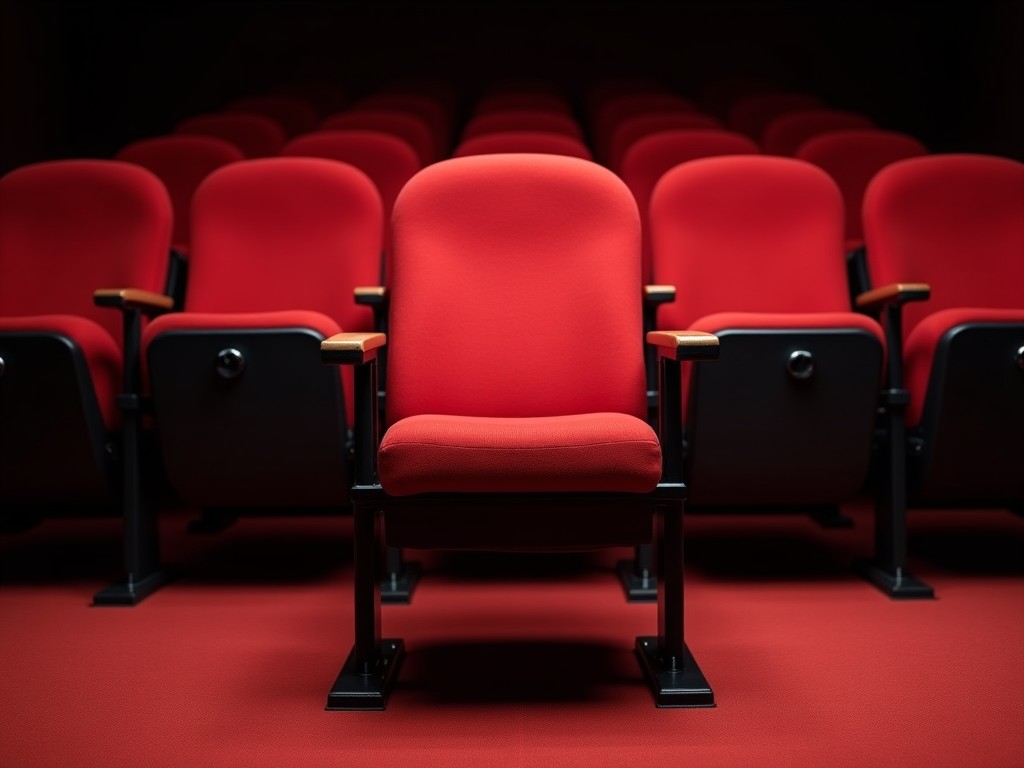
FS-801 training room chair with table. Featuring seamless fabric covering, steel frame, and fold tablet. Ideal for classroom furniture education wholesale.
Selecting appropriate fabric covering for theater seating requires evaluation of durability, acoustic performance, fire safety compliance, and long-term maintenance requirements. This guide details the engineering characteristics that influence procurement decisions for commercial auditorium installations.
Theater chair fabrics typically utilize solution-dyed synthetic fibers or treated natural blends engineered for high-traffic environments. Key performance metrics include Martindale abrasion resistance (typically 100,000+ cycles for commercial use), tensile strength (>300 N warp/weft), and pilling resistance (grade 4 or higher per ISO 12945-2). These values ensure surface integrity under repeated loading cycles common in auditorium seating.
Acoustic transparency is measured via sound absorption coefficient (α) across frequency bands; effective theater fabrics maintain α > 0.4 between 500 Hz and 4 kHz to avoid deadening high-frequency speech intelligibility while supporting bass response. Flame retardancy compliance is verified through standardized tests such as NFPA 701 (small scale) or BS 5852 (ignition source 5), with char length limits and after-flame times documented per batch.
Fabric selection begins with defining dimensional stability requirements based on chair geometry. Upholstery teams calculate required yardage using 3D surface mapping, accounting for compound curves, welting depth, and pattern repeat matching. Customization options include:
Width options: 54", 60", or 66" rolls to minimize seams on wide seats
Backing types: acrylic latex for foam adhesion or open weave for breathable mesh integration
Edge treatments: selvage finishes to prevent fraying during automated cutting
Colorfastness: wet/dry crocking grades (AATCC 8) ≥ 4 for dark shades under stage lighting
Industrial buyers require traceable quality controls to ensure uniformity across large orders. Manufacturers implement spectral reflectance testing (CIELAB ΔE < 1.5) to detect dye lot variations undetectable by visual inspection. Roll-to-roll tension monitoring maintains width tolerance within ±2 mm, preventing misalignment during automated upholstery processes. Batch documentation includes:
| Parameter | Test Method | Acceptance Criteria |
|---|---|---|
| Abrasion Resistance | Martindale (EN ISO 12947) | ≥ 100,000 cycles |
| Flame Spread Index | NFPA 701 Test 2 | ≤ 25 |
| Seam Strength | ASTM D1683 | ≥ 60 N |
| Lightfastness | ASTM F1515 (Xenon Arc) | Grade 4+ after 40 hrs |
Proper installation affects long-term performance. Seam placement should avoid high-stress zones such as seat front edges and armrest interfaces. Heat-activated adhesives require precise temperature control (130–150°C) to activate without degrading fiber integrity. Maintenance protocols specify low-moisture extraction cleaning to prevent backing delamination, with pH-neutral detergents (6–8) recommended to preserve flame-retardant treatments.
Expected service life correlates directly with abrasion rating and environmental controls. In climate-controlled auditoriums (40–60% RH, 18–24°C), fabrics with ≥100,000 Martindale cycles typically maintain aesthetic and functional integrity for 8–12 years before replacement is warranted due to cumulative soiling or mechanical wear, not material degradation.
Effective specification sheets reference measurable properties rather than subjective terms. Include required values for: abrasion resistance (cycles), tensile strength (N/50mm), tear strength (N), flame spread index, acoustic transparency coefficient, and colorfastness grades. Request batch-specific test reports and confirm minimum order widths align with cutting efficiency to reduce waste. For renovation projects, submit existing fabric samples for laboratory matching to ensure visual continuity with retained seating sections.








