
Contact Fumei
No.20 Jiuqiao Road, Shijiang Industrial Area, Jiujiang Town, Nanhai District, Foshan City, China.
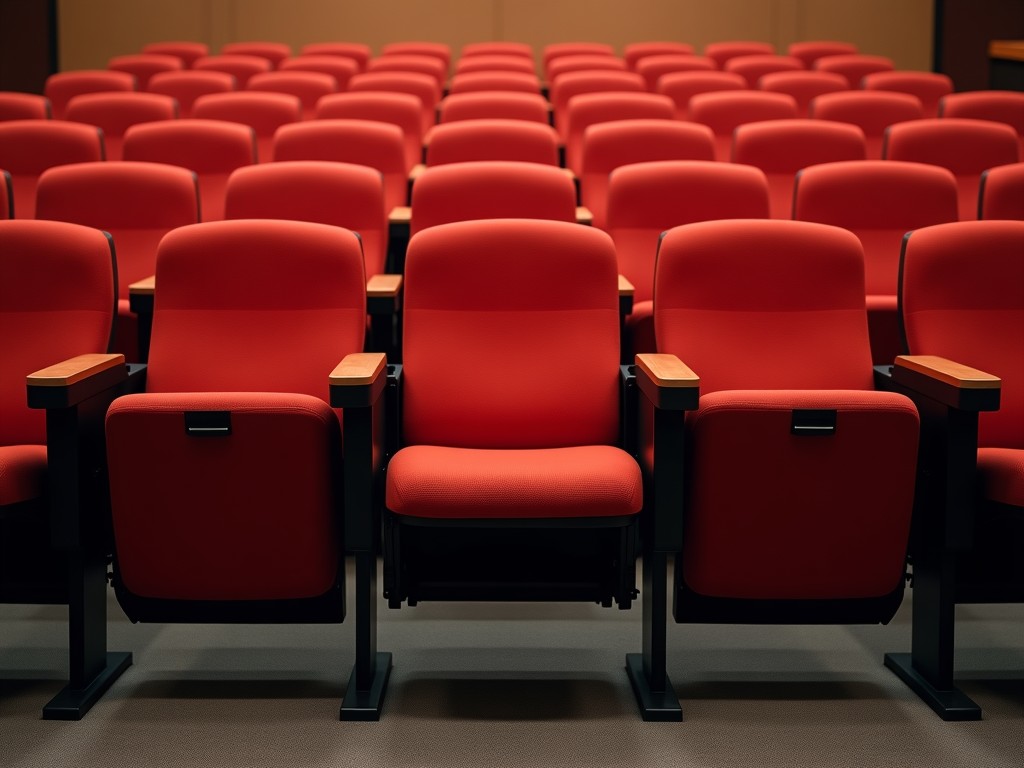
LH-2026 higher education classroom furniture. Featuring 2.0mm cold-rolled steel, fire-retardant foam, and wear-resistant fabric. Ideal for university halls. OEM factory.
Industrial manufacturers of lecture hall seating for educational campuses focus on structural integrity, long-term durability, and compliance with accessibility and fire safety standards. Production involves precision engineering of steel frames, high-density foam molding, and wear-resistant upholstery systems designed for continuous use in high-traffic environments.
This page outlines the technical considerations, manufacturing processes, and customization capabilities involved in producing fixed and retractable seating systems for campus lecture halls, addressing the needs of procurement teams, facility planners, and architectural specifiers.
Lecture hall seating frames must support static and dynamic loads from occupants while resisting deformation over decades of use. Typical designs use cold-rolled steel tubing with a minimum wall thickness of 2.0 mm, formed into C-channels or box sections for optimal bending resistance. Frame connections are welded using MIG or TIG processes to achieve full penetration joints, validated through non-destructive testing.
Load calculations follow ANSI/BIFMA X5.1 standards, requiring frames to withstand 150 kg per seat with a safety factor of 4:1 for ultimate load capacity. Deflection limits are set to less than 2 mm under maximum load to ensure long-term comfort and prevent upholstery stress. Corrosion protection is applied via zinc phosphate pretreatment followed by epoxy powder coating, achieving a minimum 500-hour salt spray resistance per ASTM B117.
Ergonomic design prioritizes posture support during extended lectures, typically lasting 60–90 minutes. Seat contours incorporate a 120–130° hip angle and 5–8° posterior tilt to reduce lumbar pressure. Foam density in seating areas ranges from 45–60 kg/m³ for the base layer, with a 25–35 kg/m³ top layer for comfort, molded using cold-cure polyurethane to maintain resilience over 100,000 cycles.
Backrests feature adjustable lumbar support mechanisms in premium models or fixed curved profiles in standard designs, maintaining thoracic spine alignment. Upholstery materials are selected for abrasion resistance exceeding 100,000 Martindale cycles, with options including solution-dyed acrylics, polyester blends, or PVC-coated fabrics for high-maintenance environments. All textiles meet CAL 117-2013 and NFPA 701 fire retardancy standards.
Production begins with CNC cutting of steel components to tolerances of ±0.5 mm, ensuring repeatable fit during assembly. Robotic welding cells maintain consistent bead penetration and minimize thermal distortion. After welding, frames undergo shot blasting to Sa 2.5 surface cleanliness before coating application.
Foam molding uses closed-loop temperature control to prevent cell collapse and ensure uniform density. Upholstery is cut using CNC knives and sewn with double-stitch seams reinforced at stress points. Final assembly includes torque-controlled fastening of armrests, writing tablets, and under-seat storage. Each unit undergoes functional testing: load simulation, mechanism cycling (for retractable models), and dimensional verification against CAD models.
Quality control includes statistical process control (SPC) on critical dimensions, random pull-testing of welds, and accelerated aging tests on upholstery. Documentation includes material traceability, weld maps, and test reports available upon request.
Lecture hall seating systems are adapted to architectural constraints, sightline requirements, and institutional branding. Key customization parameters include row curvature, seat width, backrest height, and integrated amenities such as power outlets, USB ports, and tablet arms.
For historic buildings or spaces with limited floor depth, low-profile models with a 450 mm seat depth and fold-up mechanisms are available. Tiered installations require precise riser height calculations to maintain C-value (clear sightline) standards per ANSI S12.60. Acoustic considerations may include perforated backrests or absorptive backing materials to reduce reverberation.
| Parameter | Typical Value | Notes |
|---|---|---|
| Seat Width | 480–550 mm | Customizable in 10 mm increments |
| Seat Depth | 450–500 mm | Fixed or fold-up mechanisms |
| Backrest Height | 380–450 mm | Measured from seat compression point |
| Frame Material | Cold-rolled steel | SPCC or equivalent, 2.0–2.5 mm thickness |
| Upholstery Abrasion Resistance | ≥100,000 Martindale | Tested per ISO 12947-2 |
| Fire Rating | CAL 117-2013, NFPA 701 | Optional: BS 5852, EN 1021-1/2 |
| Load Capacity per Seat | 150 kg static | Safety factor 4:1 ultimate |
Lecture hall seating is specified based on pedagogical models, room geometry, and technological integration needs. In traditional lecture formats, fixed seating with staggered sightlines ensures unobstructed views of projection surfaces and instructor areas. Active learning environments may incorporate movable or pod-based configurations, though fixed perimeter seating remains common for circulation and accessibility compliance.
Institutions prioritize lifecycle cost over initial purchase price, favoring designs with modular components that allow for in-field replacement of upholstery, arms, or mechanisms without replacing the entire unit. Integration with assistive listening systems, wheelchair-accessible spaces, and designated companion seats follows ADA and EN 17210 standards, requiring specific floor clearances and mounting hardware.








