
Contact Fumei
No.20 Jiuqiao Road, Shijiang Industrial Area, Jiujiang Town, Nanhai District, Foshan City, China.
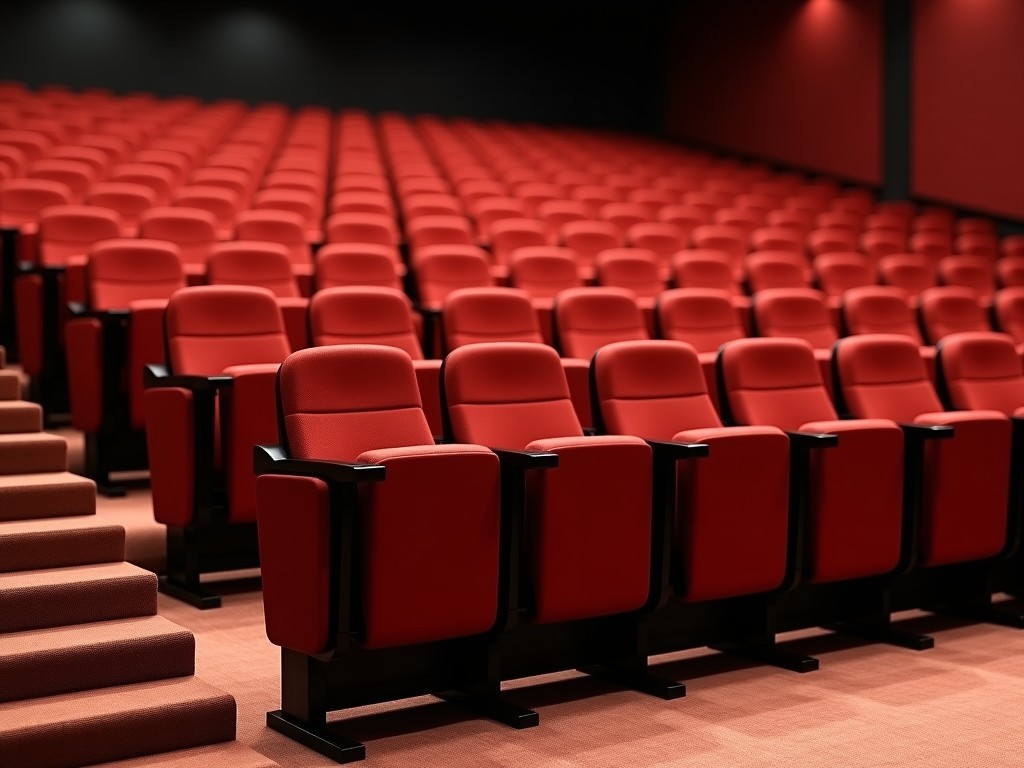
CAS-01 auditorium seating furniture. Featuring cold-rolled steel, fire-retardant foam, and anti-panic return. Ideal for lecture halls. Factory OEM bulk supply.
Auditorium seating chairs are engineered for high-traffic public assembly spaces where structural integrity, occupant safety, and long-term service life directly impact operational costs and user experience. As a manufacturer based in China, we design seating systems that comply with international standards such as EN 12727 and BIFMA X5.1 while accommodating regional variations in building codes and anthropometric data. Our production focuses on modular components that allow for field replacement of worn parts without dismantling entire rows, reducing lifecycle maintenance expenses. This approach addresses the core concern of facility managers: minimizing downtime during repairs while maintaining consistent comfort and safety across thousands of seats.
The chair frame utilizes cold-rolled steel with a minimum yield strength of 345 MPa, formed through precision stamping and robotic welding to achieve dimensional tolerances within ±0.5 mm. Load testing confirms static capacity exceeding 400 kg per seat without permanent deformation, validated through cyclic testing to 100,000 load repetitions at 150 kg. Corrosion protection consists of a zinc-phosphate pretreatment followed by electrostatic powder coating with a minimum film thickness of 80 μm, providing 500 hours salt spray resistance per ASTM B117. Frame geometry incorporates tapered leg designs that distribute point loads across a wider floor contact area, reducing pressure on vulnerable flooring substrates in retrofit installations.
Seat and backrest movement is governed by a synchronized double-linkage mechanism constructed from hardened steel pins and self-lubricating polymer bushings, eliminating the need for periodic greasing. The mechanism provides a 12° recline angle with a fixed pivot point calibrated to maintain lumbar support alignment throughout motion, reducing shear forces on the spine. Return-to-position force is calibrated to 8–12 N via torsion springs rated for 50,000 cycles, ensuring consistent operation without sagging or binding over time. Anti-panic release allows manual override to upright position within 2 seconds using<5 n="" force="">
Seat cushions use molded polyurethane foam with a density range of 55–65 kg/m³ and 25% ILD between 1.8–2.2 kPa, providing pressure distribution that minimizes peak interface forces below 8 kPa during prolonged sitting. Backrest foam operates at 40–50 kg/m³ density with 25% ILD of 1.2–1.6 kPa, optimized for lumbar support rather than load-bearing. Fabric options include solution-dyed polyester with abrasion resistance exceeding 100,000 Martindale cycles and UV stability rated for 400 hours xenon arc exposure. All textiles meet CAL 117-2013 and EN 1021-1/2 ignition resistance requirements, with optional treatments achieving NFPA 260 Class 1 compliance for high-risk venues.
Row configurations accommodate straight, curved, and radial layouts with aisle widths adjustable from 600 mm to 900 mm in 50 mm increments to meet local egress calculations. Seat spacing (pitch) ranges from 800 mm to 1050 mm, with ADA-compliant wheelchair companion seats integrated at 1:100 ratio featuring removable armrests and 900 mm clear floor space. Writing tablets are available in laminate or veneer finishes with load capacity of 15 kg, mounted via concealed brackets that preserve floor anchoring integrity. Power and data integration options include recessed AC outlets (10A/250V), USB-A/C charging ports (5V/3A), and CAT6 Ethernet jacks, all wired through segregated conduits within the seat riser to maintain fire separation ratings.
Every production batch undergoes incoming material verification including mill certificates for steel grade and foam density, followed by dimensional inspection of critical interfaces using CMM probes with 0.01 mm resolution. Functional testing includes 100% mechanism operation checks, weight distribution validation across 5 percentile to 95th percentile anthropometric dummies, and acoustic testing to ensure no squeaks or rattles below 30 dB(A) at 0.5 Hz vibration. Final audit verifies markings, packaging completeness, and inclusion of installation manuals with torque specifications for floor anchors (typically M10 bolts at 45 Nm). Statistical process control tracks defect rates below 50 PPM for critical dimensions and 200 PPM for appearance-related issues.
Chairs are packaged in knockdown configuration with backrests nested within seats to optimize volumetric efficiency, achieving approximately 0.8 m³ per 4-seat unit. Components are separated by recycled polyethylene foam sheets and secured in 7-ply corrugated cartons with burst strength exceeding 1200 kPa, printed with handling instructions and QR codes linking to installation videos. Palletized loads use ISO-standard 1161 corner posts and stretch film with 500% pre-stretch, secured via polyester strapping at 750 N breaking strength. Export documentation includes fumigation certificates for wooden pallets (IPPC ISPM 15) and material safety data sheets for all coatings and adhesives, facilitating customs clearance in destination countries.
These seating systems are specified in performing arts centers where acoustic transparency and vibration damping are critical to prevent structural resonance from affecting sound quality—achieved through decoupled floor mounts that isolate seat frames from building vibrations above 30 Hz. Legislative chambers require fail-safe mechanisms that default to upright position during power loss to maintain clear sightlines and egress paths, a feature addressed by gravity-assisted return springs. Educational lecture halls benefit from writable surfaces integrated into armrests, reducing the need for separate desks while maintaining clear aisle widths for emergency evacuation. Religious facilities often request extended backrest heights (up to 500 mm) to accommodate diverse postures during prolonged services, accommodated through modular backer frames.
| Parameter | Typical Value | Adjustment Range |
|---|---|---|
| Seat Height (unloaded) | 450 mm | 430–480 mm |
| Backrest Height | 400 mm | 350–500 mm |
| Seat Width | 500 mm | 470–530 mm |
| Row Pitch | 900 mm | 800–1050 mm |
| Frame Load Capacity | 400 kg | 300–500 kg |
| Mechanism Cycle Life | 50,000 cycles | 30,000–100,000 cycles |
| Fabric Abrasion Resistance | 100,000 Martindale | 50,000–200,000 Martindale |
| Coating Salt Spray Resistance | 500 hours | 200–1000 hours |
Quotations require venue drawings showing floor slope, aisle locations, and structural anchoring points to calculate correct riser heights and fastener quantities. Lead time for standard configurations averages 6–8 weeks after drawing approval, with expedited options available for critical path projects subject to production capacity. Sample chairs are available upon request, typically shipped within 10 working days via express freight with instrumented data loggers to monitor shock and vibration during transit. Technical support includes step-by-step installation guides, torque charts for floor anchors, and spare part lists with exploded diagrams to facilitate onboard maintenance training.
For project-specific configurations, material selections, or integration requirements, contact our engineering team to review your venue specifications. We provide detailed response within 24 business hours, including preliminary layout suggestions and cost estimates based on your provided dimensions and performance criteria.
Request Technical Consultation







