
Contact Fumei
No.20 Jiuqiao Road, Shijiang Industrial Area, Jiujiang Town, Nanhai District, Foshan City, China.
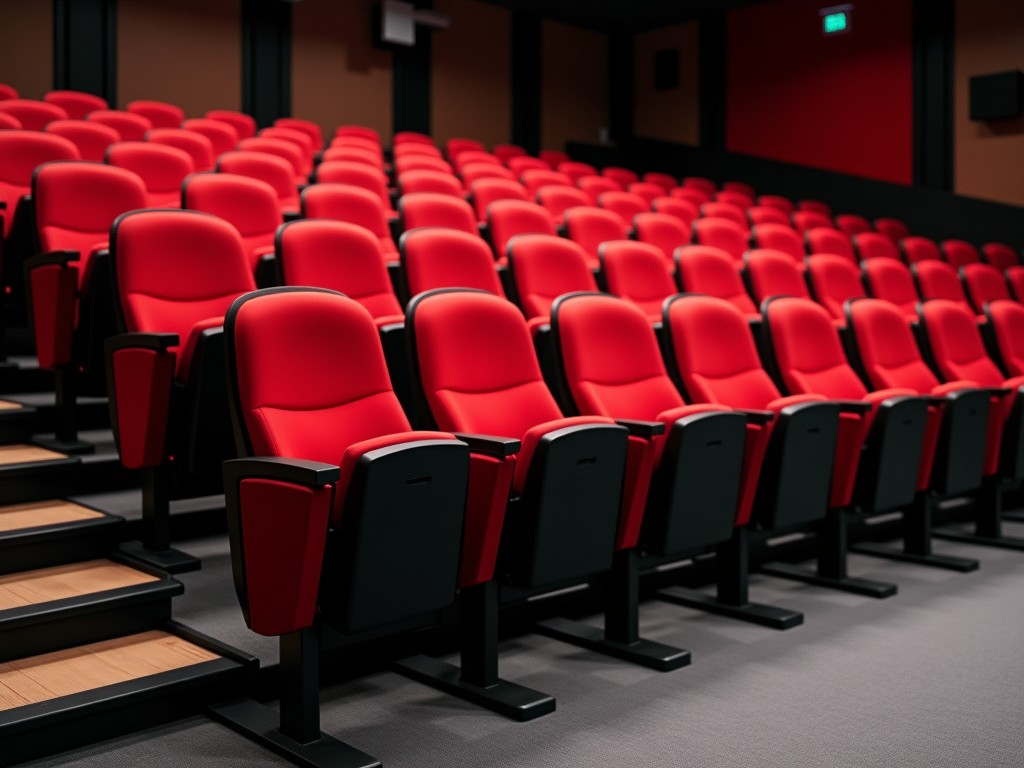
FS-01 steel classroom chairs. Featuring S235JR steel, fire-retardant fabric, and 400kg load frame. Ideal for higher education classroom furniture. Direct OEM supply.
Auditorium seating systems require precise engineering to balance structural integrity, long-term durability, and user comfort across diverse architectural environments. As an OEM/ODM manufacturer based in China, we design and produce fixed and retractable seating solutions tailored to the specific load, spacing, and acoustic requirements of performance venues, lecture halls, and multi-purpose auditoriums.
Our manufacturing process integrates CNC machining, robotic welding, and automated upholstery lines to ensure dimensional consistency across production batches. Each seat frame undergoes finite element analysis (FEA) to validate static load capacity under DIN EN 12727 standards, with typical designs rated for 400 kg dynamic load per seat. Material selection prioritizes corrosion-resistant steel grades (S235JR or equivalent) and flame-retardant fabrics meeting ISO 5660-1 standards, with all components traceable from raw material intake to final assembly.
The structural design of auditorium seats must accommodate cyclic loading from repeated use while maintaining alignment tolerances within ±2 mm across rows. Misalignment exceeding this threshold can cause operational noise, uneven wear, and reduced lifespan of mechanisms in retractable systems. To mitigate this, we use hardened steel pivot pins with self-lubricating bushings and incorporate adjustable leveling feet capable of compensating for floor slopes up to 5°.
Acoustic performance is another critical factor often overlooked in seating design. Reflective surfaces on seat backs or armrests can create unwanted echoes or frequency cancellations in the 500 Hz–2 kHz range, affecting speech intelligibility. Our designs minimize reflective surfaces through angled profiles and absorptive materials, with back panels optionally filled with recycled polyester fiber (density 80 kg/m³) to dampen mid-frequency reflections without compromising fire safety ratings.
Ergonomic dimensions are derived from anthropometric data (ISO 7250-1) but adjusted for regional user profiles. Seat depth typically ranges from 480–520 mm to accommodate 95th percentile thigh length, while seat height is set between 420–450 mm to ensure proper foot clearance. Backrest recline angles are fixed between 100°–105° to support lumbar posture without requiring mechanisms that increase maintenance needs or failure points.
As an ODM partner, we collaborate with clients during the conceptual phase to translate architectural and functional requirements into manufacturable seat designs. This includes adapting standard modules to non-standard row curvatures, integrating auxiliary systems like power/data ports or assistive listening devices, and modifying cushion geometries to meet specific comfort targets. All customizations undergo design for manufacturability (DFM) review to ensure tooling efficiency and assembly consistency.
Material options are selected based on environmental exposure, maintenance protocols, and lifecycle cost expectations. For high-humidity or coastal environments, we offer galvanized or powder-coated steel frames with zinc-aluminum alloy coatings (Zn-Al 55%) providing up to 15 years of corrosion resistance in C4 environments. Upholstery choices include vinyl (Martindale >100,000 cycles), polyester blends (pilling resistance Grade 4), and wool blends (ISO 12945-2), each with specified flame spread indices (ASTM E84 Class A or B).
Branding integration is achieved through precision methods that do not compromise structural elements. Logos can be embroidered directly onto fabric covers using UV-stable polyester thread, embossed into molded polypropylene shells, or applied via laser-etched anodized aluminum plates on armrests. These methods avoid adhesives or fasteners that could degrade over time, ensuring long-term visual integrity without adding failure points to the seat assembly.
Quality assurance begins at incoming material inspection, where steel thickness is verified via ultrasonic testing (±0.05 mm tolerance) and fabric roll width is checked against specifications. During production, each station performs inline checks: weld penetration is monitored via thermal imaging, fabric tension is measured with load cells, and mechanical assemblies undergo functional cycling (5,000 actuations) before final packaging. These controls reduce field failure risks by identifying deviations early in the process.
Final product validation includes batch testing for load distribution, mechanism smoothness, and dimensional conformity. A sample of seats from each production run is subjected to 10,000-cycle endurance testing on motorized test rigs simulating 15 years of use in high-traffic venues. Acoustic scattering coefficients are measured in reverberation chambers when required, and flame resistance is validated via vertical flame tests (ASTM D6413) on finished assemblies. Reports are documented and available for client review prior to shipment.
Traceability is maintained through unique serial numbers laser-etched onto each frame, linking to digital records of material certifications, welding parameters, and inspection results. This system supports warranty claims, recall management, and lifecycle audits. For OEM clients, we provide PPAP Level 3 documentation upon request, including design FMEA, process flow diagrams, and gauge R&R studies to support their own quality management systems.
Fixed auditorium seats are commonly installed in permanent venues such as concert halls, theaters, and university lecture halls where reconfiguration is not required. These designs prioritize maximum stiffness and minimal maintenance, often featuring monocoque steel frames with integrated seat and back shells. Deflection under load is limited to<3 mm="" to="" prevent="" perceptible="" movement="" that="" could="" distract="" users="" or="" affect="" sightline="" calculations="" in="" steeply="" raked="" auditoriums.="">
Retractable systems are designed for multi-use spaces like school gymnasiums or community centers that require frequent conversion between flat floor and seated configurations. These systems use lightweight aluminum extrusions (6063-T5) for the understructure to reduce motor load, combined with steel seat frames for durability. Deployment speed is typically 20–30 seconds per row, with synchronization tolerances <±1.5 seconds="" between="" adjacent="" rows="" to="" prevent="" binding="" or="" fabric="" snagging="" during="" operation.="">
Outdoor or semi-covered installations—such as amphitheaters or sports complex viewing areas—require additional environmental hardening. In these cases, we specify marine-grade stainless steel (AISI 316) for all fasteners and exposed components, use UV-stabilized polyurea coatings on frames, and select solution-dyed acrylic fabrics with >1,000-hour UV resistance (ASTM G155). Drainage channels are molded into seat bases to prevent water accumulation, and all electrical components are rated IP65 minimum for protection against dust and water jets.
Seats are packaged to prevent damage during long-haul transport, with special attention to corner protection and moisture barrier integrity. Each unit is wrapped in 100-micron polyethylene film, then placed in double-wall corrugated cartons (burst strength >35 psi) with internal corner guards made from expanded polypropylene (EPP). For retractable systems, major subassemblies (e.g., undercarriage, seat modules) are packed separately to reduce individual package weight below 25 kg for manual handling compliance.
Cartons are stacked on heat-treated pallets (ISPM 15 compliant) and secured with polyamide strapping. Shock indicators (50g threshold) and tilt sensors are affixed to each pallet to monitor handling conditions during transit. For sea freight, desiccant units (100g per m³) are included to maintain relative humidity below 60% inside the packaging, preventing mold growth on fabrics and corrosion on untreated steel surfaces. All packaging materials are recyclable and marked accordingly.
Labeling includes QR codes linking to digital assembly instructions, maintenance manuals, and certification documents in multiple languages. This reduces on-site installation errors and supports after-sales service efficiency. Clients receive packing lists detailing carton dimensions, weights, and HS codes to streamline customs clearance. Typical container utilization reaches 90% volume efficiency through optimized packing patterns validated via simulation software.
| Parameter | Typical Value / Range | Customization Options |
|---|---|---|
| Static Load Capacity per Seat | 400 kg (DIN EN 12727) | Up to 600 kg for VIP or fixed bench configurations |
| Seat Height (FFL to Top of Seat) | 420–450 mm | Adjustable via risers; custom heights available |
| Seat Depth | 480–520 mm | Custom depths for ergonomic or accessibility needs |
| Backrest Recline Angle | 100°–105° (fixed) | Fixed or limited recline options; no continuous adjust |
| Frame Material | S235JR Steel (standard) | Galvanized, powder-coated, or S355JR for higher load |
| Upholstery Abrasion Resistance | Martindale >50,000 cycles (standard fabric) | >100,000 cycles available (vinyl, specialty blends) |
| Flame Resistance (Fabric) | ISO 5660-1, ASTM E84 Class B | Class A available upon request |
| Corrosion Protection (Frame) | Powder coating (80–120 µm) | Hot-dip galvanizing, marine-grade coatings |
| Production Lead Time | 4–6 weeks after drawing approval | Expedited options available for critical projects |
We maintain ISO 9001:2015 certification for our manufacturing processes, with regular audits covering design control, supplier management, and production monitoring. Our engineering team includes specialists in structural mechanics, ergonomics, and acoustics who collaborate during the design phase to ensure that all performance requirements are addressed before tooling begins. For clients requiring third-party validation, we facilitate testing at accredited laboratories for load, flame, and acoustic properties.
Communication throughout the project lifecycle is structured around defined milestones: concept review, design freeze, prototype approval, and pre-production validation. Clients receive step-by-step updates with CAD models, material datasheets, and test reports at each stage. This approach minimizes misunderstandings and ensures that the final product aligns with both functional expectations and regulatory requirements in the destination market.
Selecting an OEM/ODM partner for auditorium seating involves evaluating not only production capacity but also technical depth in seating-specific engineering. Unlike general metal fabrication, auditorium seat design requires integrated knowledge of human factors, dynamic loading, and acoustic interactions—areas where general contractors may lack specialized expertise. Our focus on seating systems allows us to anticipate issues such as uneven load distribution in curved rows or resonance frequencies in lightweight retractable mechanisms before they become field problems.
We encourage clients to engage early in the design process to leverage our DFM expertise, which can reduce tooling costs by up to 25% and shorten lead times through standardized subassemblies. For projects with unique architectural constraints—such as non-uniform rake angles, variable row spacing, or integration with existing HVAC or lighting systems—we provide feasibility studies that include interference checks and load path analysis. This proactive approach reduces the risk of costly redesigns during installation or post-occupancy phases.
To discuss your auditorium seating requirements, including custom dimensions, material selections, or mechanism types, please provide your project specifications. Our engineering team will review your needs and respond with a detailed feasibility assessment, including preliminary drawings, material recommendations, and estimated timelines.








