
Contact Fumei
No.20 Jiuqiao Road, Shijiang Industrial Area, Jiujiang Town, Nanhai District, Foshan City, China.
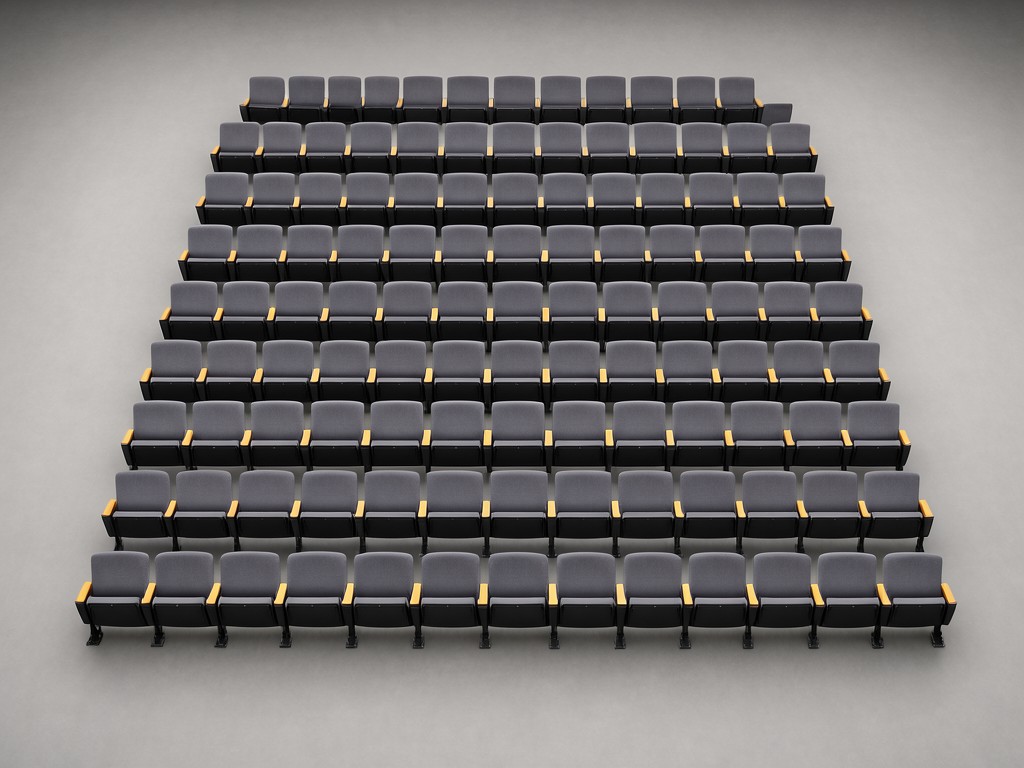
FS-A01 classroom seating furniture. Featuring cold-rolled steel, high-resilience foam, and anti-rust coating. Ideal for lecture halls. Wholesale from China factory.
When selecting auditorium seating for high-traffic venues, procurement engineers prioritize structural integrity, long-term wear resistance, and compliance with international safety standards. This page details the technical specifications, material options, and manufacturing considerations that define durable auditorium seating exported from China, focusing on measurable engineering attributes rather than subjective claims.
The primary load-bearing structure typically uses cold-rolled steel with a minimum thickness of 2.0mm for seat standards and 2.5mm for floor anchoring brackets. These dimensions are selected based on finite element analysis simulating 150kg dynamic loads per seat, repeated over 100,000 cycles to represent 15 years of use in a 500-seat venue. Weld points undergo 60% tensile strength testing to ensure joint integrity under cyclic stress.
Frame corrosion resistance is achieved through hot-dip galvanization (minimum 60μm zinc coating) or powder coating with a thickness of 80–120μm, verified by salt spray testing per ASTM B117 for 500 hours without red rust. Anchoring systems incorporate M10×80mm expansion bolts with shear ratings exceeding 15kN, suitable for concrete substrates with compressive strength ≥25MPa.
Seat shells are commonly manufactured from polypropylene copolymer with a melt flow index of 8–12g/10min, offering impact resistance down to -20°C and UV stabilization rated for 1,500 hours of xenon-arc exposure. For fire safety compliance, materials meet ISO 9705 standards with a maximum heat release rate of 100kW/m² in cone calorimeter testing.
Upholstery options include polyester fabrics with Martindale abrasion resistance ≥50,000 cycles and vinyl coatings with a thickness of 0.8–1.2mm, both tested for colorfastness under ISO 105-B02 (minimum grade 4). Foam padding uses high-resilience polyurethane with density 35–45kg/m³ and 25% indentation force deflection between 180–220N, ensuring recovery after 80,000 compression cycles.
Automatic return mechanisms utilize torsion springs made from silicon-chromium alloy wire (diameter 6–8mm), calibrated to generate 15–25Nm of return torque. Cycle testing confirms functionality after 50,000 actuations without torque degradation exceeding 10%. Dampening systems incorporate hydraulic or elastomeric buffers to limit seat descent velocity to 0.3–0.5m/s, reducing impact noise and wear on adjacent components.
Armrests, when specified, feature reinforced nylon 66 inserts with glass fiber content ≥30%, providing tensile strength >80MPa and resistance to creep under sustained 100N loads. Folding mechanisms include self-lubricating polymer bushings (PTFE-based) rated for 30,000 cycles without measurable increase in friction coefficient.
Seat pitch (center-to-center spacing) is adjustable between 800mm and 1,050mm in 25mm increments, allowing optimization for legroom versus capacity based on venue sightline studies. Row curvature follows radial calculations with tolerances ±5mm per meter, ensuring seamless alignment in concentric or fan-shaped layouts.
Numbering systems use laser-etched aluminum plates or injection-molded ABS inserts with character height 20mm, compliant with ISO 3864-1 for visibility. Optional integrated power modules include UL-certified receptacles rated 10A/250V with surge protection (clamping voltage<400v) and="" cable="" management="" channels="" maintaining="" bend="" radius="">
Each production batch undergoes dimensional inspection using CMM machines with accuracy ±0.02mm, verifying critical interfaces between seat standards, brackets, and floor plates. Load testing is performed on 10% of seats per order using servo-hydraulic frames applying 1,200N static load for 5 minutes, with residual deformation limited to 0.5mm.
Functional testing includes 10,000-cycle operation of folding mechanisms and return systems, monitored via torque sensors and displacement transducers. Final inspection checks for surface defects under 500lx illumination, with permissible limits: no scratches >0.5mm depth or length >20mm, and no coating thinning exceeding 20% of specified thickness.
Seats are packaged in knockdown (KD) configuration with steel standards nested in groups of 5–10, separated by 3mm corrugated cardboard dividers. Backrests and seat pans are stacked flat with corner protectors (25mm×25mm×500mm L-profile) and secured with 12mm PET strapping at 300mm intervals. Each pallet carries 40–60 units depending on model dimensions, with maximum stack height 1.8m to prevent deformation.
Export packaging complies with ISPM 15 for wooden pallets and includes moisture barrier bags (desiccant units: 100g per m³ internal volume). Shock indicators (50g threshold) and tilt sensors (±5°) are affixed to 20% of packages for transit monitoring. Container loading uses 20ft or 40ft GP containers with weight distribution verified via axle load simulation to maintain dynamic stability during transit.
| Parameter | Typical Value | Test Standard |
|---|---|---|
| Seat Static Load Capacity | 1,200N | EN 12727 |
| Frame Coating Thickness | 80–120μm | ASTM D1186 |
| Fabric Abrasion Resistance | ≥50,000 cycles | ISO 12947-2 |
| Foam Indentation Deflection (25%) | 180–220N | ISO 3386-1 |
| Spring Return Torque | 15–25Nm | Internal Cycle Test |
| Salt Spray Resistance | 500 hours | ASTM B117 |
All values represent typical production outcomes; actual specifications are confirmed during technical review based on project-specific requirements such as venue occupancy, local building codes, and environmental conditions. Custom configurations are available upon receipt of detailed architectural drawings and load calculations.








