
Contact Fumei
No.20 Jiuqiao Road, Shijiang Industrial Area, Jiujiang Town, Nanhai District, Foshan City, China.
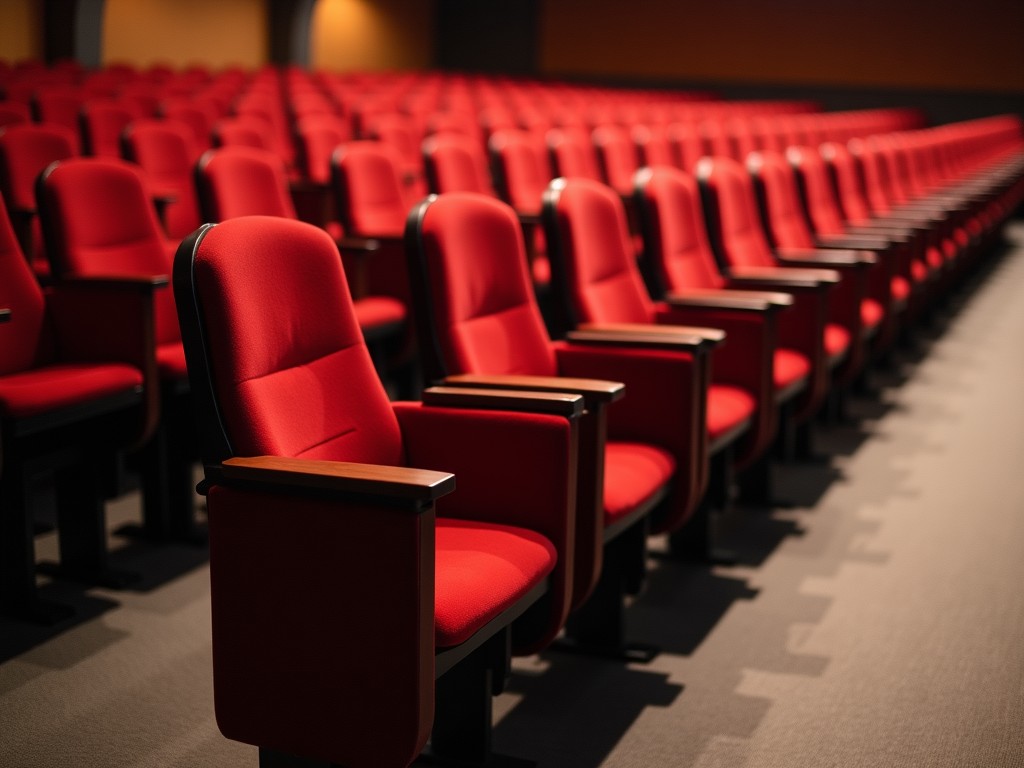
CH-01 steel classroom chairs. Featuring 1.2mm cold-rolled steel, 32kg/m³ high-density foam, and CAL 133 fabric. Ideal for university hall. OEM project supply.
Selecting seating for a church auditorium involves balancing long-term durability, occupant comfort, and spatial efficiency under varying usage patterns. Industrial procurement requires understanding material behavior, structural design, and maintenance implications over decades of service. This page details the engineering considerations behind fixed and movable auditorium seating systems tailored for worship environments.
Key factors include frame load capacity, upholstery wear resistance, aisle clearance compliance, and adaptability to multi-use spaces. We explain how these elements influence lifecycle cost and user experience without relying on subjective claims. The following sections break down technical specifications, customization pathways, and quality validation methods relevant to institutional buyers.
The chair frame must withstand repeated dynamic loads from sitting, standing, and lateral movement while maintaining dimensional stability over 20+ years. Steel gauge, joint welding integrity, and corrosion protection directly affect structural reliability in high-occupancy environments.
We use 1.2mm cold-rolled steel for the primary frame members, formed via precision roll-forming to ensure consistent wall thickness and minimize stress concentrations. All joints are robotically welded using MIL-STD-2219 compliant procedures, followed by 100% visual and dye penetrant inspection on critical load paths.
Frame finish options include electrogalvanized steel for indoor humidity control or powder-coated RAL 9005 for enhanced scratch resistance in high-traffic zones. Load testing follows ANSI/BIFMA X5.1 standards, with static load validation at 1,360 kg (3,000 lbs) per seat and fatigue endurance exceeding 100,000 cycles.
Fabric and foam choices determine long-term appearance retention, cleanability, and fire safety compliance in assembly spaces. Performance is measured through abrasion resistance, UV stability, and smoke development indices rather than subjective feel.
Seat foam uses 28 ILD high-resilience polyurethane with a minimum density of 32 kg/m³, tested for 90% height retention after 80,000 Cybex cycles. Backrest foam is 20 ILD for ergonomic support without bottoming out during prolonged use.
Upholstery fabrics are solution-dyed acrylics or FR-treated polyester blends with Wyzenbeek abrasion ratings exceeding 100,000 double rubs (heavy duty). All materials pass CAL 133 and NFPA 701 fire codes, with documentation available for AHJ submission.
Seat dimensions and row spacing impact accessibility, sightlines, and occupant throughput during ingress and egress. These are not arbitrary measurements but derived from anthropometric data and building code requirements.
Standard seat width is 510 mm (20 in) to accommodate 95th percentile male hip breadth with light clothing. Seat depth is 460 mm (18 in) to support thigh length without popliteal pressure. Seat height is 460 mm (18 in) from finished floor to ensure 90–100° knee angle for most adults.
Minimum clear aisle width is 915 mm (36 in) per IBC Section 1029 for wheelchair access and emergency flow. Row-to-row spacing (rise) begins at 915 mm (36 in) for standard applications, increasing to 1,065 mm (42 in) for enhanced legroom or kneeler accommodation in traditional liturgies.
The method of securing chairs to the floor affects both structural integrity and future reconfigurability. Permanent installations prioritize load transfer; movable systems emphasize alignment consistency and storage efficiency.
Fixed installations use M10 anchor bolts through pre-drilled floor plates into concrete substrates, with torque specs of 40–50 Nm to prevent joint creep. Movable chairs feature interlocking steel ganging mechanisms with tolerance stacks under 0.5 mm to maintain straight rows during use.
Floor plate options include 3mm stamped steel for direct concrete embedment or nylon-reinforced composite pads for raised access floors. All mounting hardware is zinc-nickel plated for 500-hour salt spray resistance per ASTM B845.
Beyond standard configurations, specific worship practices may require integrated features such as kneelers, literature racks, or communion cup holders. These additions must not compromise structural integrity or create maintenance traps.
Kneeler assemblies attach via reinforced side brackets with 6 mm steel gussets, rated for 150 kg dynamic load. Literature racks are molded polypropylene with 12 mm edge thickness to resist cracking under repeated book insertion/removal.
Communion cup holders are recessed 304 stainless steel inserts (Ø65 mm x 20 mm depth) to prevent tipping and facilitate cleaning. All optional features are designed as bolt-on modules to allow field installation or removal without welding.
Consistency across production batches depends on in-process controls and material traceability, not just final inspection. We document critical parameters from raw material receipt to final packaging.
Each chair receives a unique laser-etched serial number linking to a digital build record containing: steel coil test report, foam density batch number, fabric roll lot code, and welding operator ID. Final audit includes dimensional verification (±2 mm tolerance), joint pull testing (5 random units per 500), and fabric seam strength validation.
Packaging uses triple-wall corrugated boxes with internal corner protectors and horizontal strapping to prevent rack deformation during transit. Units are stacked no higher than 6 per pallet to maintain center of gravity within safe limits for forklift handling.
| Parameter | Standard Specification | Customizable Range |
|---|---|---|
| Frame Material | 1.2mm Cold-Rolled Steel | 1.0–1.5mm (per load req.) |
| Seat Foam Density | 32 kg/m³ | 28–40 kg/m³ |
| Fabric Abrasion (Wyzenbeek) | >100,000 Double Rubs | 50k–200k (per zone) |
| Seat Height (FFL) | 460 mm | 430–490 mm |
| Min. Aisle Width | 915 mm | 915–1,200 mm |
Technical procurement begins with clear communication of spatial constraints, usage frequency, and compliance requirements. Early engagement reduces redesign risk and ensures accurate quoting.
Required inputs for quotation include: cleared floor plan with column obstructions, expected occupancy load, preferred mounting method (fixed/movable), and any liturgical accessories. We return a detailed layout showing row counts, aisle compliance, and total delivered weight per truckload.
Lead time averages 8–10 weeks after drawing approval, subject to fabric availability and order volume. Samples are available upon request, typically shipped as a single fully configured unit with all specified options for in-situ evaluation.
To initiate a technical review or request a quotation for church auditorium chairs, provide your project specifications through our inquiry form. Our engineering team will respond with a feasibility assessment, detailed drawings, and itemized pricing within two business days.
Request Technical Quotation







