
Contact Fumei
No.20 Jiuqiao Road, Shijiang Industrial Area, Jiujiang Town, Nanhai District, Foshan City, China.
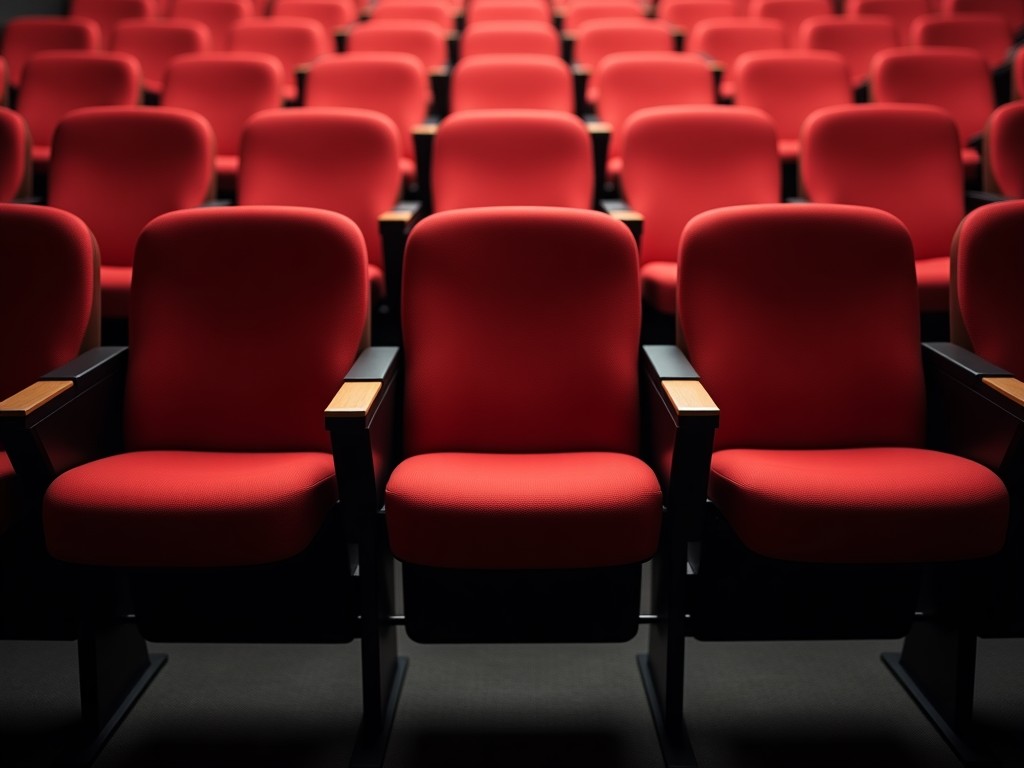
FM-CC01 classroom seating furniture. Featuring cold-rolled steel, fire-retardant fabric, and BIFMA 300lbs rating. Ideal for university halls. Factory wholesale.
College classroom auditorium seating chairs are engineered for prolonged use in educational environments where ergonomics, durability, and space efficiency directly impact learning outcomes. These chairs must accommodate diverse body types while maintaining structural integrity under repeated dynamic loads from sitting, standing, and reconfiguration. Material selection, frame geometry, and upholstery specifications are determined through biomechanical analysis and lifecycle testing to ensure performance over 10+ years of institutional use.
Unlike general-purpose seating, auditorium chairs in academic settings integrate specific technical requirements: fire-retardant compliance with CAL 133 or NFPA 260, minimum 50,000 double-rub abrasion resistance for fabric, and load ratings exceeding 300 lbs per seat with a 4:1 safety factor. Understanding these parameters allows procurement teams to evaluate options based on measurable engineering criteria rather than subjective claims.
The chair frame typically employs 1.5mm to 2.0mm thick cold-rolled steel tubing with a yield strength of 300 MPa or higher, formed into a closed-loop cantilever or four-leg configuration to resist twisting and lateral sway. Joint connections use robotic MIG welding with penetration depths exceeding 0.8mm, followed by stress-relief annealing to minimize fatigue cracking at high-stress points like the seat-to-backrest junction and floor interface.
Load testing follows ANSI/BIFMA X5.1 standards, applying 150% of rated capacity (450 lbs) for 100,000 cycles to simulate a decade of use. Deflection limits are capped at 2mm under center-load conditions to prevent perceived instability. Powder coating thickness averages 80-120 microns with a minimum 500-hour salt spray resistance (ASTM B117) to withstand humidity and cleaning agents in high-traffic campuses.
Frame geometry also influences stacking capability — critical for storage and reconfiguration. Models designed for vertical stacking incorporate tapered leg profiles and nylon glides to prevent marring, allowing 4-6 chairs to be stacked safely without compromising structural alignment or increasing point loads on the bottom unit beyond 1,800 lbs.
Seat depth ranges from 16 to 18 inches to accommodate 5th to 95th percentile male and female anthropometrics, with a 2-3 degree rearward tilt to promote pelvic stability and reduce lumbar pressure. Foam density in the seat cushion is specified at 2.5 lb/ft³ (40 kg/m³) high-resilience polyurethane, compressed to 40% deflection under a 200 lb load to maintain consistent support over time without bottoming out.
Backrest height is typically 16-18 inches above the seat, contoured to support the thoracic spine with a built-in lumbar curve peaking at L3-L4. The foam uses a dual-density approach: softer 1.8 lb/ft³ foam near the surface for comfort, transitioning to 2.5 lb/ft³ core for structural retention. Fabric is stretched over the foam with a 10-15% tension tolerance to prevent wrinkling while allowing breathability.
Armrests, when included, are positioned 7-9 inches above the seat surface with a 2-inch inward angle to support forearm alignment without impeding egress. Materials range from reinforced polypropylene to die-cast aluminum with powder-coated finishes, selected based on impact resistance (ASTM D256 Izod impact > 18 ft-lb/in) and resistance to cleaning solvents.
Fabric selection prioritizes abrasion resistance, cleanability, and flame retardancy. Common solutions include solution-dyed nylon or polyester blends with a minimum 50,000 double-rub rating (Wyzenbeek method) and STAIN FREE® or Crypton® backing for liquid barrier protection. These materials achieve a Class A fire rating when tested per ASTM E84, with flame spread indices below 25 and smoke development under 450.
Vinyl alternatives are used in high-spill environments (e.g., labs, cafeterias adjacent to auditoriums), offering 300,000+ double-rub resistance and seamless weldability to prevent fluid ingress. However, vinyl requires plasticizer stabilization to avoid cracking in temperatures below 50°F, limiting its use in unheated storage areas. Breathability is addressed through micro-perforation patterns that maintain vapor transmission rates above 50 g/m²/24hr.
Colorfastness is evaluated via AATCC Test Method 16E, requiring a minimum 4.0 gray scale rating after 40 hours of xenon arc light exposure to prevent fading under skylights or fluorescent lighting. Custom color matching is available within Pantone tolerances (±2 ΔE) for institutional branding, though darker shades are recommended to mask wear in high-traffic zones.
Customization begins with precise dimensional matching to existing floor plans, including row spacing (typically 36-42 inches center-to-center), aisle width compliance with ADA (minimum 36 inches), and sightline calculations based on tiered riser heights. Chair width ranges from 19 to 22 inches, with armless models at the lower end to maximize density in retrofit scenarios where structural modifications are restricted.
Optional features include retractable writing tablets (12x18 inch laminated phenolic surface, 15 lb load capacity), under-seat book racks (steel wire form, 5 lb capacity), and numbered seat decals (engraved aluminum or UV-stable vinyl). Electrical integration is available via low-voltage raceways in the frame for USB-A/C charging (5V/2.1A per port) or data ports, wired to a central hub with surge protection (IEC 61643-1 Class II).
Finish options extend beyond standard black or gray powder coating to include custom RAL colors with antimicrobial additives (silver-ion inhibited, ISO 22196 compliant) for health science buildings. Frame assemblies can be pre-drilled for ganging mechanisms (steel connectors with nylon washers) to create rigid rows that prevent shifting during events, tested to withstand 50 lb lateral forces without disengagement.
Production begins with incoming material certification: steel tubing mill test reports verify yield strength and elongation; foam batches are checked for density and 25% indentation force deflection (IFD); fabric rolls undergo roll-to-roll inspection for width, weight, and defect frequency (maximum 1 major flaw per 50 linear yards). All components are traceable via batch numbers linked to final assembly logs.
In-process checks include weld penetration verification via ultrasonic scanning (minimum 75% root fusion), foam compression set testing after 22 hours at 158°F (ASTM D3574 Test B), and fabric seam strength (minimum 25 lb/in via ASTM D1683). Final assembly undergoes 100% visual inspection for alignment, fastener torque (verified to 85-95 in-lb using calibrated drivers), and smooth operation of moving parts.
Finished chairs are subjected to audit sampling: 1 in 50 units undergo full BIFMA compliance testing, including stability, strength, and durability tests. Packaging is designed for drop testing from 24 inches (ISTA 1A) with corner protectors and edge boards to prevent frame deformation. Lead times average 6-8 weeks for standard models, extending to 10-12 weeks for fully customized orders with certified materials.
| Parameter | Typical Value | Notes |
|---|---|---|
| Frame Material | Cold-rolled steel | 1.5-2.0mm thickness, 300 MPa yield strength |
| Seat Depth | 16-18 in | 5th-95th percentile accommodation |
| Seat Foam Density | 2.5 lb/ft³ | High-resilience polyurethane |
| Fabric Abrasion Resistance | 50,000+ double-rubs | Wyzenbeek method, CSTD |
| Load Rating | 300 lbs per seat | 4:1 safety factor, static |
| Stacking Height | 4-6 chairs | Vertical, with glide protection |
| Fire Rating | CAL 133 / NFPA 260 | Optional, project-dependent |
| Writing Tablet Load | 15 lbs | Phenolic surface, steel brackets |
| USB Port Output | 5V/2.1A per port | Overcurrent protected |
Lecture halls benefit from fixed or semi-fixed installations where sightlines and acoustics are prioritized. Chairs with integrated writing tablets and power access support modern pedagogies requiring device use, while energy-absorbing floor mounts reduce vibration transmission from foot traffic. In tiered classrooms, chair height is coordinated with riser dimensions to maintain a 30-34 inch eye-level to screen distance, minimizing neck strain during 50-75 minute sessions.
Multipurpose auditoriums hosting guest speakers, performances, or community events require rapid reconfiguration. Stackable models with interlocking ganging mechanisms allow quick conversion from lecture mode to open floor space, with total setup/teardown time under 15 minutes for a 300-seat section. Low-profile bases (<4 inch="" height="">
Science and technology buildings often specify antimicrobial frames and easy-to-clean surfaces to support hygiene protocols in shared learning spaces. Law and business schools may prioritize refined aesthetics with wood-grain laminate tabletops or brushed metal accents, while maintaining the same structural core. In all cases, the chair’s service life is designed to outlast typical renovation cycles (15-20 years), reducing long-term cost of ownership through minimal maintenance and replacement frequency.
For technical specifications, customization requests, or project consultation regarding college classroom auditorium seating chairs, contact our engineering team to discuss your facility’s specific requirements.
Request a Quote







