
Contact Fumei
No.20 Jiuqiao Road, Shijiang Industrial Area, Jiujiang Town, Nanhai District, Foshan City, China.
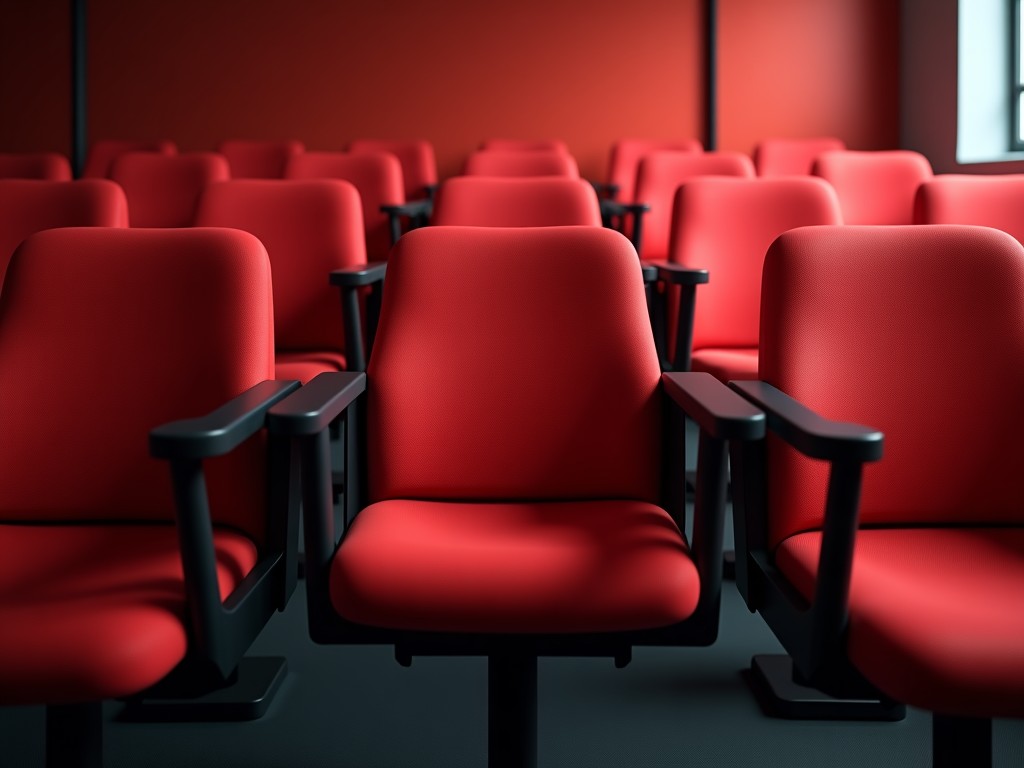
EM-800 classroom chairs with desk. Featuring steel frames, modular tablet arms, and custom row spacing. Ideal for higher education. OEM/ODM manufacturer.
Lecture hall seating systems must withstand continuous use, frequent cleaning, and long-term occupancy while supporting ergonomic comfort and operational efficiency. Maintenance demands directly impact lifecycle costs and facility uptime. This page details the engineering considerations behind easy-maintainable lecture hall seats, focusing on material selection, structural design, and serviceability features that reduce intervention frequency and complexity.
Seat surfaces and frames are constructed from materials chosen for resistance to wear, staining, and microbial growth. High-density polyethylene (HDPE) or polypropylene shells are commonly used for seat and back panels due to their non-porous nature, which prevents liquid absorption and allows wiping with standard disinfectants without degradation. These polymers maintain dimensional stability under repeated load cycles and resist cracking from UV exposure in spaces with significant daylight.
Frame components typically use powder-coated steel or extruded aluminum. Powder coating provides a uniform, chip-resistant barrier against moisture and cleaning agents, while aluminum offers inherent corrosion resistance with lower mass. Both materials support disassembly for part replacement without requiring specialized tools, reducing service time during maintenance intervals.
Maintainability is enhanced through modular construction where seat, back, armrest, and mounting brackets are individual replaceable units. This design isolates failure points—such as a worn pivot mechanism or damaged upholstery—to a single module, eliminating the need to remove entire seating rows during repairs. Quick-release fasteners, often cam-lock or push-button types, allow technicians to disengage components in under two minutes per seat.
Upholstery, when specified, uses replaceable slipcovers made from abrasion-resistant fabrics with reinforced seams. These covers are secured via hidden zippers or hook-and-loop strips, enabling removal for cleaning or replacement without disassembling the underlying foam or frame. Foam cores are molded to exact seat contours and retain shape after compression, minimizing sagging that would otherwise require full unit replacement.
Lecture halls experience cyclic loading, frequent repositioning (in retractable systems), and exposure to humidity variations. To mitigate wear, pivot points in reclining or folding mechanisms use self-lubricating polymer bushings instead of metal-on-metal contact. These bushings eliminate the need for periodic greasing and resist dust accumulation, maintaining smooth operation over tens of thousands of cycles.
Floor-mounted anchors feature stainless steel inserts or nylon sleeves to prevent galling between the seat base and flooring channel. This design reduces fretting corrosion and allows for realignment or replacement of anchors without damaging the subfloor. In retrofit scenarios, adjustable mounting brackets accommodate minor floor irregularities, ensuring even load distribution and preventing premature stress on fasteners.
Surfaces are designed with minimal crevices and smooth transitions to prevent debris accumulation. Seat pans and backs feature rounded edges and draft angles that facilitate wiping and reduce trapping points for dust or spills. Where seams are unavoidable, they are sealed or overlapped to create a continuous cleanable surface.
Antimicrobial additives can be incorporated into polymer shells or fabric treatments upon request, inhibiting microbial growth on high-touch areas. These additives do not affect material strength or color stability and are compatible with hospital-grade disinfectants. All finish options are tested for resistance to common cleaning agents, including alcohol-based solutions and quaternary ammonium compounds, without discoloration or surface tackiness.
While base configurations follow standard lecture hall dimensions, key parameters are adjustable to match project-specific requirements. Seat width, depth, and row spacing can be modified within ergonomic limits to optimize capacity and comfort. Armrests, tablet arms, and power/data integration modules are available as bolt-on accessories that do not compromise the seat’s serviceability.
| Parameter | Typical Range | Notes |
|---|---|---|
| Seat Width | 480–550 mm | Measured at hip contact point |
| Seat Depth | 400–450 mm | Includes lumbar support contour |
| Backrest Height | 380–450 mm | Measured from seat cushion |
| Frame Material | Powder-coated steel or aluminum | Custom colors available |
| Surface Finish | HDPE, polypropylene, or fabric | Antimicrobial option available |
Customization extends to mounting types—fixed, retractable, or telescopic—each engineered for straightforward maintenance access. Retractable systems, for example, include lubrication-free roller guides and accessible drive mechanisms located at aisle ends, minimizing disruption during servicing.
Manufacturing processes include dimensional validation of critical interfaces—such as bolt hole patterns and pivot alignments—to ensure interchangeability of replacement parts across production batches. Load testing simulates 150,000 cycles of occupancy and motion, exceeding typical lecture hall usage over a 20-year lifespan. Finish adhesion and colorfastness are verified under accelerated weathering and chemical exposure protocols.
Each unit receives a unique identifier enabling traceability of materials and production date. This supports efficient warranty claims and facilitates proactive maintenance planning by allowing facilities to track wear patterns across seating zones. Spare parts kits are available for high-wear components, including armrest pads, glides, and mechanism bushings, reducing downtime during repairs.
Easy-maintainable lecture hall seats are particularly valuable in institutions with limited facility staff or high utilization rates, such as universities, conference centers, and medical training facilities. By reducing the frequency and complexity of interventions, these systems lower total cost of ownership through decreased labor expenses, extended service intervals, and minimized operational disruptions during maintenance windows.
The focus on serviceability does not compromise ergonomic performance or structural integrity. Instead, it integrates accessibility into the core design philosophy, ensuring that long-term reliability is achieved through practical, field-tested engineering rather than reactive repairs. For procurement teams evaluating seating solutions, this approach translates into predictable lifecycle costs and sustained user satisfaction.








