
Contact Fumei
No.20 Jiuqiao Road, Shijiang Industrial Area, Jiujiang Town, Nanhai District, Foshan City, China.
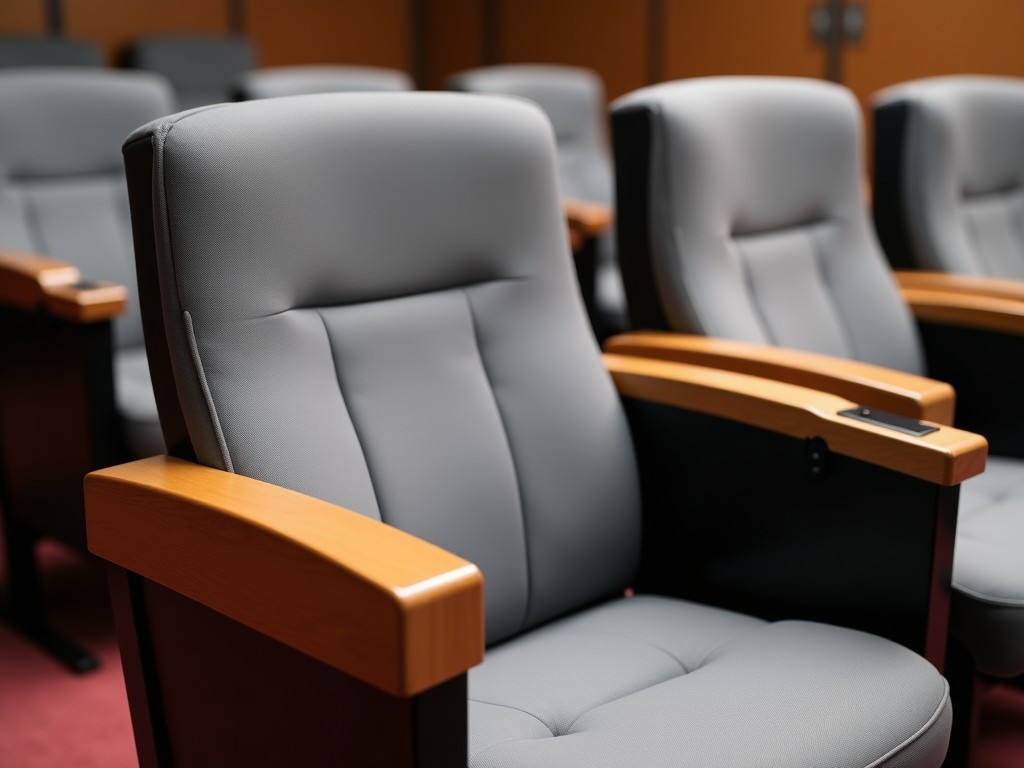
FAC-500 folding auditorium chair. Featuring cold-rolled steel frame, flame-retardant ABS, and anti-collapse lock. Ideal for university hall. B2B wholesale supply.
When selecting seating for large gathering spaces, structural integrity, space efficiency, and long-term usability are primary concerns. Folding auditorium chairs address these requirements through engineered mechanisms that allow rapid deployment and compact storage while maintaining load-bearing capacity and ergonomic support.
These chairs are commonly specified in venues such as conference centers, educational institutions, houses of worship, and multi-purpose halls where fluctuating occupancy demands flexible infrastructure. The ability to reconfigure seating layouts quickly supports dynamic event scheduling without compromising safety or comfort.
The folding action relies on precision-engineered pivot points and locking systems designed to withstand repeated cycling. High-cycle fatigue resistance is achieved through hardened steel pins, self-lubricating bushings, and synchronized dual-arm linkages that prevent racking or misalignment during operation.
Load testing typically validates performance at 150% of rated capacity for 10,000 cycles, ensuring reliability under frequent use. Anti-collapse features include mechanical stops that engage automatically when the chair is in the open position, preventing unintended folding under load.
Seat and backrest modules are often constructed from molded polypropylene or flame-retardant ABS, selected for impact resistance, UV stability, and compliance with fire safety codes such as CAL 133 or BS 5852. These materials maintain dimensional stability across temperature ranges from -20°C to 60°C.
Frame construction commonly uses cold-rolled steel tubing with diameters ranging from 22mm to 28mm and wall thicknesses of 1.2mm to 1.8mm, depending on load requirements. Electrostatic powder coating provides corrosion resistance, with salt spray testing often exceeding 500 hours to ASTM B117 standards.
Alternative materials include extruded aluminum for weight-sensitive applications, though steel remains predominant due to its superior stiffness-to-cost ratio. Frame geometry is optimized to distribute dynamic loads across multiple stress points, minimizing localized deformation during occupancy shifts.
Weight capacity ratings typically range from 120kg to 180kg per seat, validated through static and dynamic load tests per BIFMA X5.1 or EN 16139 standards. Deflection limits are generally kept under 10mm under maximum load to ensure user comfort and long-term durability.
When folded, these chairs achieve a reduced footprint that enables high-density storage. Typical folded dimensions range from 1050mm to 1200mm in height, 350mm to 450mm in width, and 600mm to 800mm in depth, allowing efficient stacking on dollies or in carts.
Deployment time averages under 5 seconds per unit when operated by trained staff, facilitated by gravity-assisted folding and intuitive release mechanisms. Storage density can reach 18 to 22 chairs per linear meter of storage aisle, significantly reducing the space required for inactive inventory.
Optional features include integrated ganging devices for row alignment, under-seat storage baskets, and numbered backplates for seating coordination. These additions are designed to maintain folding functionality while enhancing venue operations.
Manufacturers offer configurable elements to match venue aesthetics and functional needs. Available choices include seat and backrest colors from standardized palettes, frame finishes in matte, gloss, or textured coatings, and optional armrest designs that fold in tandem with the seat.
Upholstered variants use commercial-grade fabrics with abrasion resistance exceeding 100,000 Martindale cycles and stain-resistant treatments. For high-hygiene environments, antimicrobial coatings or wipe-clean vinyl surfaces may be specified.
Mounting compatibility with fixed floor anchors or portable docking systems is evaluated per project requirements. Some models include adjustable glides to accommodate uneven flooring, ensuring stability without damaging finished surfaces.
| Parameter | Typical Range | Notes |
|---|---|---|
| Seat Width | 420mm–480mm | Measured at front edge |
| Backrest Height | 380mm–450mm | From seat to top |
| Folded Depth | 600mm–800mm | Includes footrest clearance |
| Weight Capacity | 120kg–180kg | Static load per seat |
| Folded Height | 1050mm–1200mm | Vertical stack dimension |
Production processes emphasize repeatability through CNC tube bending, robotic welding, and automated powder coating lines. Dimensional tolerances on critical folding components are typically held to ±0.5mm to ensure smooth operation across production batches.
Each chair undergoes functional testing before packaging, including fold/unfold cycles, load verification, and joint alignment checks. Statistical process control monitors key dimensions such as hinge pin alignment and tube ovality to detect drift early.
Packaging methods protect finishes during transit, using corrugated corner guards, stretch wrap, and stacked pallet configurations designed to minimize shifting. Export packaging often includes moisture barriers and edge protectors to meet ISTA 3A standards for consolidated shipments.
Contact our engineering team for project-specific configurations








