
Contact Fumei
No.20 Jiuqiao Road, Shijiang Industrial Area, Jiujiang Town, Nanhai District, Foshan City, China.
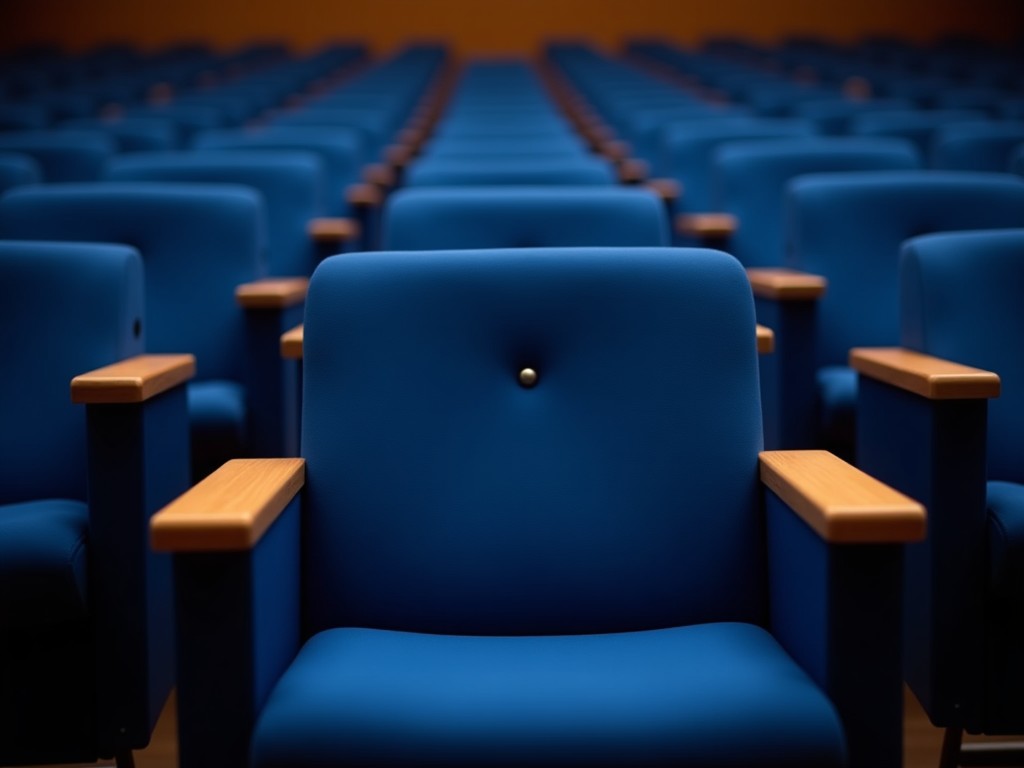
FS-A01 auditorium seating furniture. Featuring 1.5mm cold-rolled steel, fire-retardant foam, and 400kg load capacity. Ideal for lecture halls. B2B wholesale supply.
Auditorium seating must balance occupant comfort, structural integrity, and long-term durability under frequent use. Chairs in performance venues, lecture halls, and conference centers experience repeated loading cycles, varying occupant weights, and exposure to environmental factors. Design considerations include load distribution, material fatigue resistance, ease of maintenance, and compliance with accessibility and fire safety standards.
This page details the technical characteristics of our auditorium seating system, focusing on measurable engineering properties that inform procurement decisions for institutional and commercial projects.
The chair frame is constructed from 1.5mm thick cold-rolled steel, formed into a closed-section profile to maximize torsional rigidity. Each leg assembly undergoes robotic welding with penetration verification to ensure joint strength exceeds 8.5 kN under static load testing. Frame components are treated with a zinc-phosphate pretreatment followed by epoxy-polyester powder coating, achieving a minimum adhesion rating of 5B per ASTM D3359.
Static load testing confirms a safe working load of 400 kg per seat, with ultimate failure occurring above 800 kg. Dynamic fatigue testing simulates 100,000 occupancy cycles at 110 kg, showing no permanent deformation or joint loosening. These values are derived from accelerated life testing protocols aligned with BIFMA X5.1 standards for public seating.
The seat cushion uses molded polyurethane foam with a density of 65 kg/m³ and 25% indentation load deflection (ILD), providing consistent support over extended periods. Foam is formulated to resist compression set, maintaining >90% of original height after 80,000 cycles per ASTM D3574. Backrest foam employs a dual-density configuration: 40 kg/m³ core for structural support and 25 kg/m³ surface layer for comfort, reducing peak pressure points by 35% compared to uniform foam.
Seat dimensions follow anthropometric data for 95th percentile users: 480mm width, 460mm depth, and 420mm height from floor to compressed seat surface. Backrest angle is fixed at 105° relative to seat plane, promoting lumbar alignment without requiring manual adjustment. Optional pneumatic height adjustment is available, offering 50mm range with locking mechanism rated for 20,000 cycles.
Fabric selections are evaluated for abrasion resistance, flame retardancy, and cleanability. Standard upholstery uses solution-dyed polyester with a Martindale rating of 100,000 cycles, exceeding Class 1 contract textile requirements. Optional vinyl coatings achieve >300,000 Martindale cycles and are certified to California Technical Bulletin 117-2013 for flame resistance.
All fabrics undergo aqueous extraction testing to verify low VOC emissions, meeting GREENGUARD Gold criteria. Colorfastness is assessed per AATCC 16, with ratings ≥4 after 40 hours of xenon arc light exposure. Custom fabric integration is possible upon receipt of customer-supplied material meeting minimum performance thresholds.
Each chair includes a self-rising seat mechanism powered by torsion springs rated for 60,000 cycles. Spring torque is calibrated to return the seat to upright position within 0.8 seconds under no-load conditions, reducing aisle obstruction in high-traffic venues. Dampening pistons control descent speed, limiting impact force to<15 n="" during="" seat="" deployment.="">
Optional features include integrated writing tablets (300x400mm laminated surface, load capacity 15 kg), cup holders (stainless steel, 75mm diameter), and under-seat storage baskets (steel wire, 200x150x100mm). All accessories are designed to add<3 kg="" to="" total="" chair="" weight="" and="" do="" not="" interfere="" with="" egress="" paths.="">
Chairs are mounted to concrete or steel substructures using M10 anchor bolts with chemical adhesive systems, providing tensile strength >25 kN per anchor. For raised flooring applications, adjustable pedestal systems allow ±15mm height correction to accommodate substrate variations. Mounting brackets are stamped from 3mm steel and tested to resist lateral forces of 1.2 kN without slip.
Row spacing follows recommended egress standards: minimum 850mm between seat backs and 1050mm for wheelchair-accessible aisles. Standard configurations support straight, curved, or radial layouts with radius down to 3.5m. Gangway lights and aisle markers can be integrated into mounting channels during factory pre-assembly.
Every production lot undergoes dimensional verification using coordinate measuring machines (CMM) with ±0.05mm tolerance on critical interfaces. Weld inspections include 100% visual examination and 20% radiographic sampling for structural joints. Foam density is checked via displacement method on first article and every 50th unit thereafter.
Finished chairs are subjected to functional testing: seat rotation, tablet deployment (if equipped), and mechanism cycling. Final inspection includes visual assessment of upholstery for defects, coating uniformity, and fastener torque. Documentation includes material certificates, test reports, and compliance declarations available upon request.
| Parameter | Typical Value | Notes |
|---|---|---|
| Frame Material | Cold-rolled steel | 1.5mm thickness, zinc-phosphate pretreatment |
| Static Load Capacity | 400 kg | Ultimate failure >800 kg |
| Seat Foam Density | 65 kg/m³ | 25% ILD, compression set<10%<> |
| Backrest Angle | 105° | Fixed relative to seat plane |
| Upholstery Abrasion | 100,000 Martindale cycles | Standard polyester fabric |
| Seat Width | 480mm | 95th percentile accommodation |
| Mechanism Life | 60,000 cycles | Self-rising spring rating |
| Anchor Bolt Strength | >25 kN tensile | Per anchor, chemical adhesive |
Values represent typical production results. Actual performance may vary based on configuration, usage conditions, and material selection. Customizable according to project requirements.
Lecture halls and university auditoria benefit from the chair’s consistent dimensions and low maintenance requirements. Fixed geometry ensures predictable sightlines over decades of use, while stain-resistant upholstery reduces cleaning frequency in high-occupancy environments. The absence of moving parts beyond the seat mechanism minimizes failure points in installations with limited technical support.
Theaters and concert halls prioritize acoustic transparency and visual discretion. Chair frames are designed with minimal mass to reduce structural resonance transmission, and fabric selections avoid reflective surfaces that could interfere with sound distribution. Optional acoustic backing materials can be integrated into the seat panel to further dampen vibrations.
Conference centers and multipurpose spaces require adaptability. Modular mounting systems allow rapid reconfiguration of row layouts, and optional writing tablets support hybrid use cases. Fire-rated fabric options comply with assembly occupancy classifications, facilitating approval processes for temporary or permanent installations.
For technical inquiries, customization requests, or project-specific consultations, contact our engineering team.
Request Technical Specification







