
Contact Fumei
No.20 Jiuqiao Road, Shijiang Industrial Area, Jiujiang Town, Nanhai District, Foshan City, China.
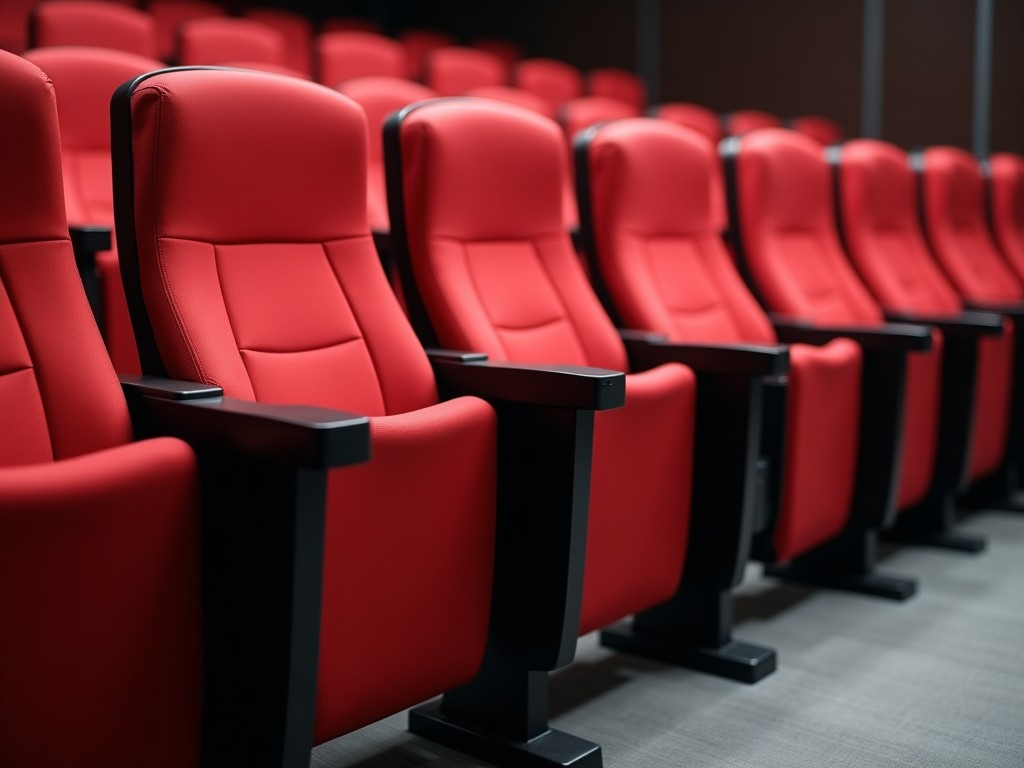
FS-TA01 auditorium seats. Featuring 14-gauge cold-rolled steel, fire-retardant foam, and anti-scratch HPL tablet. Ideal for lecture halls. Factory OEM supplier.
Auditorium seating with integrated tablet arms supports note-taking, device use, and ergonomic positioning in lecture halls, theaters, and conference spaces. The design combines fixed seating stability with functional workspace integration, addressing the need for both comfort and utility in high-occupancy environments. Material selection, mechanism durability, and tablet surface stability are critical factors influencing long-term performance and user satisfaction.
The seat frame is constructed from 14-gauge cold-rolled steel, formed and welded to withstand repeated dynamic loads from sitting, standing, and tablet arm actuation. Each frame undergoes stress analysis to ensure deflection remains under 2mm under a 150kg dynamic load at the seat center. The tablet arm mechanism uses a 5-bar linkage system with hardened steel pivots and self-lubricating bushings, enabling smooth rotation and locking in both stowed and deployed positions. Arm deployment force is calibrated to 8–12N, preventing accidental movement while allowing single-hand operation.
The tablet surface measures 300mm wide by 400mm deep, providing sufficient area for a laptop, notebook, or tablet device. Surface material options include high-pressure laminate (HPL) with 0.8mm thickness, resistant to scratches, stains, and light impacts per EN 438 standards. The arm pivots 180 degrees, allowing the tablet to be positioned over the lap or stored vertically against the seat back when not in use. A gas-assist spring counterbalances the arm weight, reducing user effort to less than 5N during deployment and stowing.
Seat cushions use molded polyurethane foam with a density of 65kg/m³ and 25% ILD, maintaining shape retention after 100,000 cycles per ASTM D3574. Back cushions are 45kg/m³ density foam, contoured to support lumbar alignment. Upholstery options include polyester, vinyl, or wool blends, each tested for abrasion resistance (>50,000 Martindale cycles) and flame retardancy (CA TB 117-2013). Seam stitching uses bonded polyester thread to prevent fraying under continuous use.
Seating units are designed for floor mounting via four M10 anchor bolts per seat, with a recommended torque of 45Nm. The mounting bracket includes adjustable leveling feet to compensate for uneven flooring, ensuring consistent seat height across rows. Row-to-row spacing (aisle to back) follows a minimum of 900mm to meet egress requirements, with seat width typically 550mm centerline-to-centerline. Backrest recline angle is fixed at 105 degrees, optimized for viewing comfort without compromising egress safety.
| Component | Standard Option | Available Alternatives |
|---|---|---|
| Frame Steel | 14-gauge cold-rolled | 12-gauge for high-traffic zones |
| Tablet Surface | 0.8mm HPL | Phenolic resin, stainless steel veneer |
| Upholstery | Polyester fabric | Vinyl, wool blend, antimicrobial coated |
| Arm Mechanism | Gas-assist spring | Torsion spring, manual lock |
| Floor Anchor | M10 bolt with leveling foot | Chemical anchor, welded plate |
Customization extends to tablet arm length (adjustable from 250mm to 350mm reach), cup holder integration (optional 70mm diameter recess), and seat numbering systems (laser-etched or metal plaques). Row curvature can be accommodated through tapered wedge brackets, allowing radial or fan-shaped layouts without compromising mechanism alignment. All custom options are evaluated for load impact and mechanism clearance during engineering review.
Each seating unit undergoes functional testing before packaging, including 50 cycle tablet arm deployment tests, 150kg static seat load verification, and upholstery seam strength checks. Frame welds are inspected via magnetic particle testing for surface-breaking defects. Final assembly includes torque validation of all fasteners and functional verification of arm locking positions. Packaging uses corner protectors and stretch film to prevent frame deformation during transit, with drop testing performed on packaged units per ISTA 3A standards.








