
Contact Fumei
No.20 Jiuqiao Road, Shijiang Industrial Area, Jiujiang Town, Nanhai District, Foshan City, China.
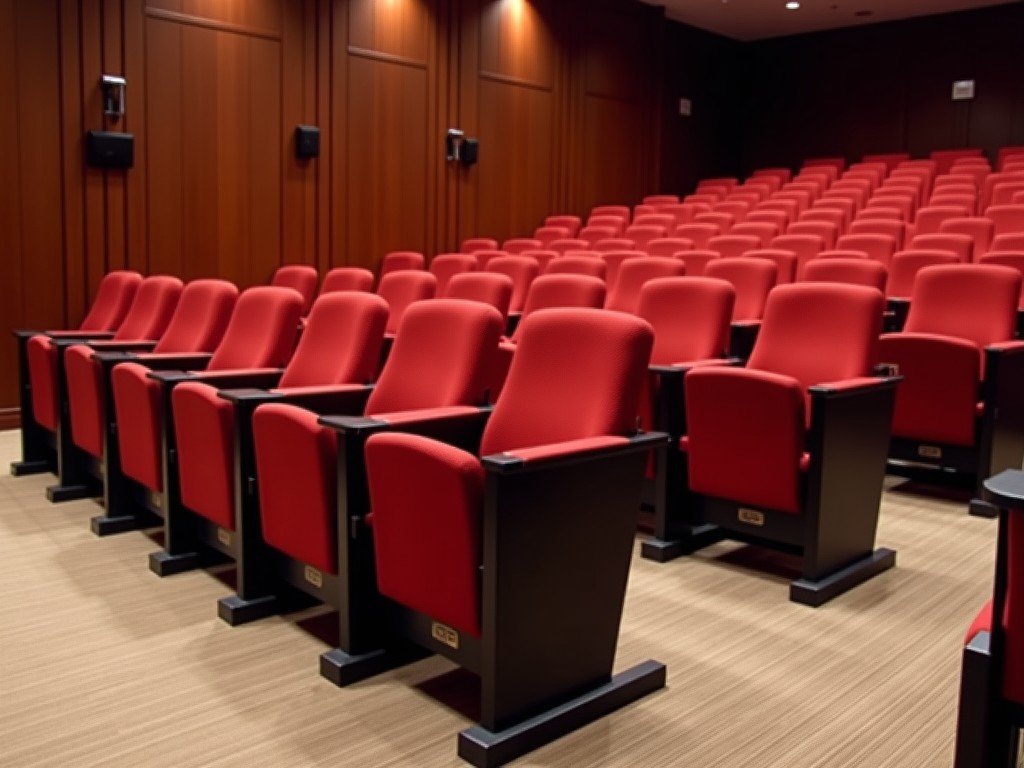
FS-901 lecture hall seats. Featuring 350MPa steel frames, fire-retardant foam, and anti-rebound dampers. Ideal for university projects. OEM bulk supply.
Lecture hall seating must support prolonged use while maintaining structural integrity under dynamic loads from occupant movement. Modern designs prioritize space efficiency, sightline optimization, and durability in high-traffic educational environments. This page details the engineering considerations for OEM-supplied lecture hall seating systems intended for bulk procurement by institutions and contractors.
Key factors include frame material selection, mechanism reliability, upholstery wear resistance, and compliance with accessibility and fire safety standards. Understanding these elements enables informed decisions that reduce long-term maintenance costs and ensure user safety.
The primary frame must resist permanent deformation under repeated dynamic loading. Steel frames with a minimum yield strength of 350 MPa are standard for fixed installations, while aluminum alloys (6061-T6) are used where weight reduction is critical, such as in retractable systems. Frame thickness typically ranges from 2.0 to 3.5 mm depending on span and load requirements.
Welded joints undergo non-destructive testing to detect porosity or incomplete fusion. Bolted connections use grade 8.8 fasteners with torque specifications to prevent loosening from vibration. Load testing follows ANSI/BIFMA X5.1 standards, validating performance under 110 kg seat load with 200,000 cycles of dynamic force simulation.
Corrosion protection is achieved through powder coating with a minimum thickness of 80 μm or hot-dip galvanizing for humid environments. Frame design includes reinforced gussets at armrest and leg junctions to distribute stress concentrations.
Lecture hall seating mechanisms fall into three categories: fixed, tip-up, and retractable. Fixed systems use rigid mounts with no moving parts, offering maximum durability. Tip-up seats incorporate a spring-assisted pivot that returns the seat to upright position when vacated, reducing aisle obstruction.
Retractable systems employ motorized or manual linkage to fold entire rows into stored positions. Mechanism life is rated in cycles: tip-up mechanisms typically exceed 150,000 cycles before spring fatigue, while retractable systems are designed for 25,000 full extension-retraction cycles. Lubrication points use PTFE-based greases to resist dust accumulation.
Fail-safe features include mechanical stops to prevent over-rotation and anti-rebound dampers that control seat return speed to under 0.5 seconds, minimizing impact noise and pinching hazards.
Seat and backrest surfaces must resist abrasion, staining, and microbial growth. Common materials include polyester-coated vinyl with a Martindale abrasion rating of ≥100,000 cycles, solution-dyed acrylic fabrics (UV-stabilized for ≥500 hours exposure), and polyurethane foams with density between 35–50 kg/m³ for consistent cushioning over time.
Fire retardancy compliance is achieved through inherent fabric treatments or chemical back-coating meeting CAL 117, BS 5852, or NFPA 260 standards. Seam construction uses double-stitching with UV-resistant polyester thread (size 69) to prevent unraveling under stress. Antimicrobial additives are available upon request for high-hygiene environments.
Colorfastness is tested per AATCC TM16, with ΔE < 4 after 20 hours of xenon arc exposure. Custom color matching is possible using Pantone references, subject to minimum order quantities based on dye lot consistency.
Optimal viewing angles require a minimum 15° downward gaze from eye level to the presentation surface. Seat height is typically 450 mm ±10 mm to accommodate the 5th to 95th percentile user thigh thickness. Seat depth ranges from 420–480 mm, with contoured fronts to reduce pressure on the popliteal area.
Row spacing (rise and tread) follows accessibility guidelines: minimum 900 mm clear width for aisles, with riser heights between 150–200 mm and tread depths of 750–800 mm to ensure comfortable ingress/egress. Armrest height is set at 200–250 mm above seat level to support forearm alignment without shoulder elevation.
Modular designs allow for adjustable seat width (480–580 mm) to accommodate diverse body types while maintaining code-compliant egress. Gangway lighting integration points are pre-drilled during manufacturing to avoid post-installation modifications.
OEM procurement requires alignment with architectural specifications, including custom armrest tablets, power/data port locations, and gangway lighting cutouts. Frame drilling templates are provided based on CAD models to ensure field installation accuracy within ±2 mm tolerance.
Upholstery can be customized with client-specific patterns or logos using sublimation printing on compatible fabrics. Foam firmness is adjustable via density gradients—softer front edge for thigh support, firmer rear for lumbar alignment. Optional features include integrated writing tablets (laminate or melamine), cup holders (stainless steel or reinforced polymer), and aisle lighting conduits.
Tooling changes for custom components incur setup fees but are amortized over orders exceeding 200 units. Prototypes are available for validation before full production, with lead times typically 4–6 weeks after design freeze.
Incoming material inspection includes mill certificates for steel tensile strength and coating thickness gauges for pretreatment layers. Each mechanism undergoes functional testing: tip-up force measurement (target: 8–12 N to initiate lift), retractable system alignment checks, and noise level validation (<55 db="" during="" operation="">
Finished goods are sampled for dimensional accuracy (seat height, width, depth), upholstery adhesion (cross-hatch test per ASTM D3359), and fire resistance (vertical flame test). Packaging integrity is validated through drop testing (ISTA 3A) and vibration simulation to simulate transit stresses.
Traceability is maintained via batch numbers linked to material certificates, inspection records, and production logs. Clients receive quality documentation including test reports and material safety data sheets (MSDS) upon request.
Seating units are packed in stackable configurations to optimize container utilization. Standard packaging includes corrugated cardboard sleeves with corner protectors and stretch film wrapping. For long-haul transport, wooden crates with ISPM 15 compliance are available, featuring internal bracing to prevent shifting.
Each pallet holds 20–30 units depending on model dimensions, with load distribution calculated to prevent exceeding floor weight limits. Labeling includes QR codes linking to installation manuals and warranty terms. Container loading plans are provided to maximize 40ft HC utilization, typically achieving 60–80 units per container.
Export documentation includes fumigation certificates, origin declarations, and IEC 62304 compliance files for electronic components (if applicable). Lead time from order confirmation to FOB port is 8–12 weeks for standard models, extending to 14–16 weeks for fully customized orders.
| Parameter | Fixed System | Tip-Up System | Retractable System |
|---|---|---|---|
| Frame Material | Steel (Q235) | Steel (Q235) or Aluminum | Steel (Q345) |
| Load Capacity (Static) | 200 kg | 200 kg | 250 kg (per seat) |
| Mechanism Life (Cycles) | N/A | 150,000 | 25,000 |
| Upholstery Abrasion (Martindale) | ≥100,000 | ≥100,000 | ≥80,000 |
| Fire Rating | CAL 117, NFPA 260 | CAL 117, NFPA 260 | CAL 117, NFPA 260 |
| Typical Lead Time | 8–10 weeks | 8–12 weeks | 12–16 weeks |
Lecture hall seating is specified in university auditoriums where sightline integrity and acoustic transparency are critical. Fixed systems are preferred in permanent installations with minimal reconfiguration needs, such as medical school lecture halls or engineering faculties. Tip-up designs dominate in multi-purpose halls requiring rapid conversion to flat floors for exhibitions or examinations.
Retractable systems serve corporate training centers and convention venues where space utilization efficiency justifies the higher mechanism complexity. These installations often integrate with HVAC and lighting controls via building management systems. Accessibility compliance (ADA, EN 17210) is addressed through removable seats or dedicated wheelchair platforms integrated into the row structure.
Religious institutions and government conference centers frequently specify custom finishes to match interior design schemes, including wood veneer armrests or fabric patterns reflecting organizational branding. Outdoor semi-covered installations (e.g., amphitheaters) use marine-grade stainless steel frames and UV-stabilized fabrics to resist environmental degradation.








