
Contact Fumei
No.20 Jiuqiao Road, Shijiang Industrial Area, Jiujiang Town, Nanhai District, Foshan City, China.
Affordable advanced auditorium seating furniture wholesale - Bulk Supply and Specification Guide Unit price and service life diverge when auditorium seats see repeated occupancy, rapid turnover betwee
Unit price and service life diverge when auditorium seats see repeated occupancy, rapid turnover between events and frequent cleaning. A lower quotation can reflect a lighter frame, thinner foam or upholstery that shows wear sooner; each may pass a showroom review but create repair work once a venue is in daily use. For importers and purchasing managers working to a launch date, the useful comparison is the complete seat specification, the production route and the time needed to repeat the approved sample.
Unit price settles the question only after the project fixes seat width, row layout, upholstery grade, arm configuration and packing method. Those choices affect material yield, welding and assembly time, as well as how many cartons fit into a shipment. A stable specification also makes a reorder easier to schedule: fewer late changes mean less disruption to production planning and less risk that the delivered seats differ in feel or appearance from the approved reference.
| Specification area | Typical project range or option | Buyer consideration |
|---|---|---|
| Seat width | Often 480–560 mm, subject to the selected model | Confirm the installed width against aisle clearance, row count and venue drawings. |
| Frame construction | Formed steel supports with welded joints; coating selected for indoor service | Joint geometry and coating coverage influence stiffness, appearance and maintenance needs. |
| Seat and back cushioning | Molded or cut foam, with thickness and firmness set by the approved model | Compare seated feel and recovery after use; foam choice changes material cost and seat profile. |
| Upholstery and finish | Fabric or other specified upholstery; powder-coated metal finish | Cleaning frequency, abrasion exposure and colour-match requirements determine the practical grade. |
Final dimensions depend on the selected model and venue drawing. Row pitch, aisle access and floor fixing must be resolved before production; changing them after tooling or cutting plans are set can add cost and move the dispatch window.
In venues with frequent audience changes, complaints tend to cluster around loose fasteners, noisy or uneven seat return, compressed cushioning and upholstery that scuffs at contact points. Those issues have different causes. A seat that shifts may need tighter control of bracket alignment and fastening; a return mechanism that feels inconsistent calls for checks across repeated open-and-close cycles. Foam that loses its shape points back to its density and profile, while fabric wear depends on the specified construction and cleaning routine.
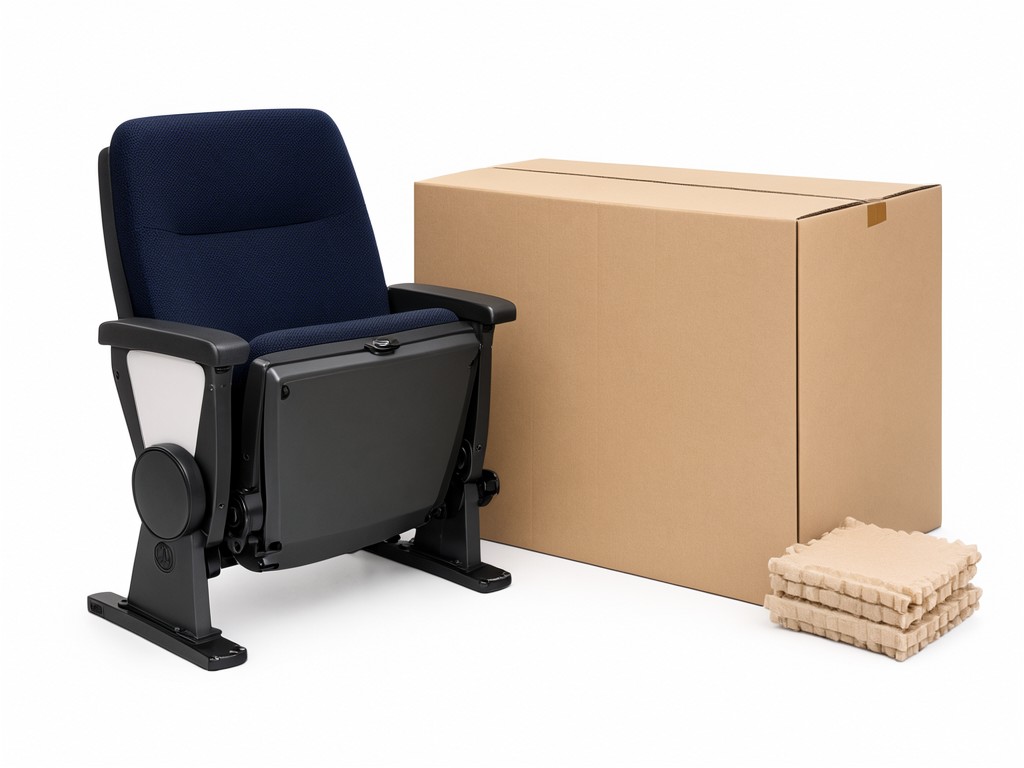
Performance checks should match the intended use rather than rely on appearance alone. Production inspection can compare key dimensions, check welds and coating coverage, verify fastener torque, and operate folding seats through repeated cycles. A pre-production sample gives the buyer a reference for seating feel, return action and upholstery appearance. Confirming that reference before a bulk run reduces the chance of disputes over acceptable firmness or finish variation after the order ships.
Two suppliers quoting the same specification may use different production controls. The difference shows up in seat-to-seat alignment, foam shape, upholstery tension and the fit of moving parts. Buyers should agree on the approved sample, inspection points and acceptable appearance range before the order enters full production.
A repeatable welding fixture helps keep brackets and support members in position across a batch. Inspect weld appearance, mounting-hole alignment, coating coverage and fastener security. For folding models, consistent return action matters as much as a clean static appearance.
Controlled cutting or molding keeps cushion profiles closer to the approved reference. Check cover seams, tension, colour under consistent lighting and the fit around corners. A sample sign-off gives both sides a clear basis for evaluating production pieces.
A fixed frame design and established fixtures reduce setup work on repeat orders; a new seat geometry can require drawing review, fixture adjustment and sample approval before batch production. Those preparation costs are spread across the order, so larger quantities can lower the tooling and setup share per seat. They do not remove the time needed to form frames, upholster cushions, inspect finished units and pack cartons.
For a fixed launch date, provide the seat count, delivery destination, installation layout and approved specification early. The factory can then confirm material availability, production capacity and a realistic dispatch window before booking freight. Splitting an order into staged releases may support phased installation, but separate packing and shipment plans can increase handling cost and require earlier schedule coordination.
Long-distance freight exposes seat frames and upholstery to carton movement, stacking pressure and repeated handling. Packaging should protect exposed metal edges, cushion faces and projecting brackets, while keeping each unit stable inside the carton. The packing plan also needs to reflect container loading and the receiving site's ability to unload and store bulky furniture.
Before dispatch, confirm carton identification, seat quantities per package and any assembly or handling notes required at destination. A packaging sample or packing photographs can help verify protection and labelling before the full shipment is released.
Use a pre-production sample to review dimensions, seated feel, upholstery finish and seat return before approving batch production. Share the target quantity and required delivery date with the sample request so tooling, production and freight timing can be assessed together.
Request a seating sample and discuss your wholesale schedule








