Contact Fumei
No.20 Jiuqiao Road, Shijiang Industrial Area, Jiujiang Town, Nanhai District, Foshan City, China.
affordable auditorium seating for schools distributor: Specification, Ordering and Quality Notes Balance and load analysis shows why school auditorium seating needs more than a low unit price: frame g
Balance and load analysis shows why school auditorium seating needs more than a low unit price: frame geometry, floor fixing and seat-return action all affect how a row behaves through daily assemblies. For a distributor qualifying a second source, the useful comparison is the approved configuration, its inspection points and the consistency of repeat batches.
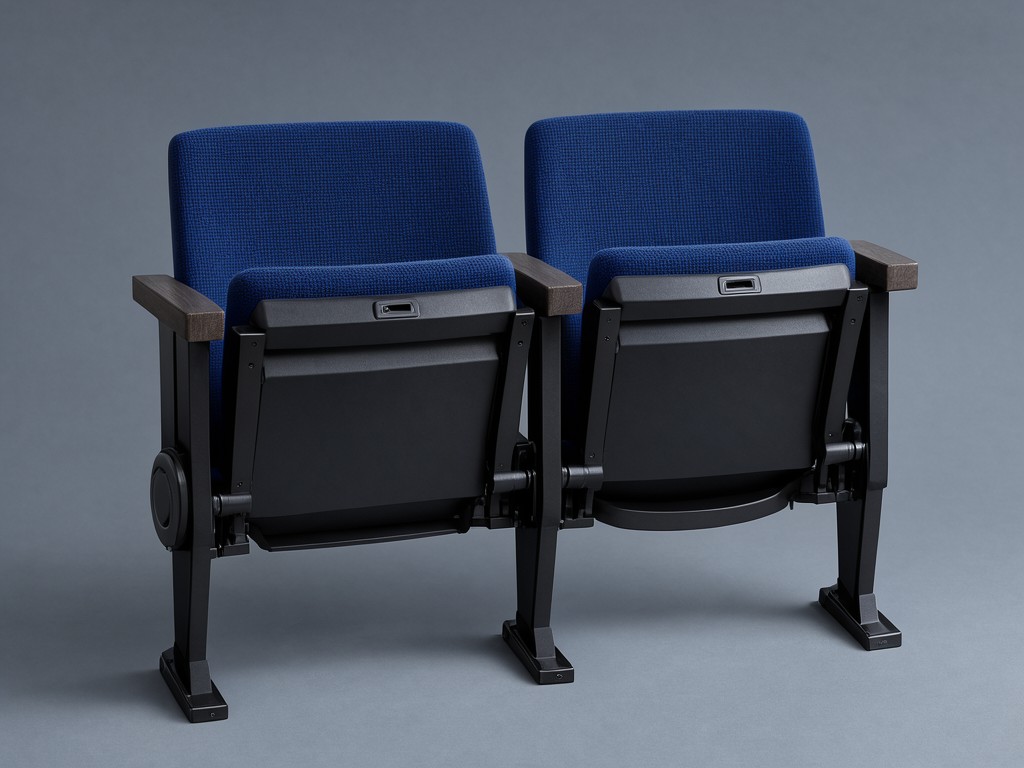
A fixed or tip-up seat must support repeated entry and exit without rocking at the floor connection. In a tip-up model, the seat pan should return without a hard slam; hinge alignment and spring selection influence both noise and user effort.
The first complaints tend to identify a specific weak point: loose anchors where the floor substrate or fixing method was not confirmed, squeaks at a dry or misaligned pivot, and cracked plastic near a mounting point after repeated impact. Upholstered models add different wear points, including fabric abrasion at aisle edges and foam compression in the main sitting zone. Match the construction to the school's cleaning routine and expected use rather than paying for options that do not address those conditions.
The interface between parts determines whether a seat feels firm or develops movement after installation. A typical production route cuts and bends steel tube, welds the frame, prepares and powder-coats the metal, then fits molded or upholstered seat and back components with the specified pivots and fixings.
Weld-jig control helps keep bracket spacing and row alignment consistent; coating thickness and coverage affect appearance and protection at edges and joints. For molded polypropylene parts, stable material and mold conditions help limit variation around screw points and contours. Upholstered options depend on repeatable foam cutting, fabric tension and attachment. A factory check should cover dimensions, weld appearance, coating coverage, fastener fit and tip-up movement on the approved sample configuration.
Installation rule: confirm floor construction, fixing points, aisle layout and row pitch before production release. A sound chair-frame specification cannot compensate for an unsuitable anchor or an unverified site layout.
Treat the figures below as planning ranges, not a substitute for a project drawing. Seat width, row pitch and overall depth interact with aisle width, room capacity and the chosen mounting arrangement.
Set row pitch and seat centres from the approved plan; confirm aisle and access clearances before fixing dimensions.
Choose fixed or tip-up construction. Pivot and return components must match the seat pan and intended use.
Select molded surfaces or upholstery, frame colour and end-panel details against the cleaning and branding brief.
| Parameter | Typical planning range or option | Confirm before order |
|---|---|---|
| Seat width | About 450–520 mm, depending on arm and end-panel design | Seat-centre spacing and room capacity drawing |
| Seat height | About 430–470 mm from finished floor | Finished floor level and user requirements |
| Row pitch | Often planned around 850–1,000 mm | Aisles, access route and local project requirements |
| Unit weight | Roughly 10–18 kg per place, depending on frame and upholstery | Final configuration and packing method |
| Main materials | Welded steel frame; molded polypropylene or upholstered seat and back | Material, colour, surface and component sample approval |
Colour changes and upholstery selection are usually simpler than changes to frame geometry or molded-part tooling. If a custom width or mounting point is required, approve a drawing and physical sample before the distributor commits to a project quantity.
Deflection under load governs comfort and perceived stability, but a product description alone does not establish suitability for every building or installation.
For an OEM programme, the buyer supplies the controlled drawing, finish schedule, label requirements and packing instructions; the factory builds to that approved definition. ODM starts from an existing seating platform, then applies agreed changes such as fabric, frame colour, end-panel treatment or branding.
A second-source approval should record more than a product name. Keep the signed drawing, bill of materials, finish sample, approved seat-return feel, carton layout and inspection points together as the reference set. Changes to a mold, weld fixture or mounting pattern need buyer review because they can affect fit across a row or compatibility with replacement parts.
Private-label marks can usually be placed on agreed labels or panels, subject to artwork files and placement confirmation. A production sample provides a practical check for colour, logo scale, assembly access and the visible finish before a full release.
Repeat-order consistency depends on controlled revisions and traceable components, not just a matching colour name. Maintain the model code, drawing revision, material choices, finish reference and packaging specification with each purchase order. Batch identification on cartons helps the distributor separate incoming lots and investigate a mismatch without relying on visual memory.
Before confirming replenishment, check whether the original upholstery, molded parts or branded labels remain available in the approved version. If a component must change, request a documented deviation and sample review before shipment. Export packing should protect coated edges, seat surfaces and projecting hardware; the carton arrangement should also suit the buyer’s storage and handling equipment.
Routine checks can catch movement before it becomes a row-wide complaint. Inspect floor fixings, exposed weld areas, pivots and fasteners at intervals set by the facility; tighten or replace parts according to the approved installation and service instructions.
Use a soft cloth and a cleaner confirmed as compatible with the seat material and finish. Abrasive pads and unverified solvents can dull plastic, mark powder coat or damage upholstery. Store boxed units dry, off the floor and away from sharp edges or sustained pressure on seat pans. Keep replacement hardware identified by model and revision so service parts match the installed assembly.
Yes. Request a sample in the intended frame, seat and finish combination. Review dimensions, seat-return action, visible welds, coating and assembly details against the project drawing before approval.
An existing model with a standard finish generally avoids new tooling costs. Custom molded parts, special frame geometry, non-standard upholstery or dedicated printed packaging can change the minimum quantity; confirm the setup and repeat-order terms for the selected scope.
Provide the seating plan or row schedule, target seat centres, mounting conditions, preferred materials and finish, quantity, branding artwork and destination packaging requirements. Flag any site fixing or access constraints before the specification is costed.
Request a sample to qualify the construction and finish before adding a second source. Share the project drawing and target configuration through the sample-request contact form.