
Contact Fumei
No.20 Jiuqiao Road, Shijiang Industrial Area, Jiujiang Town, Nanhai District, Foshan City, China.
Affordable space saving lecture hall chairs factory: Specification, Ordering and Quality Notes Two suppliers quoting the same specification can still deliver chairs with different seat comfort, foldin
Two suppliers quoting the same specification can still deliver chairs with different seat comfort, folding action and batch consistency. For a private-label order, compare the frame, seat return mechanism and inspection plan alongside unit price; those choices shape replacement rates and warranty exposure.
| Configuration | What the buyer pays for | Fit for use |
|---|---|---|
| Fixed seat and back | Fewer moving parts and a lower initial component cost. The occupied row depth remains in place between sessions. | Rooms with a set layout and little need to clear floor space between classes. |
| Tip-up seat with a fixed back | A return mechanism adds parts and assembly checks. The seat moves upright when unoccupied, so the clear passage can be wider within the same row layout. | Lecture rooms with frequent entry and exit or a need to clear the floor between bookings. |
| Tip-up seat with buyer-matched upholstery and finish | More control over feel and visual match, with added material and batch approval requirements. | Private-label programs that need repeat orders to match an approved sample. |
A low quote often comes from thinner frame sections, less controlled foam feel or a simpler return assembly. Those savings can disappear if seat movement becomes noisy, a weld needs repair or replacement upholstery differs visibly from the first shipment.
Before comparing quotations, confirm the same seat and back dimensions, row-mounting points, finish, upholstery and packing method. A price comparison is useful only when those details match.
Tip-up seating saves space through the seat pivot, not by reducing the usable sitting area. Pivot position, return force and seat clearance determine whether the seat moves smoothly and parks without striking the frame. A stronger return action is not automatically better: if it closes too quickly, the movement can feel abrupt and create noise in a quiet teaching room.
Approve a complete chair sample before bulk production. Record the seat feel, upright position, fabric or finish colour, frame dimensions and mounting points as the reference for repeat orders.
Tube size, weld placement and pivot fit affect frame stability and seat movement. Factory checks can compare key dimensions with a fixture, review weld appearance and cycle a sample seat against the buyer-approved action.
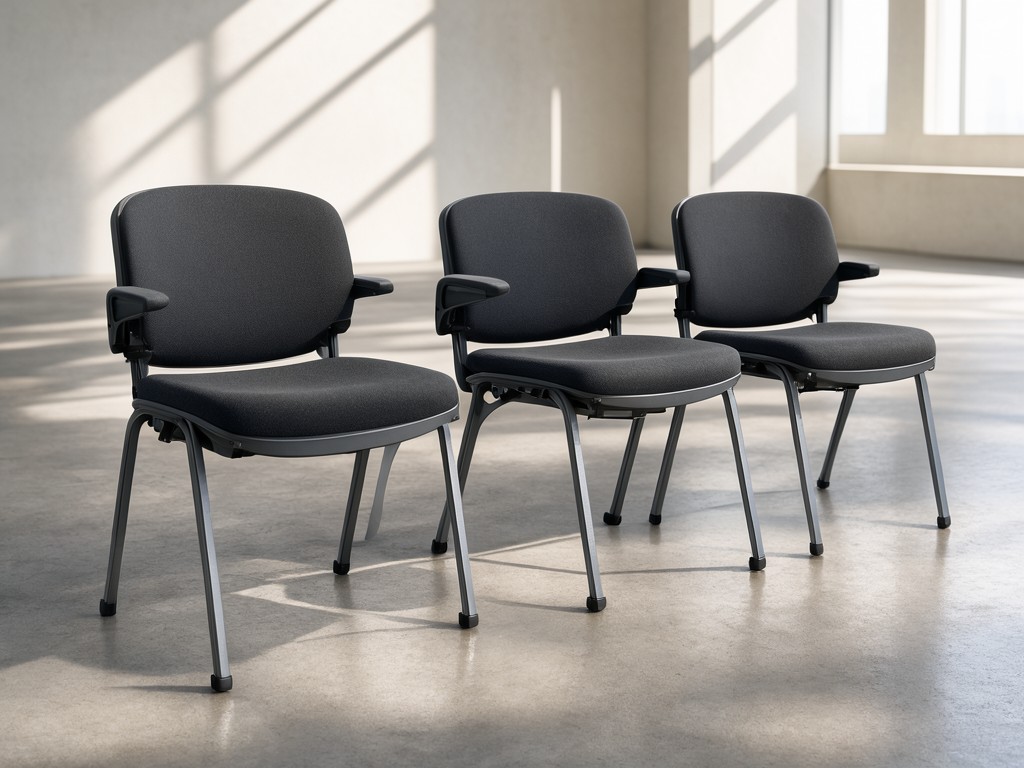
Foam thickness and firmness affect comfort over a long lecture; upholstery tension and colour control affect the look across a room. Retain approved material references and compare production samples by lot to catch visible drift before packing.
Unit price and service life diverge when the first batch sets no measurable reference. Check seat width, back height, mounting-hole position and overall finish against the approved drawing or sample. A small change in any of these can complicate installation across a large lecture room.
For universities and training centres with closely spaced rows, a tip-up seat can recover aisle clearance when a lecture ends and students leave together. The benefit depends on the room plan: row pitch, access route and mounting layout still need approval before production.
A repeatable chair specification also helps distributors manage replacement orders. Matching frame finish, upholstery, foam feel and seat dimensions to the approved batch reduces visible variation across phased installations. The best cost choice is the configuration that limits service calls and warranty claims over the planned order volume, not simply the lowest chair price.
Private-label buyers can usually specify finish and branding around an existing frame and seat design. Keeping the established structure helps avoid new tooling and keeps the order closer to the factory’s proven assembly sequence.
A logo change rarely affects the chair structure; a change to the seat profile or fixing pattern can. Send artwork in a production-ready format and identify its placement on the chair or packaging. Confirm any finish or material change against the sample before approving the full batch.
Orders using an existing frame, pivot and seat design avoid the development steps tied to new geometry. Custom colours or upholstery can still affect the schedule because materials may require separate sourcing and approval. Confirm the order quantity, destination, packing method and branding scope before requesting a firm production window.
For repeat batches, retain the approved drawing, sample details, finish reference and carton artwork with the purchase specification. Ask the factory to check production dimensions and appearance against those references before shipment; this gives the next order a practical comparison point and reduces avoidable mismatch claims.
Send the target chair specification, logo files, finish preferences and expected order quantity for a review against the existing construction. We can identify which details fit the standard design and which may affect sampling, tooling or timing.
Request an artwork and branding review







