Contact Fumei
No.20 Jiuqiao Road, Shijiang Industrial Area, Jiujiang Town, Nanhai District, Foshan City, China.
custom college lecture hall seats supplier - Bulk Supply and Specification Guide A repeat-order seat program starts with a controlled design: agreed row geometry, floor fixing details, comfort targets
A repeat-order seat program starts with a controlled design: agreed row geometry, floor fixing details, comfort targets and a sample that represents the production build. Buyers reduce warranty disputes when drawings, tolerances and finish references are approved before materials are released.
Treat the approved drawing and signed-off sample as linked controls. A change to foam, upholstery, arm style or tablet hardware can alter feel, clearances or installation details even when the seat looks similar.
| Design choice | Use effect | Agree before production |
|---|---|---|
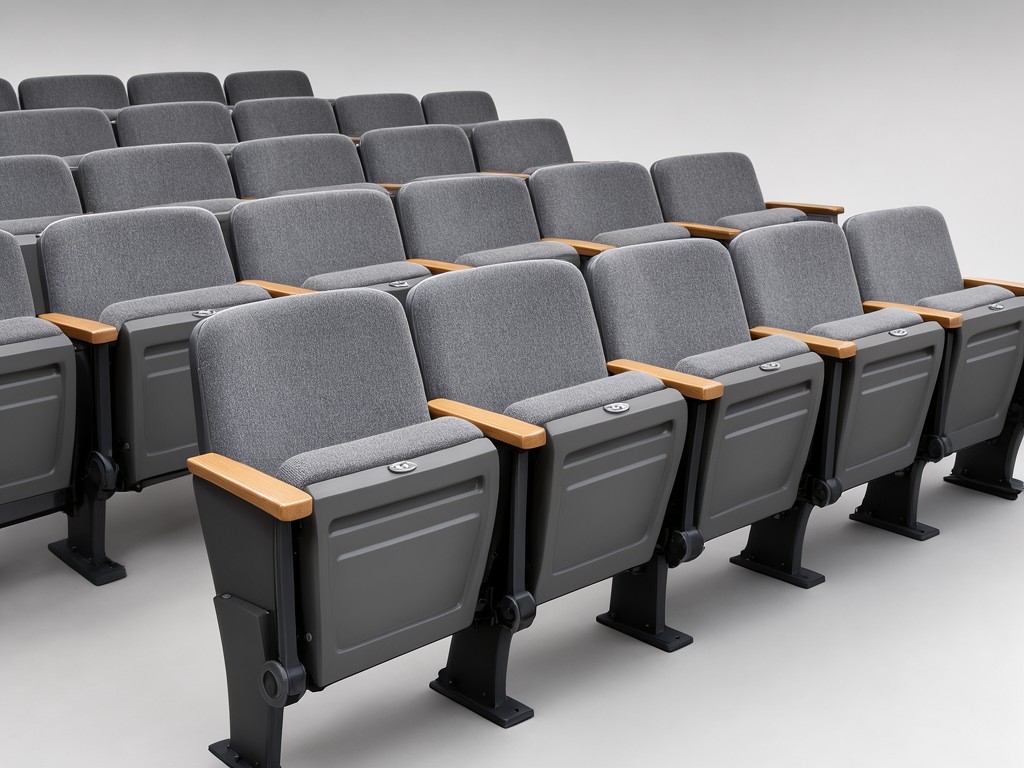
| Tip-up seat with a defined return mechanism | Controls aisle clearance and the effort and sound of seat return. | Return action, stop position, operating cycle and acceptable noise. |
| Foam profile and upholstery tension | Shape, support and surface feel depend on both foam geometry and cover fit. | Approved sample, foam specification, seam placement and fabric reference. |
| Pedestal spacing and floor attachment | Affects alignment across the row, stability and the fit to site conditions. | Mounting drawing, floor build-up, fixing method and site-set tolerances. |
Balance and load analysis shows why seat performance cannot be judged from the upholstery alone. A long lecture session exposes hard edges, shallow support and excess pressure points; repeated seat return exposes loose pivots, inconsistent stops and contact noise. For procurement, compare the full assembly against the intended row layout, not just the appearance of an individual chair.
Set dimensional acceptance points on the approved drawing: seat and back envelope, center-to-center spacing, arm position, tablet clearance where fitted, and floor fixing locations. Project tolerances should reflect the building survey and installation method rather than an assumed universal seat dimension.
Consistency depends on the parts meeting at the same points from unit to unit. A typical build uses formed and welded steel supports, a coated metal finish, a seat-return assembly, shaped foam, upholstery and project-specific arm or writing-table components. The sequence usually runs from metal cutting and forming through welding, surface preparation and coating, followed by upholstery work, assembly and final inspection.
Weld location and fixture control affect frame alignment. If a frame sits out of square, installers may have to force the row into position, which can transfer stress to fixings or leave visible gaps. A repeatable welding fixture, reference dimensions on the drawing and a first-article fit check help catch that issue before the order moves into full assembly.
A finish sample controls colour and texture, but it does not replace a construction sample. Approve both when the order depends on a specific sit feel, seam layout, arm profile or return action.
Foam density alone does not define comfort. Thickness, contour, compression behaviour and the way the cover is tensioned all change the result. Buyers should compare a representative assembled sample and record the selected foam and upholstery references so a later batch does not substitute a similar-looking material with a different feel.
A complaint about wobble, uneven rows or poor comfort often traces back to a specification gap rather than a single defective part. These assumptions create avoidable cost at approval and installation:
Record deviations in writing and route them through drawing revision and sample re-approval. Verbal substitutions are difficult to audit when a second shipment has a different finish or feel.
The first approval should lock the interface dimensions and visual references; decorative choices come after those controls. A change in seat width, arm arrangement or tablet position can affect row spacing, fixing locations and access. A colour or embroidery change may leave the frame geometry untouched, but still requires a clear artwork and material approval.
| Custom item | Specification input | Limit or approval point |
|---|---|---|
| Upholstery and colour | Fabric reference, colour target, direction of pattern and seam layout. | Approve a physical reference; colour appearance can vary with material and light. |
| Frame and coating | Frame finish, sheen, texture and any exposed-metal details. | Confirm colour and surface appearance on a finished part, not a screen image alone. |
| Tablet, arm or accessory | Mounting side, clearance, folded position and hardware finish. | Check against adjacent-seat movement, aisle clearance and the room layout. |
| Logo or identification mark | Vector artwork, approved colours, position and finished size. | Review a placement proof and confirm the application method before the production run. |
A repeatable frame and upholstery specification suits phased procurement when room geometry stays consistent. Fewer variants simplify sampling, spare-part identification and reorder control.
Custom row geometry, accessories or branding can fit a particular room plan, but each variation adds approval work and may affect setup quantities. Separate variant codes and drawings before ordering.
Tooling or fixture changes may be needed when a requested profile alters formed metal parts or mounting interfaces. Confirm any one-time setup cost, sample timing and repeat-order implications in the quotation rather than treating every change as a finish selection.
Inconsistent row spacing, coating marks, loose hardware and uneven return action are easier to prevent when acceptance points are tied to the approved file set. The production record should identify drawing revision, material references, sample approval and any permitted substitutions.
A practical inspection plan can include dimensional checks on frame and mounting points, visual review of welds and coated surfaces, upholstery seam and cover-fit inspection, hardware checks, and operation checks on the tip-up mechanism. Any load or cycle test should follow the agreed project protocol; buyers should specify the setup and acceptance criteria rather than rely on an undefined pass/fail claim.
For repeat orders, retain an approved reference sample or controlled material swatches, plus inspection records tied to the batch. A visual match alone cannot confirm that foam, mechanism parts or fixing details stayed unchanged.
Define the inspection level and defect categories before the order is released. Cosmetic marks on a hidden surface, a misaligned mounting hole and a damaged upholstery seam do not carry the same installation or service consequence. Clear acceptance rules make buyer and supplier disposition decisions faster.
Availability depends on the selected frame configuration, upholstery, mechanism and order quantity. A project-specific colour or accessory can require material procurement or a separate setup, so the quoted production window should begin only after drawings, artwork and samples receive written approval.
For phased room fit-outs, align the purchase schedule with the confirmed room count, installation sequence and spare-unit allowance. Ask the supplier to identify any components with longer procurement exposure and to state the point at which a specification change would alter the schedule. Do not treat unapproved samples as a production release.
Reorders move more predictably when the buyer keeps the original drawing revision, finish references, upholstery code and carton identification. If a change is needed, issue it as a revision and decide whether remaining stock should match the previous build or transition to the new one.
Long-distance freight can expose upholstery and coated metal to abrasion, compression and moisture. The pack plan should match the shipment configuration: assembled or knocked down, individual seat protection or grouped packs, and the handling equipment available at destination. Confirm carton or pallet dimensions against container loading and receiving access.
Protect finished edges, arm surfaces and moving hardware from contact damage. Separate metal parts from upholstery where movement could scuff the cover, and secure loose fittings so they cannot mark adjacent components. Packing instructions should also state whether stacking is permitted and identify orientation or handling limits for the shipment.
Before dispatch, align carton labels with purchase-order line items, seat variants and installation sequence. Batch or carton identification supports shortage checks and helps isolate damage without mixing parts from different configurations.
Installation should follow the approved layout and fixing details, with the floor condition checked before drilling or anchoring. Verify row alignment and seat operation during setup; forcing a frame to meet a floor point can place stress on the assembly and make later adjustment difficult. Use the project’s specified fixing hardware and installation method.
Routine care should use cleaning methods compatible with the selected upholstery and finish. Test any cleaning agent on a concealed area first, and keep abrasive tools away from coated metal and fabric surfaces. Report loose fasteners, unusual return noise or a change in seat movement early; continued use can enlarge wear at a pivot or mounting point.
List likely service parts in the purchase specification, such as pivot hardware, return components, arm pads, writing-table parts or upholstery panels where the design permits replacement. Confirm part references and availability terms against the approved seat revision. A parts schedule tied to the drawing gives maintenance teams a clearer route than a generic model name.
For a quotation review, send the room layout or seat schedule, desired row configuration, finish and upholstery references, accessory requirements, destination and target approval date. Request a quotation review to align drawings, sample approval, production release and export packing before the purchase order is finalized.