Contact Fumei
No.20 Jiuqiao Road, Shijiang Industrial Area, Jiujiang Town, Nanhai District, Foshan City, China.
custom noise reduction auditorium lecture seats suppliers: Specification, Ordering and Quality Notes Material choice starts with the conditions the seat will meet. For lecture halls, noise reduction u
Material choice starts with the conditions the seat will meet. For lecture halls, noise reduction usually means controlling hinge movement and contact between moving parts, not promising a measured reduction in room reverberation.
A damped, gravity-return seat can limit the sharp impact of an uncontrolled seat pan. Upholstery, foam, frame finish and pivot hardware all affect cost, but the approved drawing and sample determine whether a supplier can repeat the specification without redesigning it.
A quiet return depends on the interaction of the pivot, damper or return mechanism, travel stop and contact buffer. If the stop is poorly positioned, or the buffer compresses too far, the seat may still strike the frame. Fastener retention matters too: a pivot that loosens during repeated use can introduce play, rattling and uneven return.
Specification boundary: confirm whether the requirement concerns seat-mechanism noise, upholstery sound absorption, or both. A quiet-return mechanism does not by itself establish a room-acoustics rating.
Welded steel frames suit repeated public use, while molded plywood or a shaped seat shell can reduce part count and alter the seat profile. Upholstered foam adds comfort and can soften contact sounds, but fabric, foam density and attachment details should be fixed at sample approval to avoid visible or tactile variation between batches.
Start selection with the room plan and fixing points, then check user clearance and the seat’s folded position. Common project dimensions fall around 450–520 mm for seat width and 400–470 mm for seat depth; back height and row pitch depend on the hall layout. An upholstered, damped unit may weigh roughly 10–18 kg, depending on frame section, upholstery and mechanism.
Use this decision path before the supplier issues a production drawing:
| Service area | Specification to agree | Factory or incoming check |
|---|---|---|
| Repeated seat movement | Pivot hardware, return action, stop position and buffer material | Cycle the approved sample; check for binding, loose hardware and unwanted impact sounds. |
| Frame and finish wear | Steel section, weld locations, powder-coat colour and visible-surface limits | Inspect weld appearance, coating coverage, colour against the approved reference and frame dimensions. |
| Upholstery in daily use | Fabric composition and colour, foam build, seam layout and attachment method | Compare fabric and stitching with the signed sample; check seams, coverage and seat-pan fit. |
| Building and project requirements | Any required fire performance, cleaning limits or local project documentation | Review the buyer’s stated requirements and supporting documents before order confirmation. |
Universities and lecture-hall operators need seats that return consistently between classes, where frequent movement makes pivot noise and loose fittings noticeable. Training centres and conference venues often prioritize a repeatable private-label appearance across rooms, so fabric shade, frame colour and logo placement need defined approval references.
OEM buyers and purchasing managers can use an existing platform when room geometry and user requirements already fit. That route avoids new tooling or frame redesign; the trade-off is that dimensions and fixing positions remain within the platform’s established range.
For retrofit projects, provide the old seat’s mounting details and a site measurement rather than relying on a catalogue image. Small differences in bracket position or folded projection can affect row clearance and installation time.
A practical programme starts with a buyer specification, room drawing or physical reference. The supplier checks frame geometry, mounting points, upholstery build and mechanism compatibility, then returns a dimensioned drawing for review. Any change to a fixing position, fabric or logo after that stage should be marked as a revision.
Before production release, approve the finished sample against the drawing and record the fabric reference, finish colour, artwork placement, inspection points and packaging marks. A signed sample gives both sides a physical comparison standard for repeat orders.
For a private-label match, artwork should include the logo file, size, position and colour reference. The supplier can usually adapt branding and finish within an existing seat structure; a new frame profile or altered mechanism may require separate engineering review and tooling discussion.
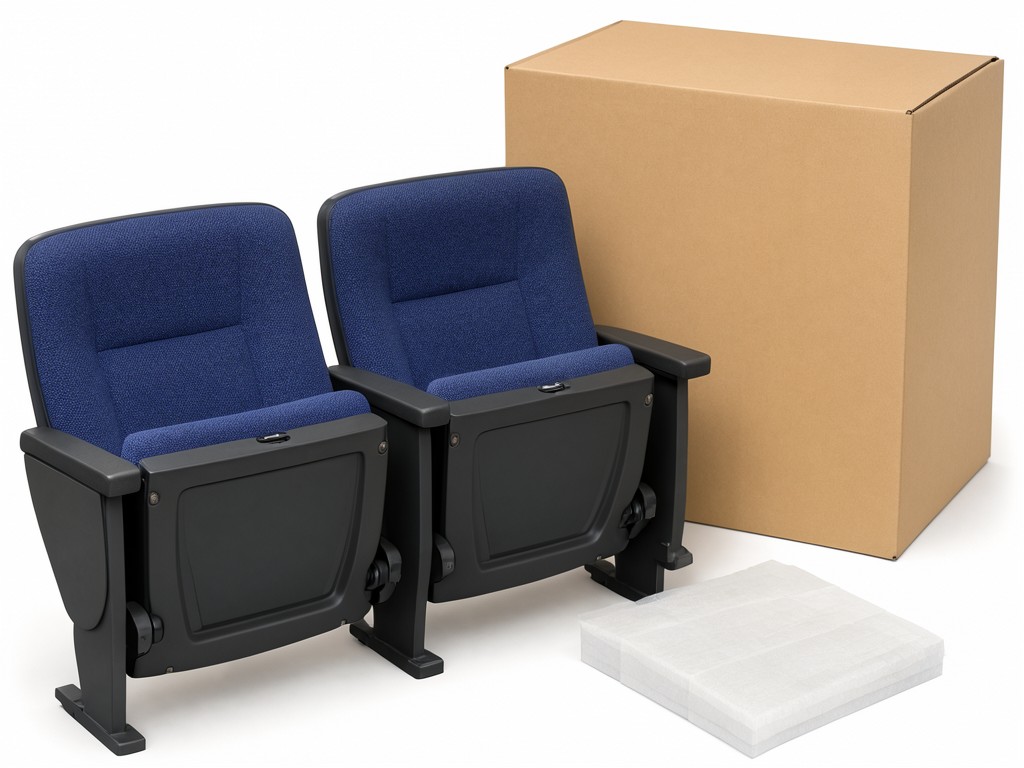
A quotation is easier to compare when it identifies the approved configuration, packing method, inspection scope and any buyer-supplied materials. Confirm carton protection for exposed frame corners and upholstery faces, especially when seats ship in mixed configurations.
Routine checks should focus on pivot fasteners, return movement, buffers, weld areas and visible upholstery wear. A seat that begins to rattle or return unevenly needs inspection before the issue spreads to adjacent hardware.
Use cleaning agents approved for the selected fabric and frame finish; abrasive pads and unverified solvents can change surface appearance. Store packed units dry, keep cartons off standing water, and avoid stacking loads that compress the upholstery or distort projecting brackets.
Service life depends on traffic, maintenance and the agreed mechanism. Keep the approved drawing, sample record and batch details with the project file so replacement parts and reorder upholstery can be checked against the original specification.
Send the room layout or reference drawing, required seat dimensions, fixing details, upholstery and finish references, logo artwork, and any project-specific documentation requirements. A supplier can then review the specification before pricing the matching configuration and sample approval steps.