
Contact Fumei
No.20 Jiuqiao Road, Shijiang Industrial Area, Jiujiang Town, Nanhai District, Foshan City, China.
Custom seating for lecture hall company: What Buyers Should Check Before Ordering Returns usually trace back to the same weak point: a seat, joint, finish or layout detail that varies between the appr
Returns usually trace back to the same weak point: a seat, joint, finish or layout detail that varies between the approved sample and the delivered lot. For lecture hall seating, small differences in seat width, return action or mounting position become visible across a row, then affect comfort, aisle clearance and installation time. Buyers planning repeat orders should review the production controls behind those details, not only the appearance of a sample.
A custom seating project may combine steel supports, upholstered or molded seat and back components, an optional writing tablet and floor-mounted row hardware. Each added finish or mechanism creates another point that needs a defined specification and inspection method. Tooling, fixture setup and order volume also affect unit price and lead time: a molded part can reduce recurring labor at scale, while a lower-volume order may favor a design with fewer dedicated tools.
Lecture hall seating is a row-based furniture system specified around room geometry, audience use and the fixing method. Buyers may need linked floor-mounted chairs, a tip-up seat for tighter row spacing, or an integrated tablet for note-taking. The ranges below are early planning references; final dimensions and mass depend on the selected back, seat, arms, mechanisms and accessories.
| Planning measure | Indicative range | What changes it |
|---|---|---|
| Seat width | Approximately 450–520 mm | Arm profile, upholstery build-up and required seat spacing |
| Seat depth | Approximately 430–500 mm | Back angle, cushion shape and clearances when the seat is raised |
| Seat height from floor | Approximately 430–470 mm | Floor slope, riser layout and selected base or leg design |
| Net mass per seat | Often approximately 12–22 kg | Frame gauge, upholstery, tablet and row-link hardware |
Check dimensions against the room drawing and fixing plan before approving a production sample. A change to seat width can alter the number of chairs per row; a change to base geometry can affect hole positions and installation labor.
Upholstered plywood or a formed seat-and-back panel gives buyers room to specify foam density, cover fabric and panel shape. That route can suit venues that prioritize a padded feel or need fabric and colour coordination, but it adds upholstery labor and more seams or edges to inspect. A molded polymer shell reduces separate upholstery operations and can simplify wipe-down; the trade-off is the cost of dedicated tooling and less freedom to change the shell after tooling approval.
For the supporting structure, formed steel tube and welded brackets are common where chairs attach to floor plates or shared row supports. Powder coating adds a durable finish layer, while coating coverage around welds and edges needs attention because those areas see handling and contact during installation. Fabric, foam, panel, shell and finish choices should be frozen together in the approved sample; changing one late can alter fit, mass, appearance or unit cost.
A typical build sequence forms and welds the steel frame, prepares the surface, applies the finish, makes or sources the seat and back components, then assembles and checks each unit. Production fixtures hold frame geometry during welding; without consistent locating points, hole alignment and chair stance can drift across a batch. Upholstered parts require controlled cutting, foam placement and tension at the seams, while molded parts depend on approved tooling and stable molding conditions.
A design with fewer dedicated molded components can reduce upfront tooling exposure and support more frequent specification changes. The unit price may remain higher because upholstery and assembly labor recur on every chair. Confirm which dimensions the factory can hold with standard fixtures and which changes require new jigs.
Dedicated molds or assembly fixtures can spread setup cost across more units and shorten recurring labor time after approval. Tooling adds initial cost and lead time, so the saving depends on order volume, expected repeat quantity and how long the design will stay unchanged. Ask for tooling ownership, storage and revision terms in the quotation.
A repeat-order plan should identify the approved materials, finish references, critical dimensions and revision status. Keep those controls tied to the purchase specification so a substitute fabric, fastener or coating does not enter a later batch without review.
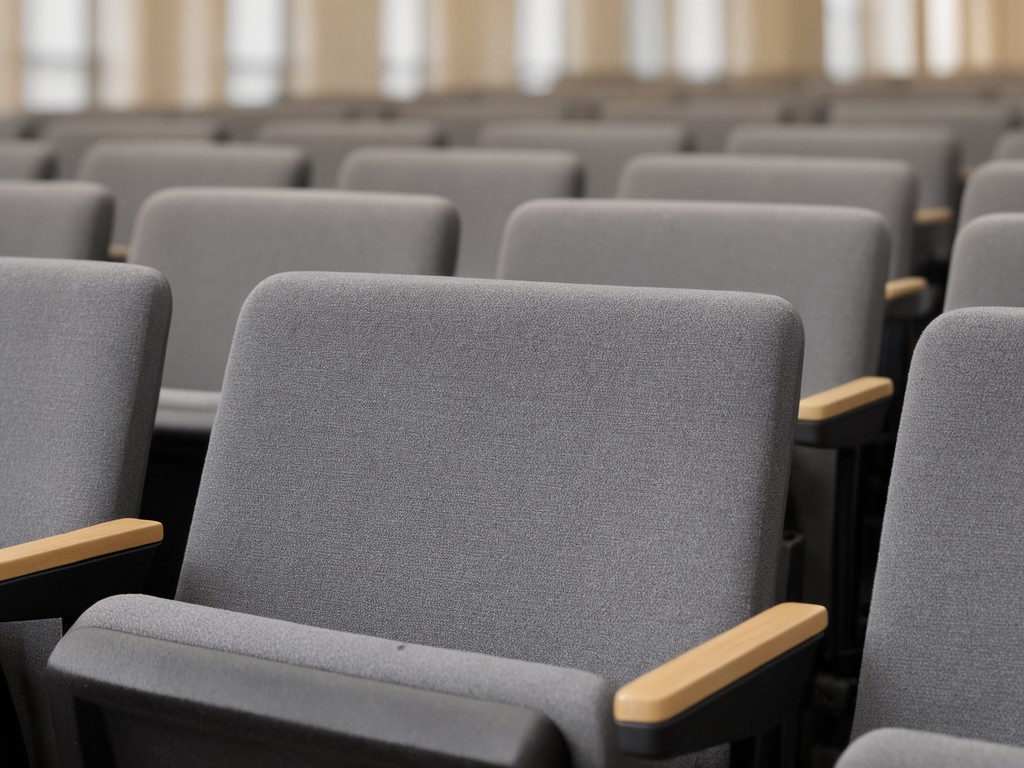
For a high-use hall, check the features that can change after repeated occupancy: frame movement, fastener retention, seat return action, surface wear and upholstery seam condition. Define the inspection sample and acceptance limits against the approved design. A documented factory test plan is more useful for repeat orders than an unqualified statement that a chair is suitable for heavy use.
| Specification checkpoint | Practical factory check | Why it matters to the buyer |
|---|---|---|
| Frame geometry and fixing points | Measure key dimensions and compare hole locations with the approved drawing and fixture reference. | Limits installation rework and misalignment across linked rows. |
| Seat and back response | Inspect the return mechanism through repeated operation and check for binding, noise or uneven movement. | Inconsistent return action affects aisle clearance and the perceived condition of a row. |
| Joints and load response | Use a project-defined static and cyclic test plan; inspect for looseness, permanent deformation and fastener movement. | Helps identify weak welds, brackets or attachment points before shipment. |
| Finish and upholstery | Check coating coverage, colour against the reference, seam alignment and cover attachment. | Catches visible batch variation and early wear points that can drive complaints. |
Fire-performance documentation, where required, depends on the destination market and project specification. Confirm the applicable requirement and evidence before material approval; do not assume a fabric or foam choice meets every jurisdiction.
Common changes include seat and back dimensions, upholstery colour, frame finish, arm shape, row connection, floor fixing and writing tablets. Each option should be checked against the hall drawing and packing plan before it becomes part of the order. A tablet can affect chair clearance and mass; a wider arm can reduce seats per row; a new molded shell profile can require new tooling and a fresh approval sample.
Retail buyers and distributors need a stable specification that supports repeat listings, clear carton identification and manageable spare-part requests. Procurement officers should prioritize drawing control, batch inspection records, installation compatibility and a defined process for handling nonconforming units. Private-label buyers also need approved branding positions, colour references and packaging marks that remain consistent from sample approval through repeat production.
Order volume changes the cost balance. A larger commitment can justify dedicated tooling or fixtures, while a phased order may limit inventory exposure but carry more setup cost per unit and require tighter revision control between batches. Request a quotation that separates one-time tooling, recurring unit cost, sample time, production lead time and export packing assumptions.
Share the room layout, target seat count, fixing details, material preferences and expected order volume. A review before sampling can flag dimensional conflicts, tooling costs and inspection points that affect repeat-order consistency.








