
Contact Fumei
No.20 Jiuqiao Road, Shijiang Industrial Area, Jiujiang Town, Nanhai District, Foshan City, China.
Durable ergonomic lecture hall seating chairs China Supplier: What Buyers Should Check Before Ordering During a private-label launch with a fixed ship date, a seating sample can pass review while the
During a private-label launch with a fixed ship date, a seating sample can pass review while the container order still produces complaints: seat pads feel different by row, tablet-arm holes shift, or the finish marks during installation. Those differences usually trace back to a material or process choice that was not fixed before production. For procurement teams, repeatable construction matters because a small unit-price saving can disappear in replacement parts, site labour and warranty claims.
For lecture rooms with frequent turnover, the seat shell, cushioning and frame must suit the cleaning routine and expected use. Fabric upholstery can offer a softer feel during long classes, but it needs a clear specification for fabric type, colour and seam layout. A molded shell or wipe-clean surface simplifies routine care, though it gives a firmer seating feel. Frame coating and substrate selection also affect the price: thicker or more complex construction adds material and process cost, so reserve it for locations where the added service life has value.
| Use condition or concern | Common construction choice | Buyer’s durability decision |
|---|---|---|
| Long sessions with repeated daily use | Upholstered seat and back with project-defined foam and fabric | Set the fabric, foam specification and seam position against the approved sample; a softer feel is not useful if replacement covers vary by batch. |
| Fast room reset and regular surface cleaning | Molded seat or back surfaces with a coated steel frame | Confirm surface texture and cleaning compatibility; the easier-care option may feel firmer than an upholstered chair. |
| Fixed rows with tablet arms or aisle-end positions | Welded steel support structure with mounting points set to the project drawing | Control hole location, arm orientation and finish coverage together; a mismatch can add costly site rework. |
Use this selection path to settle the material brief before final pricing:
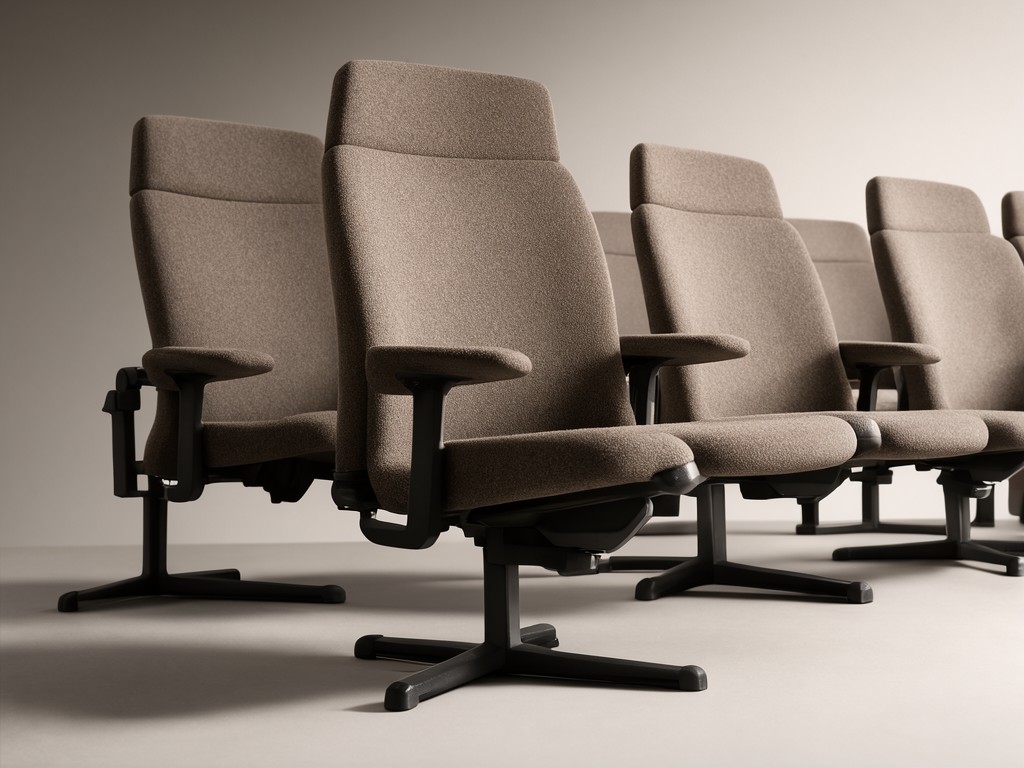
A practical production route combines cut steel tube, jig-controlled welding, surface preparation and powder coating with separately prepared seat and back components. Upholstered parts are cut and covered to the approved pattern; molded or plywood components follow their own tooling and finishing requirements. When each operation uses a fixed drawing revision and repeatable fixture points, row spacing, arm position and attachment fit are easier to reproduce from sample to bulk order.
The failure pattern is often cumulative rather than dramatic. A small hole-position drift can make tablet arms sit unevenly; inconsistent coating coverage can expose edges to wear; variation in padding or cover tension can make adjacent chairs feel unlike one another. A factory-side review should compare incoming dimensions and components with the approved specification, use fixtures for key hole and assembly positions, and check finish coverage and upholstery details at defined production stages. These controls cost less than sorting mixed units after arrival.
Lock the reference before the run. A signed sample, drawing revision, material list and finish reference should describe the same chair. If one changes, update the other records before bulk production; otherwise, a repeat order can match the old sample in some details and the new specification in others.
University procurement teams specify lecture seating for rooms where students use the same rows throughout a term and facilities staff must reset the space between classes. The chair has to keep its seat and back attachment points secure, maintain clear aisle access and tolerate routine cleaning. Training centres and corporate auditoriums may choose tablet-arm models for note-taking, but those arms need consistent position and a finish that stands up to repeated contact.
For distributors and private-label brands, the use case extends to installation crews and later replenishment. A chair that needs extra adjustment on site adds labour to the original project; a visually mismatched replacement can prompt a return even when the unit remains usable. Match the configuration to the room plan, cleaning method and expected service pattern, then retain the approved sample details for subsequent orders.
When a brand extends an existing range, the important work is to translate its current chair into controlled, factory-usable references. A catalogue match may look close but differ in seat contour, frame geometry, fabric shade or tablet-arm position. Sharing drawings, reference units and finish samples lets the production team identify which details must remain fixed and which can change to meet the project budget.
For an established chair design, the factory works to the supplied drawing, material schedule, branding position and finish reference. This route suits buyers who need the same model across repeat projects and want to limit differences between batches.
For a new private-label model, confirm the room layout, seat and back materials, frame finish, tablet-arm requirements and artwork before sampling. Changes after sample approval can affect tooling, component sourcing and the production schedule.
Branding can include a logo on a selected component, a specified colour palette or packaging labels for the importer’s distribution process. Artwork size, placement and file format should be confirmed with the sample brief. For a repeat order, retain the approved artwork and component references with the order specification rather than relying on colour names or catalogue photographs alone.
Moving from sample orders to container loads changes the cost and schedule calculation. Frame fixtures, component tooling, fabric or coating procurement, assembly capacity and export packing all need to align with the confirmed configuration. A fixed ship date is easier to protect when the buyer approves drawings and the pre-production sample before materials are committed; late colour or geometry changes can reset part of the schedule.
Ask the supplier to define the production assumptions behind its quotation: order quantity, tooling responsibility, packaging arrangement, branding scope and the point at which revisions stop. The lowest unit price is not the lowest landed cost if inconsistent parts require field adjustment or replacement. Compare the quoted configuration with the cost of installation, spare units and likely warranty handling.
Send the room layout, target quantity, preferred materials, finish and branding requirements with your sample request. The factory can then review the configuration, identify drawing details that need confirmation and quote against a defined production brief rather than a catalogue image.
Contact the production team to discuss a sample and repeat-order controls.








