
Contact Fumei
No.20 Jiuqiao Road, Shijiang Industrial Area, Jiujiang Town, Nanhai District, Foshan City, China.
Selection rule: A steel frame, durable upholstery, and a serviceable tip-up mechanism can cost more per chair than a basic stock model. Compare that premium with replacement frequency, access to spare
Selection rule: A steel frame, durable upholstery, and a serviceable tip-up mechanism can cost more per chair than a basic stock model. Compare that premium with replacement frequency, access to spare parts, and the cost of taking a lecture row out of use for repair.
For importers qualifying a second source, the relevant product is a fixed-row lecture hall chair built around a steel support frame, upholstered seat and back, and a tip-up seat mechanism. Depending on the project, the assembly can include armrests, a writing tablet, row-end panels, and floor-fixing points. Row layout and fixing details need to match the venue drawing; chair dimensions alone do not establish aisle clearance or tablet swing space.
Seat width, back profile, upholstery, and finish are specified together because a change to one can affect adjacent chairs, row spacing, or replacement compatibility. Confirm a physical sample and approved drawings before treating a production specification as transferable between suppliers.
Cheaper stock options can fail at the worst point in the season: a hinge loosens, the seat stops returning cleanly, or upholstery splits at a high-contact edge while the hall is in daily use. The purchase price looks attractive until facilities staff must isolate a chair, find a matching replacement, and coordinate repair across an occupied row.
Complaints usually trace back to a small number of decisions. Light-gauge frame members can flex under repeated use; poorly aligned pivots create uneven movement; exposed fasteners can loosen; and upholstery with weak seams wears first at corners and seat edges. Replacement rate, not unit price, is the more useful comparison when the chairs see frequent turnover between lectures or events.
For a second-source review, ask both factories to identify the frame section, hinge arrangement, upholstery construction, and parts available for field replacement. Choose the specification that addresses the failure history in the installed chairs, rather than paying for options the venue will not use.
Lecture seating has to fit a fixed room plan and tolerate repeated sitting, standing, and seat return. A wider seat may improve comfort but reduce the number of chairs that fit the approved row length. A thicker upholstered panel can soften the feel, but it also changes overall dimensions and may interfere with neighboring armrests or a writing tablet.
Floor anchors, aisle slopes, and riser geometry set the practical limits for frame feet and mounting holes. Confirm hole centres and the finished chair envelope against the venue plan. Where chairs must replace an existing installation, matching the original mounting pattern and seat-return path can be more valuable than adding a new finish or trim option.
A fixed seat has fewer moving parts and may suit compact layouts or venues that do not require clear floor space between sessions. Check the clear aisle width with the seat in its installed position.
A tip-up seat opens a passage between use periods, but the hinge and return action become service items. Specify access to pivots, springs, fasteners, and replacement seat assemblies before approving the configuration.
A common production route starts with cut steel tube, followed by bending, fixture welding, surface preparation, and a powder-coated finish. Weld position and frame alignment affect how the chair sits on the floor and how consistently mounting holes line up. A coating protects the steel from routine handling and cleaning, but it cannot compensate for poor preparation or damaged edges.
Seat and back panels may use shaped plywood or a molded support, with foam and upholstery selected for the project. Higher-density foam generally resists early flattening at the cost of added material expense; fabric choice changes abrasion behaviour, colour options, and cleaning requirements. Upholstery construction should include reinforced seams at corners and other points where users pull or press during entry and exit.
Tooling amortisation decides whether a non-standard shell, arm, or tablet is economical. A one-off profile can add tooling and sampling cost, while a factory’s existing geometry may lower initial cost but limit matching to the room plan or installed chairs. Ask for the tooling charge, ownership terms, sample-approval steps, and expected repeat-order basis as separate quote items.
A basic fixed-frame chair and a tip-up chair can share upholstery and frame-finish options, but they do not carry the same service demands. Compare them against the building’s traffic pattern, cleaning routine, aisle requirements, and maintenance access rather than treating the mechanism as a cosmetic upgrade.
| Configuration | Main trade-off | Buyer check |
|---|---|---|
| Fixed upholstered seat | Fewer moving parts; seat remains in the aisle footprint between sessions. | Confirm row clearance and whether the venue needs floor space cleared after use. |
| Tip-up upholstered seat | Improves passage clearance when raised; adds a hinge and return mechanism that require inspection and replacement parts. | Check seat movement, return action, pivot access, and the availability of matching service parts. |
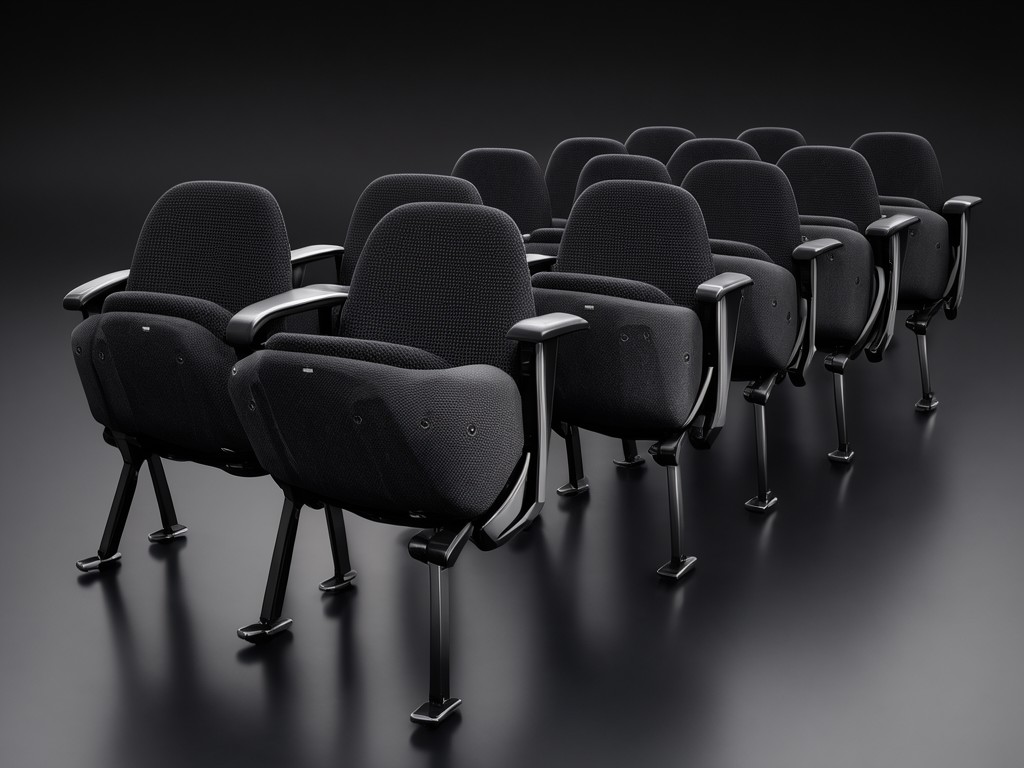
For a high-traffic hall where aisles must clear between events, the tip-up mechanism may justify its added parts and inspection needs. For a fixed seating layout with no clearance requirement, a fixed seat can reduce service points. The project drawing and maintenance plan should determine the selection.
A second source needs to hold the approved specification across production lots, not just deliver a sample that feels right. Factory checks should compare frame dimensions, mounting-hole locations, weld appearance, coating coverage, upholstery colour, seam finish, and the movement of the seat mechanism against an agreed sample or drawing.
For tip-up models, cycle checks can reveal inconsistent return action or pivot noise before chairs are packed for dispatch. Fasteners should be checked for fit and tightening, while a finished-chair inspection should confirm stable floor contact and a repeatable seat position. Agree the inspection points and acceptance criteria before the order; do not rely on a general description such as “heavy duty.”
Keep the approved fabric, finish reference, hardware details, and drawing revision tied to the order record. That reference gives both suppliers a common basis for colour review and replacement-part matching when the next batch is placed.
Installation should follow the approved row drawing and the fixing method specified for the floor. Verify anchor positions before drilling, then check each row for alignment, stable contact, and unobstructed seat movement. A mounting mismatch can turn a sound replacement chair into a costly site adjustment.
Routine care is straightforward: use cleaning products compatible with the upholstery and finish, remove debris around moving joints, and inspect loose fasteners or damaged coating during scheduled maintenance. Avoid forcing a seat that binds; a misaligned pivot or trapped object should be corrected before continued use adds wear to the mechanism.
Before approving a supplier, confirm whether hinges, pivots, seat panels, back panels, arm pads, and matching upholstery can be ordered separately. A replaceable assembly can reduce downtime and avoid discarding an otherwise serviceable frame. Record the chair model and finish information so facilities teams can identify the right part later.
MOQ and production timing depend on the selected frame, upholstery, finish, and any non-standard parts. Use the table as a quote-qualification checklist rather than a delivery commitment; the supplier should confirm commercial quantities and dates against approved specifications and material availability.
| Order basis | MOQ discussion | Lead-time basis |
|---|---|---|
| Existing frame and standard finish | Request the supplier’s minimum by model and upholstery selection. | Confirm after fabric and finish availability checks, sample approval, and order release. |
| Non-standard dimensions, parts, or finish | Ask whether tooling, minimum material buys, or setup quantities apply. | Allow for drawing review, tooling or sample work, approval, and production; obtain a dated schedule in the quotation. |
Provide the approved drawing, mounting-hole measurements, finish reference, and a sample or clear photographs with scale references. The supplier should confirm which dimensions it can match and identify any change to the seat envelope or mechanism.
For tip-up chairs, ask for pricing and availability for the hinge or pivot assembly, fasteners, and replaceable seat components. Include finish and upholstery identification so future parts can match the installed chairs as closely as possible.
New frame geometry, a non-standard finish, or a custom upholstered panel can add drawing approval, sample work, tooling, or material minimums. Separate these items in the quote so the cost of a repeat order is clear.
If the project includes an embroidered mark, label, or other branding, submit the artwork and placement requirements before sample approval. Confirm colour references and whether the branding applies to every chair or selected rows.
Qualifying a second source? Send the current chair drawing, annual volume, known failure points, target configuration, and required replacement parts for a tooling and specification review.
Request a tooling review







