
Contact Fumei
No.20 Jiuqiao Road, Shijiang Industrial Area, Jiujiang Town, Nanhai District, Foshan City, China.
durable modern auditorium seating chairs factory: Specification, Ordering and Quality Notes Balance and load analysis shows why an auditorium chair has to be specified as a connected assembly, not as
Balance and load analysis shows why an auditorium chair has to be specified as a connected assembly, not as a seat shell alone. Repeated tip-up cycles, lateral movement at the armrests and floor-anchor loads all work on different interfaces. Start with the venue layout and expected use, then select the frame, seat mechanism and finish as a matched build.
A thin-wall frame or lightly finished weld can lower the quoted unit price, but movement at the joints tends to show up first in high-use rows. Loose arm connections, hinge noise and coating wear around the floor plate create repair work across an installed block of seats. For frequent public use, compare the frame section, weld details and fixing method before comparing chair prices.
Seat shells and upholstery also age differently. A molded polypropylene shell is easy to wipe down, but the resin and colour choice need to suit the venue’s cleaning products and light exposure. Upholstered plywood or molded foam provides a different comfort and appearance profile; seams, fabric abrasion and foam compression then become key inspection points. Match the surface to the cleaning routine rather than assuming one material suits every hall.
A fabricated steel support with a consistent powder-coated finish suits venues that prioritize wipe-clean surfaces and repeatable colour. Specify the coating system with the frame geometry and use conditions; exposed edges, welds and floor plates need finish coverage, not just a presentable front surface.
A molded shell reduces fabric and seam maintenance, while an upholstered seat and back allow a softer feel and a broader interior-design match. The trade-off is material-specific: confirm cleaning-agent compatibility for molded parts, or agree fabric, seam and foam specifications for upholstered orders.
Tip-up seat assemblies clear circulation space between events. Their service life depends on hinge alignment, fastener retention and the way the seat’s weight acts on the return mechanism; request a sample assembly when these details differ from the buyer’s approved reference.
Layout comes before chair approval. Confirm seat width, row pitch, aisle clearance, floor slope and anchor locations from the venue drawings. A chair that fits a sample bay may still create installation rework if the row geometry or baseplate position changes.
Colour approval from a digital image alone can produce visible differences between a sample and a production run. Agree the physical finish or fabric reference, then record it with the order. For repeat purchases, keep the approved material and finish details tied to the item specification rather than relying on a colour name.
Seat width, arm spacing, row pitch and mounting position should follow approved drawings. Changes to the shell or frame interface can require new tooling or a revised installation sample.
Select shell material, upholstery, frame finish and armrest surface as a coordinated set. Custom colours and fabrics may have supplier minimums or longer replenishment times.
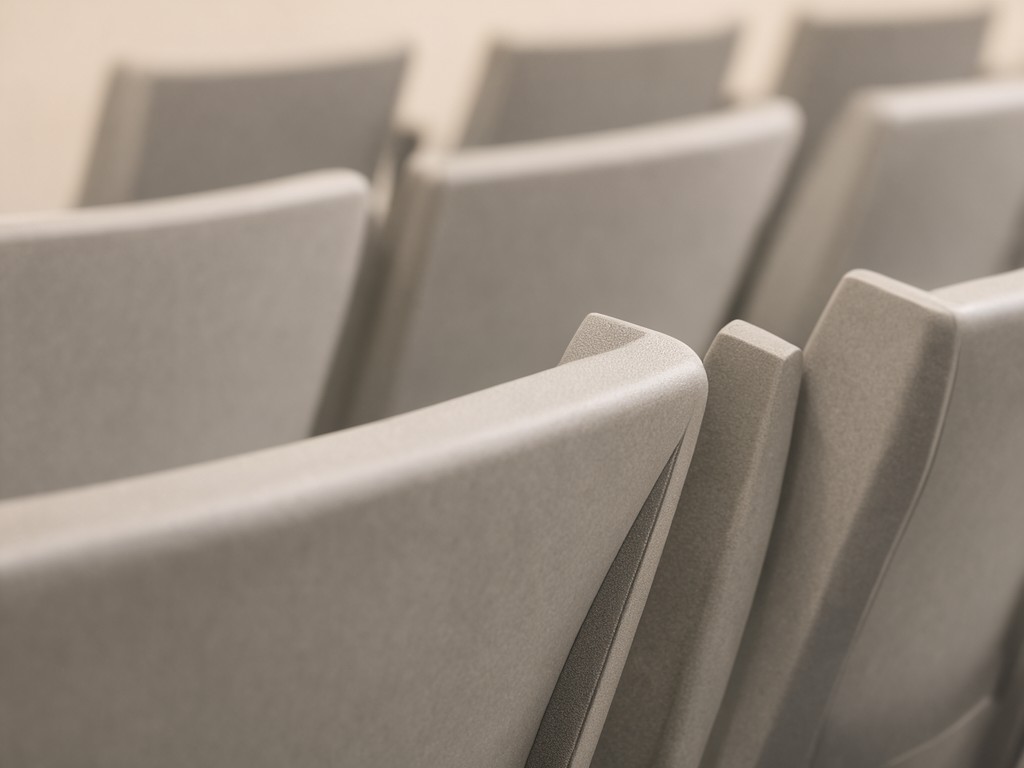
Row and seat numbering, logos or other identification can be planned with the selected surface and installation sequence. Artwork placement needs approval before production to avoid conflicts with seams, hinges or mounting points.
Tooling changes are most practical when the design is frozen before production samples are signed off. Keep the approved drawing, finish reference, bill of materials and revision level together; that record gives repeat orders a clear match point and helps control avoidable warranty claims.
| Packaging decision | Factory planning point | Buyer confirmation |
|---|---|---|
| Assembled chairs or row units | Protect exposed edges, upholstery and hinge areas; pack format depends on chair and freight configuration. | Confirm unloading access, handling equipment and delivery sequence by row or zone. |
| Knock-down components | Separate and identify hardware by assembly group to reduce site sorting and missing-part risk. | Agree who completes assembly and what installation instructions or labels are required. |
| Repeat-order finish and parts | Reserve the approved finish, fabric and component references against the production revision. | Share the prior order reference and flag any drawing, colour or packaging change before quotation. |
Lead time depends on the approved configuration, material availability, finish schedule, tooling status and inspection plan. A repeat build with unchanged parts can be planned differently from an order that adds a new shell colour, upholstery or frame detail. Share the target delivery window and quantity split at quotation stage so production and export packing can be scheduled against the installation sequence.
For batch control, record the approved sample, drawing revision, colour reference and packing instructions with the purchase order. Confirm whether the buyer needs carton marks, seat labels or grouped packing by room before materials are released.
Before placing a repeat order, request a tooling and interface review against the approved chair, room drawings and finish schedule. That review can surface design changes that affect fit, service access or component interchangeability before they become a production return.
Contact the factory to review tooling, drawings and repeat-order specifications.








