
Contact Fumei
No.20 Jiuqiao Road, Shijiang Industrial Area, Jiujiang Town, Nanhai District, Foshan City, China.
low price auditorium lecture hall seating supplier - Bulk Supply and Specification Guide During a private-label launch with a fixed ship date, a late upholstery colour approval can hold an otherwise p
During a private-label launch with a fixed ship date, a late upholstery colour approval can hold an otherwise packed auditorium seating order. Distributors and importers need the approved chair configuration, finish references and carton plan locked early enough to protect the vessel booking. Low price works best when the specification stays stable across the order, not when material changes appear after sample approval.
A fixed-row chair has to fit the room’s aisle layout, floor fixing points and planned seat count. A wider seat or armrest may improve comfort, but it also changes row clearance and carton volume; confirm the room drawing before freezing the model. The practical decision rule is to price against the installed layout, not the chair alone.
For regular lecture use, a steel frame, plywood seat and back, foam padding and upholstered cover are common construction choices. Powder-coated steel controls the visible frame finish, while fabric or vinyl determines much of the touch and cleaning experience. If chairs will see frequent use or cleaning, specify the cover and coating by use conditions; a lower-cost surface is only a saving if it holds its appearance through the expected service pattern.
Keep the approved reference sample and written finish description with the purchase order. A colour shift between lots can make replacement chairs conspicuous in the same hall and can trigger rework, split shipments or buyer returns.
Confirm dimensions against the room plan and the approved production sample; nominal model names do not control the actual seat width, row pitch or folded projection. The cards below are early quotation guides only. Final values depend on arm style, writing tablet, upholstery build and the buyer’s drawing approval.
A typical planning range is about 440–520 mm. Arm width and aisle clearance can narrow the usable choice.
Many fixed auditorium models fall around 12–20 kg per chair. A tablet, heavier frame section or thicker upholstery adds mass.
Set from the room layout and chair projection. Confirm clearances with the seat in both upright and folded positions.
For lot checks, record the same measurement points on the approved sample and production units. A small dimensional shift repeated across a row changes alignment; unit-weight drift can also indicate a change in frame, foam or cover specification. Agree the sampling method and permitted tolerances before the bulk run.
A basic fabric cover and standard powder-coated frame suit projects where purchase price and a consistent appearance matter most. Moving to a denser foam build, a more abrasion-tolerant cover or a reinforced frame section raises unit cost and shipping weight, but can better fit venues with frequent daily turnover. Compare like with like: cover colour, foam build and frame finish should match across the sample and quoted lot.
Choose a straightforward frame, foam and upholstery combination for lecture rooms with moderate scheduled use. Fewer options simplify replenishment and reduce the chance of colour or component mismatch on a repeat order.
For halls with multiple sessions each day, consider a cover selected for the cleaning routine and a frame specification suited to repeated seat movement. The higher purchase price is justified only if those choices match the venue’s actual use and upkeep plan.
For OEM orders, the buyer supplies the approved model, brand artwork and chosen materials; ODM work can include configuration changes such as arm style, tablet, upholstery and frame colour. Artwork placement, fabric colour reference and visible frame finish should be signed off on a sample before bulk production. That approval gives both sides a common reference for repeat orders.
Keep the first order’s bill of materials and finish references on file. Changing a fabric supplier or powder-coat batch without approval can create a visible mismatch even when the model number stays the same. For a private-label range, limit the launch to options that can be replenished on the same specification.
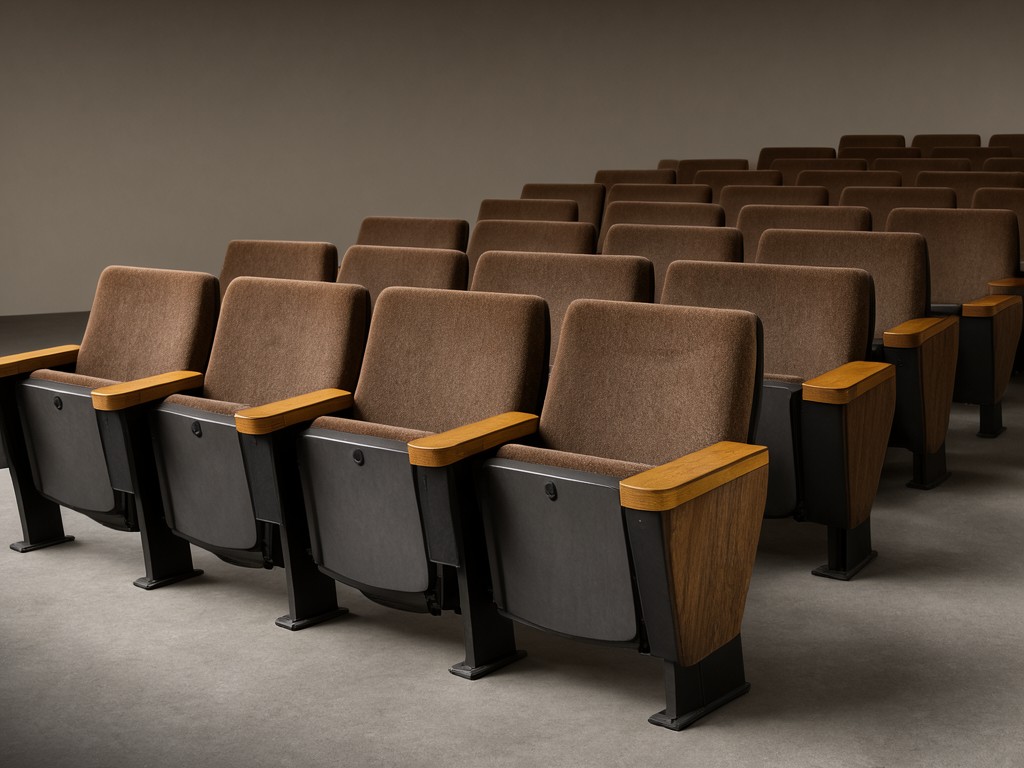
| Customization point | Planning range or choice | Buyer approval check |
|---|---|---|
| Seat and overall width | Seat width commonly about 440–520 mm; overall width depends on arm design. | Approved drawing, row count and aisle clearance. |
| Unit mass and build | Often about 12–20 kg per chair, depending on frame, padding and accessories; steel frame with plywood panels is a common base. | Weigh the approved sample in the sale configuration and record the material specification. |
| Upholstery and frame colour | Buyer-selected fabric or vinyl and powder-coat colour, subject to material availability. | Approve physical swatches and retain the colour reference for reorders. |
| Arm and tablet options | Fixed or selected arm configuration; tablet availability depends on model design. | Confirm handedness, storage position and folded clearance on the sample. |
A repeat configuration is easier to schedule than a new combination of upholstery, frame colour and hardware. Confirm available material, sample approval, order quantity and pack plan before fixing the ship window; any late change can move the production sequence or require a fresh sample check. For importers working toward a launch date, reserve time for approval and export booking rather than counting only factory production days.
Tooling needs depend on the selected model and requested changes. A colour or fabric substitution may require material confirmation, while a change to seat shape or hardware can call for engineering review and sample validation. Ask for the order schedule to identify approval gates, material readiness and packing completion as separate milestones.
Chair frames and finished upholstery can be marked by movement during export transit. Individual protective wrapping, separators at contact points and a carton or pallet plan suited to the chair’s shape help limit abrasion and pressure marks. Confirm whether units ship assembled or partly disassembled, since that choice affects packing density, handling time and destination setup.
Before booking, check carton dimensions, gross weight, stack arrangement and container loading plan against the shipment quantity. Ask for labels to show the model, finish and carton count in a format the receiving warehouse can use. Keep those details consistent with the purchase order so mixed finishes do not get combined during unloading.
Floor fixing depends on the venue substrate and the approved base design. Use the project drawing to set row spacing and fixing locations, then check each seat’s movement before opening the hall; an uneven floor or misplaced fixing point can affect alignment and folding action. Site-specific anchors should be selected for the actual floor by the project installer.
For routine care, use cleaning products compatible with the approved upholstery and wipe powder-coated surfaces with a soft cloth. Abrasive cleaners can dull the finish, while excess liquid may affect fabric or internal components. Keep the model and finish details with maintenance records so replacement seats or parts match the original installation.
Before placing the bulk order, ask which parts can be supplied separately, such as arm components, seat panels or hardware, and confirm their identification method. A retained sample and a written parts list make later claims and replenishment checks more direct. For a quotation review against your target ship date, send the quantity, room drawing, finish references and required packing details.








