
Contact Fumei
No.20 Jiuqiao Road, Shijiang Industrial Area, Jiujiang Town, Nanhai District, Foshan City, China.
affordable classroom chairs for students distributor - Bulk Supply and Specification Guide Design Constraints Behind the Specification First-article tooling determines whether a molded polypropylene s
First-article tooling determines whether a molded polypropylene shell matches the approved contour, mounting points, and surface finish across a production run. For a distributor matching an existing private-label specification, the drawing must define seat and back dimensions, shell thickness zones, frame geometry, and the permitted variation before tooling or production approval. Changing the shell profile after sampling can require tool changes and delay approval; agree the drawing and reference sample first.
Stacking height, student fit, and classroom handling place different demands on the chair. A lighter tubular steel frame can reduce freight weight, while additional bracing or a heavier tube section may better suit frequent movement and repeated use; those choices affect both cost and chair mass. Set the intended age group, floor type, stacking requirement, and project load criteria before the sample is signed off, then keep those decisions fixed in the purchase specification.
Approve one controlled reference for each shell colour, frame finish, and chair size. A signed sample and dimensioned drawing give production and incoming inspection the same basis for checking reorders.
Process choice shows up later as differences in cleaning, surface wear, and reorder matching. Both configurations below can use a welded tubular steel frame; the best fit depends on the buyer’s room conditions and the approved sample, not on a material label alone.
| Specification point | Molded polypropylene shell | Plywood seat and back |
|---|---|---|
| Shell production | Injection-molded part; colour and dimensions depend on the approved resin and tool setup. | Formed wood panel with a coated surface; layer build and edge treatment must match the sample. |
| Use and care | A practical choice for routine wipe-downs; confirm the cleaning agent against the specified finish. | Offers a firmer seat feel; protect exposed edges from repeated knocks and moisture. |
| Cost and reorder control | Tooling is part of the initial cost; once approved, colour and tool condition are key controls for repeat orders. | Avoids a molded shell tool, but panel finish and edge consistency need careful sample matching. |
| Agree before production | Shell dimensions, colour reference, texture, and mounting locations. | Panel thickness, coating, edge profile, and fixing method. |
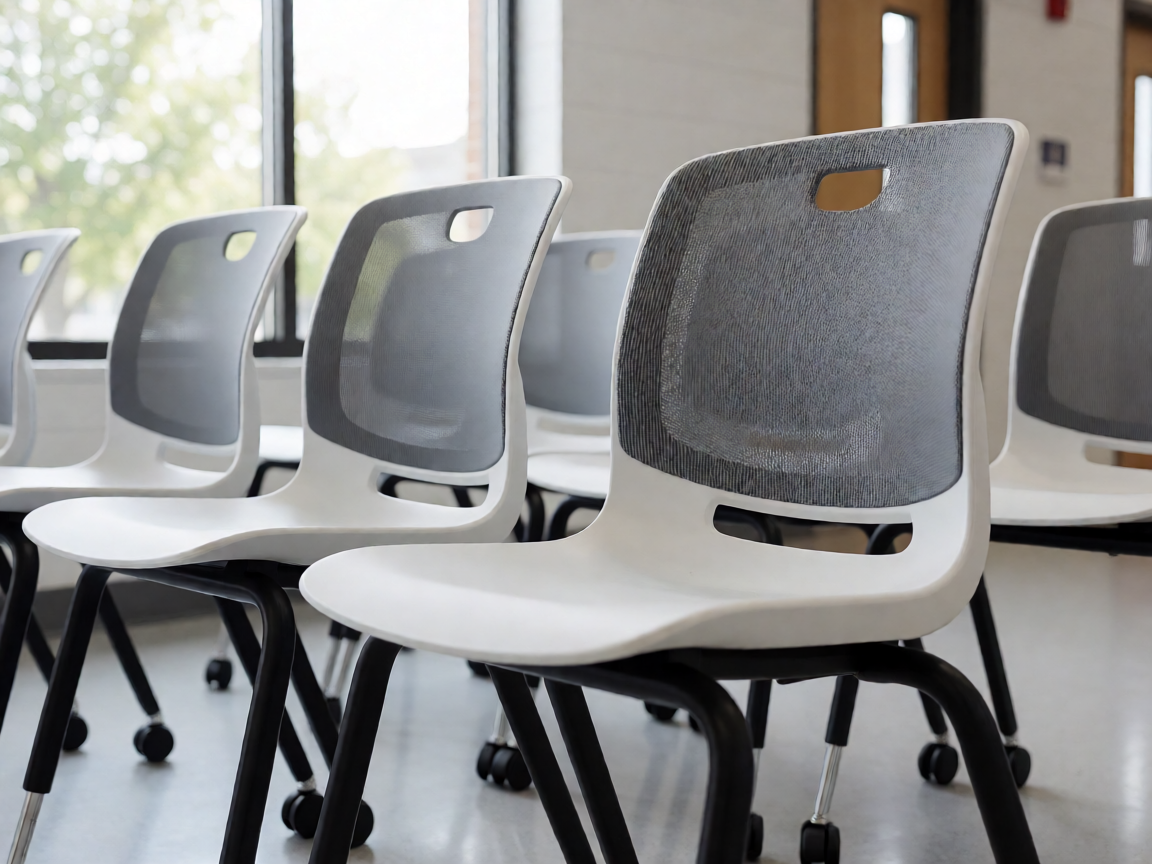
Consistency is set at the forming stage, but the full chair specification also depends on frame fabrication and final assembly. For a buyer carrying one established model, retain the approved seat height, shell outline, tube dimensions, weld positions, foot glides, and finish; substitutions in any of these can change fit, stack behavior, or the look of a replenishment order.
When the target is a new private-label program, provide a dimensioned drawing or physical reference and identify which features may change. The factory can then quote the closest existing configuration before proposing a tooling change. Confirm the sample against the intended classroom desk and floor surface, then record accepted dimensions and finish references in the order file.
A lower-cost frame may be suitable for light, fixed-room use; a more substantial frame and reinforced joints may be preferable where staff move chairs between rooms or stack them each day. Set any required load or stacking limits as buyer-defined acceptance criteria and verify them on the approved construction rather than assuming all chairs in a style share the same limits.
School tenders, education wholesalers, and private-label importers do not always need the same configuration. Use the service pattern to set the specification, then approve finish and branding on a physical sample before committing the bulk order.
For fixed classrooms with daily student use, prioritize a consistent seat height, stable frame geometry, and foot glides suited to the floor. Approve the finish against the school’s cleaning routine, and keep a signed sample available to compare against later deliveries.
For distributor stock, stable colour matching, repeatable carton packing, and traceable batch details help simplify replenishment. Submit logo artwork with its position, size, and colour references; check a marked-up proof and, where the branding method allows, a production sample before release.
Inspection should use the approved drawing, sample, and order specification as its references. Dimensional checks cover agreed seat and back measurements, frame height, and mounting alignment; visual checks look for molding defects, coating gaps, damaged edges, exposed weld defects, and finish differences from the accepted sample.
Before production, share the drawing, reference sample, finish details, and artwork for review. To align the branding proof and specification with the selected chair configuration, contact the team for an artwork and branding review.








