
Contact Fumei
No.20 Jiuqiao Road, Shijiang Industrial Area, Jiujiang Town, Nanhai District, Foshan City, China.
Affordable student chair with table set company: Specification, Ordering and Quality Notes Consistency depends on fixing the student age band, seat proportions, writing-table position and frame finish
Consistency depends on fixing the student age band, seat proportions, writing-table position and frame finish before production starts. A low-cost chair-and-table set can meet a launch budget, but small changes in tube gauge, tablet material or carton layout affect comfort, assembly time and damage rates. Approve one complete sample against a dimensioned drawing so bulk units match the posture and writing reach expected by students.
For importers and private-label buyers, the main schedule risk is often late confirmation of details rather than fabrication time alone. Seat and back moulds, welded frame jigs, surface finish, colour, left- or right-side tablet position and retail labelling all need a clear order record. If any of these remain open after sample review, the factory may need to hold packing or remake parts to protect the approved configuration.
A welded steel tube frame is a common cost-conscious base because it supports a repeatable shape and accepts a powder-coated finish. Seat and back components are often moulded polypropylene; tablet options include moulded plastic or a panel with a laminated surface. The lower-cost choice is not automatically the lower-cost order: an unsuitable tablet edge, exposed weld or finish that chips in transit can drive replacement and return costs.
| Order specification | Common configuration | Buyer confirmation point |
|---|---|---|
| Frame and joints | Bent steel tube with welded cross-members and tablet support | Tube dimensions, weld locations, frame colour and assembly method on the approved drawing |
| Seat and back | Moulded polypropylene in a selected colour | Age-band dimensions, edge feel, colour reference and fixing points |
| Writing surface | Moulded tablet or laminated panel on a steel support arm | Surface dimensions, usable writing area, corner profile and handedness |
| Finish and packout | Powder-coated frame with protected components in export cartons | Finish sample, carton quantity, assembly instructions and retail label details |
For a set that ships flat or partly assembled, check the tablet support and fastener access on the packed sample. A design that saves carton volume but makes the writing surface difficult to secure can add assembly complaints at the school or retail destination.
The interface between parts determines whether the tablet stays level and whether the chair feels firm after repeated classroom use. A typical production sequence cuts and bends steel tube, positions the members in a welding jig, inspects the frame, applies the coating, then fits the seat, back and writing surface. Jig location and weld sequence matter: a frame that pulls out of square can leave the chair rocking or the tablet sitting at an awkward angle.
Moulded parts and frame holes should be checked against the same approved assembly reference. If the seat fixing points shift between batches, installers may force fasteners into place, which can stress the plastic or leave a loose seat. A factory-side inspection can compare key dimensions, check assembly fit on a retained sample and record finish appearance by production lot.
A one-piece plastic surface avoids a separate laminate edge and can simplify cleaning. Buyers should assess flex under ordinary writing pressure and inspect the support attachment; a thin tablet or a poorly located fixing can feel unstable to the student.
A panel can offer a broad, firm writing area and a familiar flat finish. Its edges and corners need protection from knocks, and the panel-to-arm connection must resist loosening; this option can add material and finishing steps compared with a moulded tablet.
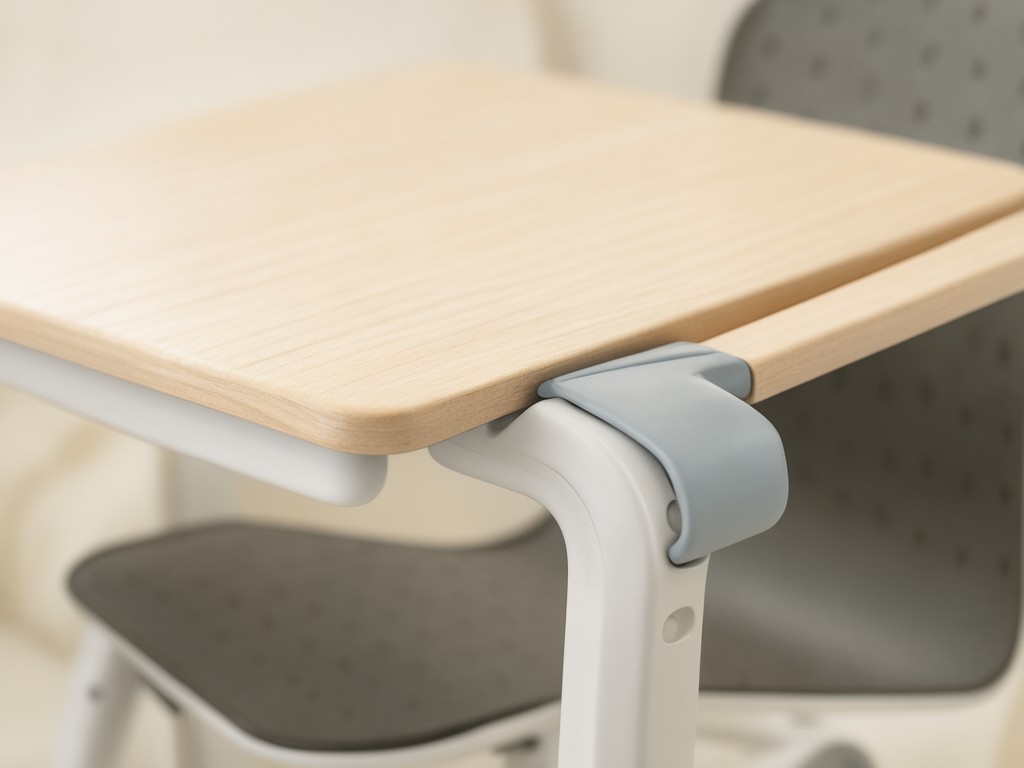
Deflection under load governs how a student judges the writing surface. A tablet that flexes too much feels poor even if it remains attached; a loose frame joint or rocking foot makes the whole set seem unstable. The first complaints often concern comfort, wobble, sharp or rough edges, coating chips and fasteners that loosen during assembly.
Agree inspection points before the order is released: visible weld condition, coating coverage, component fit, edge finish, fastener presence and carton condition. Any load or use check should follow buyer-approved criteria for the intended school setting; do not treat a factory sample check as a substitute for a defined product requirement.
Primary classrooms, tutoring centres and training rooms do not put the same demands on a chair-and-table set. Younger pupils need dimensions suited to their reach and seated posture; shared rooms need surfaces that tolerate frequent wiping and chairs that can be moved without damage to feet or finish. A private-label range should keep its core frame and component interfaces stable even when colours or labels vary by destination.
| Service condition | Likely complaint | Practical durability check |
|---|---|---|
| Daily movement between lessons | Scratches, coating wear at contact points or damaged feet | Inspect frame contact areas and foot fit; review the packed sample for exposed metal-to-metal contact |
| Frequent surface cleaning | Finish dulling, edge lifting or residue around joints | Confirm the buyer’s cleaning method against the selected surface and inspect edges after sample cleaning |
| Repeated writing and leaning on the tablet | Tablet flex, support-arm movement or loose fasteners | Check tablet deflection and joint movement against agreed sample criteria; recheck fasteners after assembly |
| Long-term use across age groups | Poor seat fit or awkward writing reach | Maintain separate approved dimensions for each ordered age or size group |
A fixed frame design and a limited colour range are easier to plan than multiple seat sizes, tablet materials and finishes in one launch order. Confirm which components are standard production items and which require a dedicated colour, mould or panel specification. Availability can change with material supply and factory loading, so request a dated production and shipping plan against the approved configuration rather than relying on an informal stock estimate.
For repeat orders, retain the signed drawing, finish reference, component list, carton details and sample record under one item code. Send forecast quantities early if the next order needs a new colour or a different size group. The sample should be approved before the production slot is confirmed; late changes to tablet position, packaging or labels can affect both the build sequence and the dispatch date.
To request a pre-production sample, share the target age group, quantity, preferred tablet and frame options, destination market and required launch date. Contact the team to discuss a sample request and order timing.








