
Contact Fumei
No.20 Jiuqiao Road, Shijiang Industrial Area, Jiujiang Town, Nanhai District, Foshan City, China.
affordable student desk and chair set for sale - Bulk Supply and Specification Guide During a private-label launch with a fixed ship date, an importer needs more than a low quoted unit price: desk and
During a private-label launch with a fixed ship date, an importer needs more than a low quoted unit price: desk and chair dimensions, surface finish, carton plan and artwork approval all need to settle before production starts. A set for daily classroom use faces repeated loading, chair movement and surface cleaning, so a small saving on the frame or top can become a larger cost if damage drives replacements or returns.
For OEM buyers, the practical target is cost per unit sold across the order and its expected service period. Stable dimensions, repeatable welding and drilling, and a finish that suits the intended cleaning routine help protect that figure. Larger runs can spread setup and fixture costs across more sets, but only if the approved specification remains fixed and incoming components stay within the same fit requirements.
In a classroom, the desk carries books and writing loads while the chair is pulled out, turned and moved between lessons. Performance depends on the frame geometry, joint quality, panel support and the fit between the chair and desk heights—not on any single material claim. Tube diameter and wall thickness affect frame stiffness and mass; weld position and fixture control affect whether legs sit level. A top with adequate support beneath it is less prone to flex or edge damage under routine use.
A typical production route forms and welds steel tube frames, applies a powder-coated finish, prepares desk panels, then assembles and checks the sets. Drilling templates and welding fixtures reduce variation between batches. For student furniture, inspection should include overall dimensions, desk and seat height, frame squareness, level contact points, fastener fit and visible finish defects. These checks catch fit problems before packing, when correction costs less than a replacement shipment.
Production control point: approve a dimensioned sample and its finish before bulk work begins. A change to panel thickness, frame geometry or carton layout after fixture setup can add rework and disrupt the booked production sequence.
Repeated loosening, rocking, chipped edges and finish wear are useful complaint signals. Agree the inspection points against the approved drawing and sample; the values below are configurable product ranges, not a universal fit for every student age group or market.
| Check area | Typical configuration or inspection | Why it matters to the buyer |
|---|---|---|
| Desk and chair fit | Common desk widths fall around 600–700 mm; seat height is often selected within roughly 380–460 mm. Confirm final dimensions against the intended student group and market. | A mismatched seat-to-desk relationship can drive dissatisfaction even when both pieces pass dimensional checks separately. |
| Frame stability | Check frame squareness, weld appearance, fastener engagement and level contact on a flat inspection surface; agree any load checks for the project before order confirmation. | Rocking or loose joints lead to service calls and replacement requests. |
| Top and edge condition | Inspect panel flatness, edge coverage, fixing points and surface marks after assembly and before packing. | Poor support or exposed edges can lead to flex, chipping or moisture-related damage during use and cleaning. |
| Finish and fasteners | Check coating coverage at joints and edges, visible scratches, and whether fasteners remain seated after the agreed assembly check. | Finish damage and loose hardware affect appearance, upkeep and the cost of after-sales support. |
A lower-cost configuration suits controlled use and price-led ranges; a reinforced configuration is more appropriate where furniture sees frequent movement, shared use or a longer replacement cycle. The right comparison is the landed cost against expected claims and reorder demand, not frame weight alone.
A standard tube frame and straightforward panel layout keep component and assembly costs down. This option fits planned classroom use where the buyer can control handling and has a clear replacement policy.
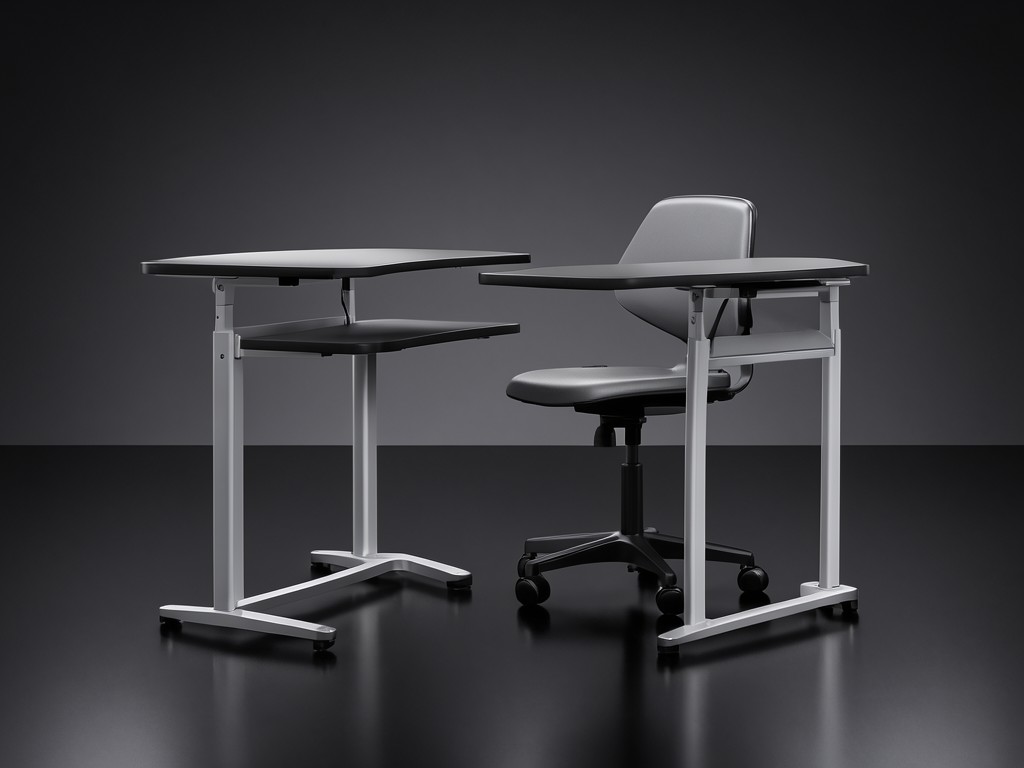
Cost advantage is strongest when dimensions, finish and packout stay common across the order. Added variants reduce the benefit of a simple production run.
A specified frame reinforcement, stronger support beneath the desk panel or upgraded edge treatment adds cost and may add shipping weight. Those changes can make sense in shared rooms where sets are moved often and minor damage generates repeated service work.
Confirm the intended use and inspection criteria before selecting upgrades; added material does not correct poor joint placement or inconsistent assembly.
For primary-grade classrooms, select the desk and seat relationship for the students who will use the set, then keep the size group clear on cartons and product labels. Secondary classrooms may need a larger work surface for books and devices. Private-label ranges benefit from a small number of stable configurations, since each size or finish variation adds separate purchasing, inspection and packing requirements.
Moving from sample orders to container loads changes the cost structure. Sample work may carry a larger share of setup, fixture adjustment and approval effort per set; a repeat bulk run can spread those fixed tasks across more units. The saving depends on a frozen drawing and consolidated options. Separate colours, mixed dimensions or late packaging changes can interrupt the production sequence and add handling even when total quantity is high.
Lead time should be planned from sample sign-off, component availability, production slot and export pack approval rather than from order placement alone. Share the required ship window, forecast quantities and any staged delivery plan at quotation. The factory can then confirm a schedule against the actual configuration and reserve capacity where the program requires repeat releases.
Standard configurations are easier to schedule than orders that change dimensions, colour or hardware each time. For a continuing range, retain the approved drawing, finish reference, carton specification and inspection record against the item code. Forecasts help purchasing plan panel and frame components; they do not guarantee finished-goods stock unless a stock arrangement has been agreed.
If demand is seasonal, agree a forecast and release schedule early. A repeat order with unchanged specifications can avoid another round of tooling checks, while a revision to frame or panel dimensions may require fresh sample approval and updated packing validation.
Flat-pack supply can reduce freight volume, but the carton must protect panel edges, coated frame surfaces and loose hardware through handling. Confirm whether each carton contains one complete set, whether assembly instructions and fasteners are included, and which marks the importer needs for warehouse receipt or retail distribution.
A packed sample or agreed packout photos give both sides a reference for bulk inspection. Changes to carton size can affect container loading, so treat freight configuration as part of the product specification rather than a final warehouse detail.
Share the target student group, set dimensions, order volume, private-label requirements and required ship window. The specification team can review the sample route, fixture needs, packout and repeat-order plan against your cost-per-unit-sold target.
Contact us to discuss your project and request a configuration review for your bulk order.








