Contact Fumei
No.20 Jiuqiao Road, Shijiang Industrial Area, Jiujiang Town, Nanhai District, Foshan City, China.
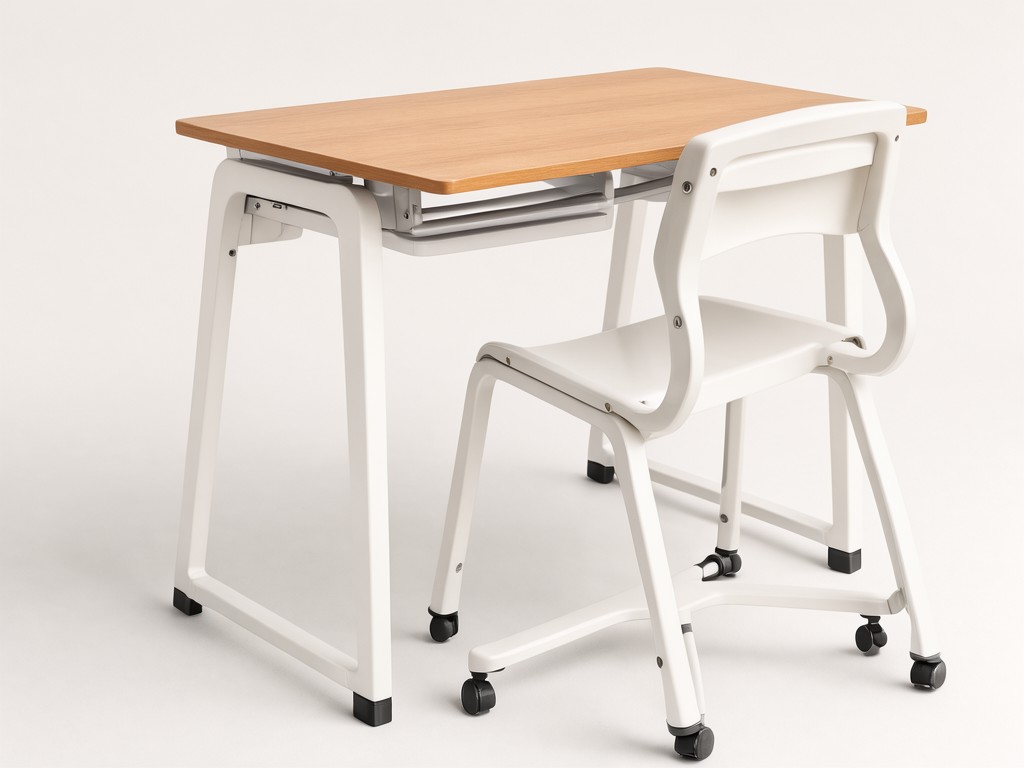
Specifying affordable student desk and chair set producer for Wholesale and OEM Orders Weight and stiffness trade off against each other. A lighter set can reduce freight and make room changes easier,
Weight and stiffness trade off against each other. A lighter set can reduce freight and make room changes easier, but thin steel sections or a flexible desktop may feel unstable under daily classroom use. Agreeing the intended age group, load pattern, and target price before production helps keep those trade-offs from turning into launch delays.
The limiting factor is rarely the headline specification. Desk stability depends on the relationship between the leg footprint, frame joints, and top size; chair service life depends on how the seat, back, and legs carry repeated user movement. A sample that looks right in a showroom can still feel loose if the production drawing leaves joint details or fastener positions open to interpretation.
Fatigue appears at the stress concentration. On the desk, that is often around a leg-to-apron connection or a fixing point near the desktop edge. On the chair, repeated leaning can load the seat-to-back transition and the rear leg joints. Confirm these details on a representative sample, then lock the approved construction and dimensions into the production drawing.
Stability: confirm desk footprint, leg section, and cross-bracing as a combined choice.
Fit: set desk and seat heights for the student age group and destination market.
Repeatability: approve one drawing and sample reference before ordering production quantities.
A powder-coated steel frame is a common cost-controlled choice for both desk and chair. Tube diameter, wall thickness, bends, and joint design affect stiffness and weight; increasing steel use can reduce flex, but adds material cost and freight weight. Confirm whether the quote covers a fixed or height-adjustable desk, since telescoping legs add parts and assembly steps.
For the work surface, laminated particleboard or MDF keeps the unit price lower than many solid or molded alternatives. Edge treatment matters: exposed board edges are more vulnerable to impact and moisture during normal school use. A molded polypropylene chair seat and back can reduce part count, while a formed board seat may suit a price-led design; the shape and attachment points still need to suit the expected sitting pattern.
Drawing rule: specify frame section, panel thickness, edge finish, fastener type, and surface colour together. A material name alone does not define the finished set or its expected feel.
Use the comparison as a starting point for the specification discussion, not as a substitute for an approved drawing. Dimensions and net weights vary with age grading, frame section, desktop thickness, and chair design.
| Use level | Typical configuration | Indicative size and set weight | Suitable purchasing context |
|---|---|---|---|
| Light daily use | Powder-coated steel frame, laminated board desktop, molded plastic chair seat and back | Desk top commonly around 600 × 400 mm; set net weight often falls near 10–14 kg, subject to size and materials | Home study, tutoring rooms, or lower-frequency classroom use where price and manageable weight lead the brief |
| Shared, frequent use | Heavier frame sections or added bracing, protected desktop edges, reinforced chair joints | Desk top commonly around 600–700 × 400–500 mm; set net weight often falls near 13–18 kg, subject to specification | Schools and learning centres with daily room changes, repeated use, and less controlled handling |
Ask the producer to state whether quoted weight is per set and whether it includes detachable accessories. For a launch plan, a shared definition of finished dimensions and net weight prevents avoidable revisions between sample approval and purchase order.
Start with the student age range, destination-market sizing expectations, intended use frequency, target retail price, and required ship date. Add a reference sketch or drawing with overall dimensions and the details that affect assembly. If a reference product is available, identify which features must match and which may change for cost.
Request the quote against a defined version: desk height, top size and thickness, frame finish, chair seat height, chair material, colour, and any branding. The first sample should resolve fit, appearance, and assembly questions. Record approved changes in a dated drawing or sample sign-off so the production order does not rely on comments scattered across emails.
For a time-sensitive retail or school launch, ask the producer to separate sample development, material confirmation, production, and dispatch timing in the quote. A late artwork change or an unapproved colour can shift the schedule even when the base frame and panels are available.
Common custom options include frame and panel colours, desktop dimensions, fixed height, chair colour, edge finish, and a logo or retail label. The earlier these choices are fixed, the easier it is to reserve matching materials and keep the sample aligned with the intended production version.
Structural changes are not simple artwork edits. A different desk height can require changes to leg length and packaging layout; a new chair silhouette can require revised tooling or attachment points. Confirm minimum order quantities and any tooling charge before approving a shape change. Existing tooling and standard colours usually offer a shorter path than a new molded component or custom colour match.
Supply print-ready logo files with placement, size, colour references, and any required retail text. Approve a visual proof before the branded sample or production run. A branding and artwork review can resolve file and placement questions before they affect the order schedule.
Lead time depends on whether the order uses existing dimensions and finishes or requires new sampling, tooling, or colour matching. Confirm the required quantity, order split, destination, artwork status, and approval owner when requesting a schedule. Those inputs let the factory distinguish production capacity from time still needed for decisions.
For a launch date, build the internal approval deadline backward from the requested dispatch window. Reserve time for drawing review, sample comments, final artwork, and purchase-order confirmation. If the sample needs a dimensional or structural change, agree whether it requires a new sample before the production slot is confirmed.
A staged order can help align inventory with store or school delivery dates, but separate batches need the same approved specification and colour reference. Confirm the quantities and release dates together so the producer can plan material purchasing against the full order.
Availability is most predictable when the reorder uses the same frame, panel dimensions, finish, and chair components as the approved run. Ask which parts are regular production items and which depend on a minimum colour or material purchase. A stock statement should identify the actual configuration; “desk and chair set available” is not enough if the stocked version differs from the approved retail item.
Retain the approved drawing, sample reference, colour details, logo file, and fastener specification with the purchase record. For a reorder, compare those references against any requested changes before confirming price and timing. Substituting a panel thickness or chair component to use available stock can change weight, fit, or perceived stiffness, so obtain buyer approval first.
Assembly instructions should identify each frame member, panel orientation, and fastener location. Tighten connections evenly and avoid forcing a screw into a misaligned pilot hole; that can damage the board or leave the frame joint loose. For desks with adjustable legs, confirm that both sides are set to the same height before use.
Use a soft damp cloth for routine cleaning and dry metal surfaces after spills. Avoid abrasive pads on powder coating and standing moisture at panel edges. Include part names or reference numbers for feet, fasteners, chair seats, and backrests in the buyer’s service records so replacement requests identify the correct production version.
Prepare the launch brief before requesting a quote. Share the target dimensions, intended student group, order quantity, destination, artwork, and approval dates. That gives the producer a clear basis for pricing the set and confirming a schedule.
Request an artwork and branding review alongside your drawing and sample approval plan.