Contact Fumei
No.20 Jiuqiao Road, Shijiang Industrial Area, Jiujiang Town, Nanhai District, Foshan City, China.
B2B laboratory school desk and chair furniture China Supplier: Specification, Ordering and Quality Notes The build method decides how consistently a school laboratory desk and chair can be repeated ac
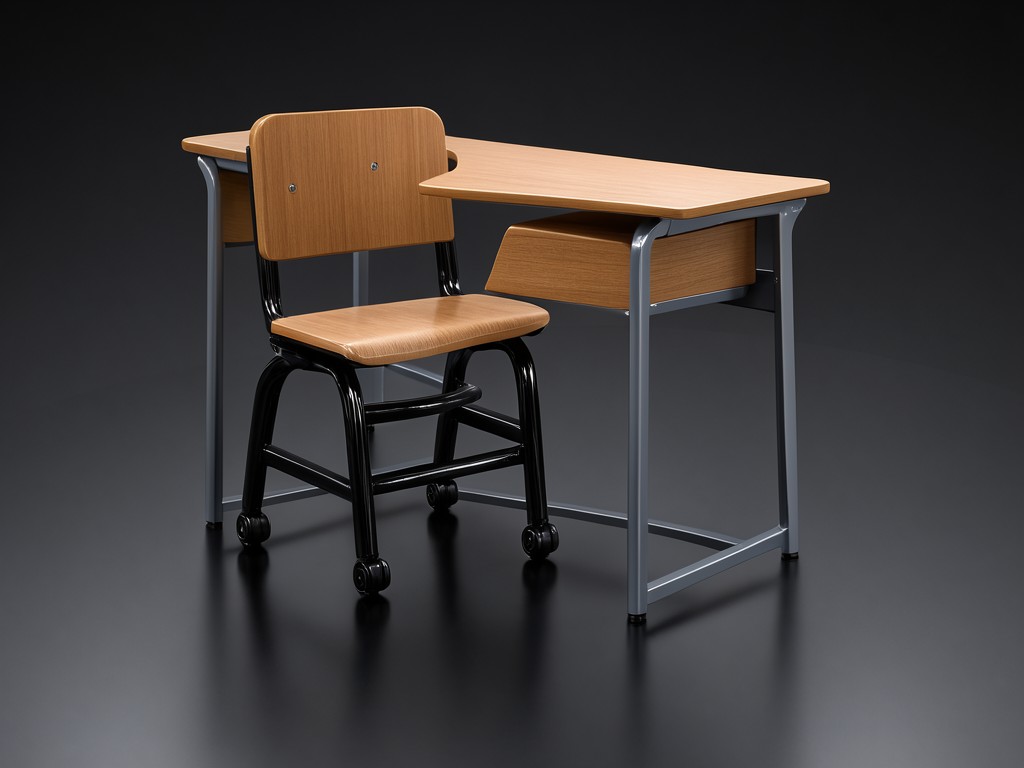
The build method decides how consistently a school laboratory desk and chair can be repeated across a purchase order. A typical construction uses formed steel tube frames, welded joints, a powder-coated finish, and a worktop selected for the room’s teaching and cleaning conditions. For second-source qualification, compare the frame drawings, board build-up, fixture references, and inspection points—not just the finished sample.
A desk sized for group laboratory work needs usable knee clearance, stable support, and a top that suits the expected spills and cleaning routine. Thicker steel sections and reinforced joints add material and welding time; lighter frames reduce freight weight but leave less tolerance for rough daily handling. Chair height and desk height should be specified as a matched set for the intended age group.
Specify the desk and chair as a coordinated set. A worktop height change without a matching chair-height decision can create an ergonomic mismatch even when both pieces meet their individual drawings.
Consistency is set at the forming stage. Tube bends that drift from the drawing can pull the frame out of square, while poorly controlled welding can leave rocking feet or uneven top support. A locating jig holds joint position through welding; its value rises when repeat orders use the same frame geometry.
The worktop contributes to service life as much as the frame. Board thickness, surface material, edge sealing, and cutout details need to match the intended room conditions; an exposed edge can admit moisture and swell even when the visible face remains intact. Powder coating protects the steel surface, but coverage at corners and welds depends on preparation and rack placement.
For a second source, freeze the approved drawing revision, finish sample, hardware, and packing method together. If one supplier uses a different tube section or board build-up, a similar external appearance does not establish equivalent load behaviour or fit.
First-article tooling determines whether the production fixture follows the approved geometry or merely produces a close visual match. Skipping a first-article check may leave the buyer with holes that do not align, chairs that rock on a level floor, or tops that sit unevenly on the frame.
A useful inspection plan checks the product against the released drawing at the points most likely to change between batches: frame dimensions, weld position, finish coverage, top fit, and chair stability. Agree on the sample quantity, defect classification, and records before production; these controls help a second source deliver repeatable lots rather than a single acceptable sample.
| Item | Typical specification basis | Factory check |
|---|---|---|
| Desk footprint and height | Common configurations fall around 600–1200 mm wide, 450–600 mm deep, and 640–760 mm high; confirm final dimensions for the room and user group. | Measure the finished unit against the approved drawing; verify top fit and frame squareness. |
| Chair seat height and finished mass | Seat heights commonly range from about 380–460 mm. A desk may weigh roughly 15–24 kg and a chair 4–8 kg, depending on size, board, and frame section. | Check seat height and sample weight; confirm the desk-chair pairing and assess rocking on a level surface. |
| Steel frame and joints | Tube section, wall thickness, brace layout, and weld locations should follow the released product drawing. | Inspect dimensions and weld appearance; assemble a sample to check alignment and movement under intended use. |
| Top, edges, and finish | Specify board type, surface, edge treatment, powder colour, and any cutouts; requirements depend on cleaning and room use. | Compare finish with the retained sample, inspect corners and edges, and check for coating gaps, chips, or surface defects. |
| Packing and batch identity | Carton protection, hardware pack, product labels, and batch references should be agreed for the export order. | Verify pack contents and labels; retain inspection records and the approved sample reference for reorders. |
Treat the dimensions and masses above as planning ranges, not universal standards. A change in board, frame section, or packing method can alter both finished weight and freight cost, so the quotation should identify the exact configuration.
Yes, provided the drawing set includes dimensions, material details, weld locations, finish references, hardware, and packing requirements. The factory should review the files for manufacturability and submit a first article for fit and finish approval before the production release.
Material purchasing, welding setup, coating batches, and packing labour all affect the unit price. Larger repeat orders can spread fixture and setup costs across more pieces, while a low-volume custom design may carry a higher per-unit charge and require more setup time. Ask the supplier to separate tooling or fixture charges from the recurring unit price.
Approve the first article, finish sample, worktop edge, hardware, carton method, and product label details. For a repeat programme, keep the revision and sample reference on file so later lots do not drift in dimensions or colour.
A preliminary schedule is possible, but confirmed timing depends on drawing approval, material availability, finish selection, tooling needs, order quantity, and sample sign-off. Custom frame geometry or a new colour can add setup steps that standard configurations avoid.
Send the drawing revision, target quantity, finish reference, delivery location, and any approved sample notes for a like-for-like review. The quotation can identify tooling charges, configuration differences, and the production assumptions that affect unit cost and lead time. Request a quotation review.