
Contact Fumei
No.20 Jiuqiao Road, Shijiang Industrial Area, Jiujiang Town, Nanhai District, Foshan City, China.
Specifying Best Price anti scratch school desk and chair supplier for Wholesale and OEM Orders The build method decides where a low purchase price holds up and where it creates repeat complaints. For
The build method decides where a low purchase price holds up and where it creates repeat complaints. For school furniture, the common trade-offs sit at the tabletop face and edges, chair joints, frame finish, and the protection used for export freight.
A practical second-source review should compare panel and frame specifications, not just the quoted set price. Anti-scratch describes resistance to routine classroom abrasion; it does not mean the surface cannot be marked by sharp tools, grit, or dragged hardware.
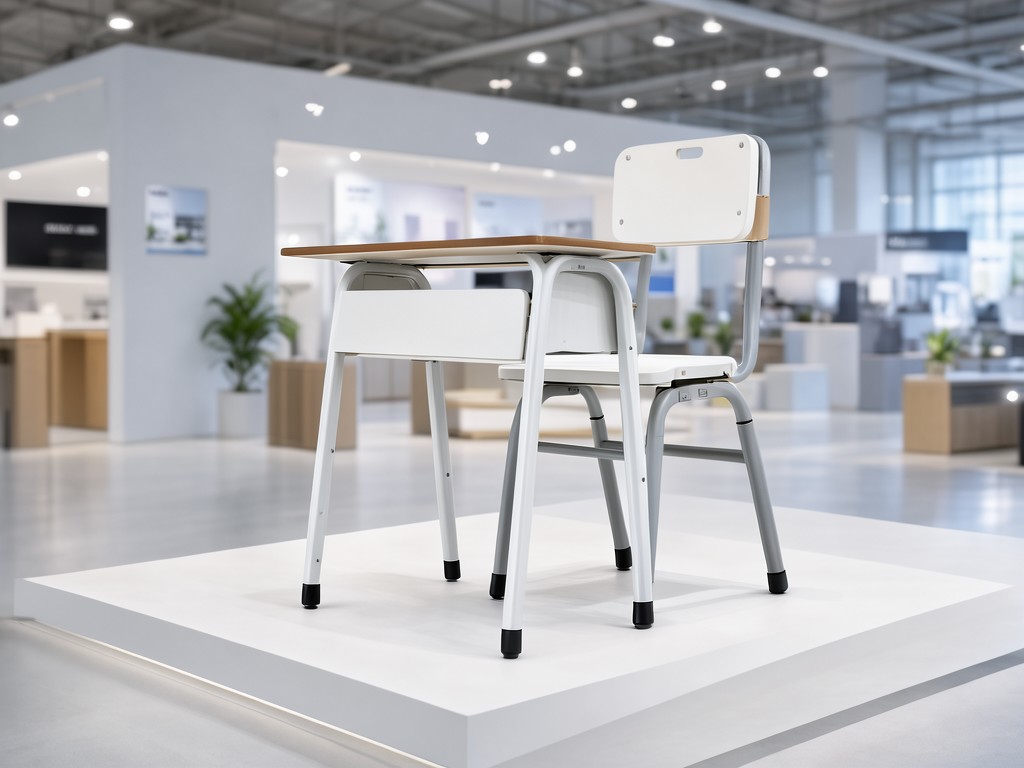
For flat-pack school desk and chair sets, a common cost-controlled construction pairs a melamine-faced wood panel desk top with edge banding, a formed steel tube frame, and a molded plastic or formed-panel chair. Panel grade, face finish, edge adhesion, and weld placement affect service life more than a low unit price suggests.
Chipped corners often start where edge banding is thin, poorly bonded, or exposed to repeated impacts. Scratches show sooner on glossy faces and dark colours. On the chair, loose fasteners or weld fatigue can appear if the frame geometry and joint fit change between production runs.
Specification boundary: Ask the supplier to identify the panel core, face finish, edge treatment, frame tube dimensions, and coating process in the approved specification. “Anti-scratch” alone does not define a test method or guarantee against every classroom mark.
School tenders often call for different colours, desk heights, chair sizes, or local branding. Each change can affect component availability, setup time, and reorder matching. Confirm the approved sample and the limits of each finish before production release.
Standard panel decors and a standard powder-coat colour usually reduce setup and sourcing complexity. This route suits repeat orders where the buyer can accept the factory’s available colour range.
A custom panel décor, frame colour, or logo may require a minimum run or separate setup. Approve colour under consistent viewing conditions, then retain a signed sample or documented reference for repeat orders.
Height and size changes need a coordinated desk-and-chair review. A change to one item alone can leave the set mismatched for the buyer’s intended age group or local purchasing specification.
First-article tooling determines how well a custom desk profile, frame bend, or branded component carries into production. For a second-source qualification, begin with a controlled sample against the target dimensions, materials, colour references, assembly method, and carton plan.
OEM orders typically use the buyer’s drawings, approved materials, and branding artwork. ODM development can adapt an existing desk-and-chair construction, but any change to panel thickness, frame geometry, or hardware should be reflected in the sample record before a purchase order is placed.
Consistency is set at the forming stage. Panel dimensions, edge application, tube bends, hole locations, and weld fixtures establish the fit that assembly depends on. If those controls drift, buyers may see uneven desk edges, chair wobble, misaligned fasteners, or colour differences across one shipment.
A second-source programme should define the approved materials and finish references before the first bulk run. Keep the sample identifier, revision status, and critical dimensions with the order record; then compare later batches against the same basis rather than against memory or an unmarked showroom sample.
Weather exposure matters during storage and export transit as well as classroom use. Moisture can affect panel edges and carton strength, while poorly protected steel can show finish damage after abrasion or condensation. Specify dry storage, suitable carton protection, and a finish system appropriate to the intended environment.
Damage complaints often begin before the furniture reaches a classroom. Carton compression, shifting loads, and damp storage can scuff panel faces, break corners, or expose frame parts to moisture. Align packout checks with the buyer’s route and handling method.
| Handling or Storage Condition | Complaint Seen at Receipt | Packout Specification to Prevent It |
|---|---|---|
| Cartons stack or shift during container transit. | Scratched faces, crushed corners, or damaged edge banding. | Separate finished faces with protective sheets or sleeves; restrain the load and validate carton strength against the planned stack and route. |
| Goods wait in a humid warehouse or pass through damp conditions. | Swollen panel edges, softened cartons, or marks on steel components. | Use dry, intact cartons and suitable moisture protection; confirm storage instructions and inspect the packed product before sealing. |
| Mixed desk and chair sets are moved through distributor handling. | Bent frame parts, missing hardware, or incomplete sets. | Immobilize frame components, bag and identify assembly hardware, and use carton marks that link each desk pack to its chair set. |
Before shipment, inspection can cover key dimensions, panel-face and edge condition, weld appearance, coating coverage, fastener fit, assembly completeness, and carton condition. Agree the inspection scope and sampling basis with the supplier; do not treat a visual check as proof of scratch resistance or weather performance.
For repeat supply, distinguish stocked components from finished goods. Standard panel decors, steel sections, hardware, and carton materials may be easier to replenish than a custom colour or newly tooled part. Confirm component availability, production slot, and lead time against the order forecast rather than assuming finished sets are held in stock.
A dated specification and retained approval sample reduce variation when a second order follows a gap in production. Buyers qualifying a backup supplier should also confirm change notification, replacement-part handling, warranty scope, and batch traceability before moving volume.
For a quotation review, share the required set configuration, target quantity, destination, branding files, and packaging needs. Request a quotation review to compare the proposed construction, packout, and reorder conditions against your current supply specification.








