
Contact Fumei
No.20 Jiuqiao Road, Shijiang Industrial Area, Jiujiang Town, Nanhai District, Foshan City, China.
china cost-effective educational tables and chairs manufacturer - Bulk Supply and Specification Guide Design Constraints Behind the Specification The limiting factor is rarely the headline specificati
The limiting factor is rarely the headline specification. In a classroom, mismatched seat heights, desk heights or edge details become visible across a shipment, and the buyer pays for that drift through sorting, complaints and replacement orders. A private-label specification should lock the table and chair dimensions as a matched set, with the intended student age group and classroom layout confirmed before production.
Set the usable dimensions first: seat height and depth, backrest position, desktop height, panel thickness and leg clearance. Then select the frame section, surface and edge treatment that fit the expected daily use. A thicker panel or heavier tube can raise unit cost and shipping weight; the benefit is worthwhile only when the school’s handling pattern or service life calls for it.
Repeat loading drives the failure. Chair legs and crossbars take stress as students shift, lean back and move furniture between lessons; table joints face similar loads during cleaning and room changes. When a frame flexes at a weld or a fastener loosens, noise and wobble tend to appear before a visible break.
Comfort depends on fit as much as padding or surface feel. A seat that is too high can leave shorter students without stable foot support, while an unsuitable desktop height can change arm position during writing. Confirm the intended user group and chair-to-table pairing on a physical sample; small dimensional changes can affect perceived comfort across an entire school order.
For repeat orders, retain an approved reference for dimensions, frame colour and surface finish. Without one, acceptable variation in separate production lots may still create a visibly mixed classroom set.
Laminated board offers a familiar writing surface and a broad choice of colours. Panel grade, edge sealing and thickness affect cost, surface wear and resistance to routine cleaning.
Moulded polypropylene suits curved seat and back shapes and avoids exposed panel edges. It adds mould and tooling considerations, so it is most cost-effective when the order volume supports a fixed design.
Steel tube is a common frame choice for institutional furniture. Tube diameter, wall thickness, bends and brace layout determine the material use and the frame’s resistance to movement.
Powder coating provides a finished surface over prepared steel. Colour control depends on the agreed reference and process settings; a colour change between lots is more noticeable when chairs and tables sit together in open classrooms.
Choose surface and frame options as a whole specification. A low-cost panel paired with a heavier frame may miss the price target, while a lighter structure with an unsuitable panel edge can increase service complaints. Sample approval should cover the complete table-and-chair combination.
For a buyer matching an existing private-label product, the assembly reference matters as much as the material list. Keep drawings, approved finish samples and component revisions aligned; a supplier change to a hole position or brace dimension can alter the fit even when the catalogue description stays the same.
For standard daily lessons and regular room cleaning, specify the required dimensions, a practical steel frame and a surface matched to the buyer’s price point. This configuration limits unnecessary material cost, but finish and edge details still need to suit the school’s cleaning routine.
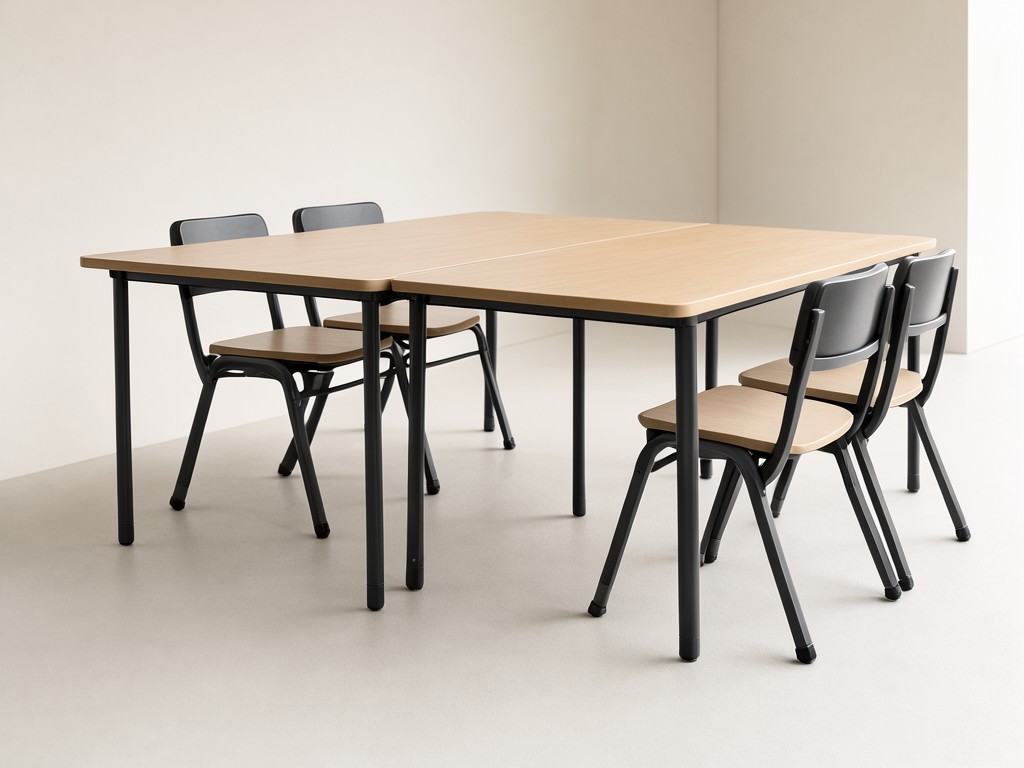
Where staff move furniture between rooms or rearrange seating often, review brace placement, joint access and the surface’s resistance to scuffs. Added reinforcement and upgraded edge or finish choices raise the unit price; they can reduce the visible wear that drives early replacement.
Usage level should determine the specification, not a broad “heavy duty” label. Ask suppliers to quote the same dimensions, finish, packing method and component grade for each option so the price difference has a clear cause.
For OEM supply, provide the existing drawing, bill of materials, finish reference, packaging requirements and approved sample. This route keeps redesign out of the programme and focuses the review on whether the factory can reproduce the specified dimensions, materials and appearance. ODM work may include adjustments to frame geometry, panel shape, colour or branding; changes to moulded parts can require tooling review and a longer approval path.
| Planning Item | Typical Quotation Basis | What Changes the Plan |
|---|---|---|
| MOQ | Quoted by model, finish and order mix; separate colour runs may require separate quantities. | Custom colours, moulded parts, packaging and the number of sizes in the order. |
| Sample and bulk lead time | Confirmed after drawing review, sample approval and component availability. | New tooling, finish approval, order quantity, export packing and production scheduling. |
MOQ and lead time should be confirmed against the final configuration rather than a catalogue model. For reorders, retain the same part revisions and finish references; small changes can trigger a new sample approval and affect delivery timing.
Lot-to-lot control starts with a clear reference for frame dimensions, panel or seat dimensions, assembled weight, finish colour and packaging. Production records should identify the component revisions used for each order. That record gives buyers a basis for checking a replenishment lot against the product already in schools.
Dimensional checks on the frame and assembled furniture help catch fit drift before cartons close. Finish comparison against the retained sample can flag a shade change; weight checks can help identify a material or component substitution. These controls are most useful when the buyer and factory agree on acceptable tolerances before mass production.
Planning a private-label order around an existing table or chair? Request a tooling and specification review with drawings, target quantities, finish references and the approved sample details. The review can identify which dimensions and components can remain unchanged before quotation and sampling.








