
Contact Fumei
No.20 Jiuqiao Road, Shijiang Industrial Area, Jiujiang Town, Nanhai District, Foshan City, China.
Custom classroom table and chairs set Exporter: What Buyers Should Check Before Ordering Top material sets the cost floor and the repair route: melamine-faced board keeps the purchase price down, whil
Top material sets the cost floor and the repair route: melamine-faced board keeps the purchase price down, while plywood with a durable laminate tolerates repeated edge knocks better. If a school expects daily use across several terms, specify the edge treatment and frame finish with the panel grade; if the furniture will see lighter use, a simpler top may be the better cost-per-seat choice.
Set the approved reference before production. Confirm top dimensions, chair seat height, panel thickness, frame finish and colour against one approved sample. Small differences across a shipment can complicate classroom allocation, increase replacement requests and delay a planned launch.
Cost and service life pull in opposite directions once tables and chairs are moved, stacked or cleaned every day. Thin board can swell at an unsealed edge after repeated damp wiping; light-gauge tubing can flex at the joints, and a thin powder coat shows scratches sooner at contact points. Those faults are not just repair issues: mixed replacement parts and visible finish differences can make a later reorder harder to match.
A lower quote can still make sense for low-use rooms, provided the buyer accepts a shorter service interval and keeps replacement quantities in view. For sustained daily use, compare the cost of a thicker, sealed panel and a better-protected frame against the likely cost of early top or chair replacement. The decision rule is to pay for the wear points that are difficult to service separately.
Construction options diverge as soon as weight matters. A welded steel-tube frame gives the table and chair a fixed geometry, but cut lengths, fixture position and weld sequence must stay controlled from one production lot to the next. For the tops, CNC panel cutting keeps dimensions repeatable; edge banding or sealed edges then protect the board core from routine cleaning and knocks.
For chairs, an injection-moulded polypropylene seat and back reduce part count and simplify wipe-down care. A plywood seat and back can suit a coordinated wood-look range, but add finishing steps and make edge condition a more important inspection point. Powder-coat shade can also vary between batches, so buyers should approve a physical colour reference and keep the finish code and supplier record with the order specification.
Record panel type, thickness, top size, edge method and surface colour. These details help prevent substitutions that alter weight or appearance.
Freeze tube dimensions, joint locations, foot design and coating colour. A change to any of these can affect fit, finished weight or replacement compatibility.
Approve seat height, shell material and colour together. A matching colour name alone does not ensure a close visual match between separate production lots.
The useful comparison is not simply “light” versus “heavy”; it is whether the furniture needs to tolerate routine classroom handling or more frequent movement and cleaning. The dimensions and weights below are indicative production ranges, not a substitute for a buyer-approved drawing. Confirm the age group and required fit before fixing the final sizes.
| Usage level | Table size and weight | Chair size and weight | Typical materials |
|---|---|---|---|
| Routine, single-shift classroom use | Around 1200 × 600 mm top; approximately 12–18 kg per table, depending on frame and panel choice | Seat height commonly selected within 340–460 mm; approximately 4–6 kg per chair | Melamine-faced board or laminated plywood top; welded steel-tube frame; polypropylene chair shell |
| Frequent movement, multi-shift use | Around 1200 × 600 mm top; approximately 15–21 kg per table, subject to the specified panel and frame | Seat height selected for the same user group; approximately 5–7 kg per chair with a reinforced frame option | Thicker or better-protected top edge; welded steel-tube frame; polypropylene shell or finished plywood seat and back |
A heavier configuration may cost more in materials and freight, but it can reduce damage at the parts that take repeated contact. Do not use weight alone as a proxy for strength: compare the approved construction and inspect the finished joints, panel edges and chair fixings.
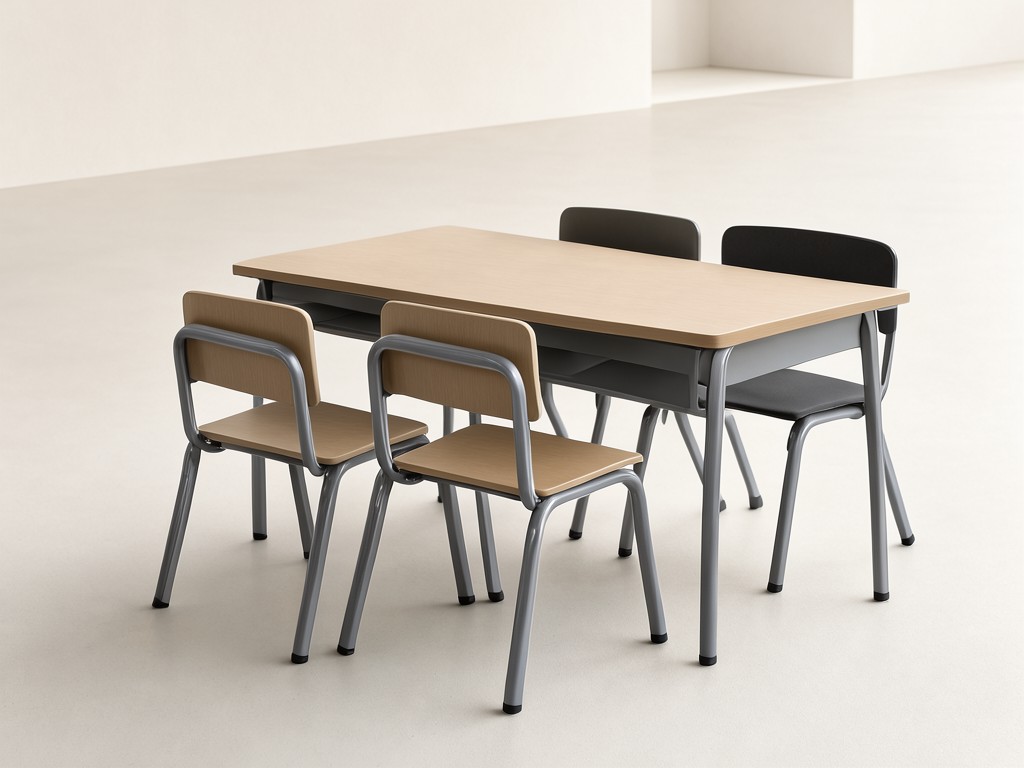
Size, finish and branding can be adapted, but each change affects sampling or production control. A new top dimension may need revised cutting files and frame positions; a custom chair-shell colour may require a minimum resin quantity or dedicated moulding run. Lock the bill of materials and artwork before the production sample is approved, particularly if the launch date depends on one consolidated shipment.
Inspection should compare finished goods with the signed sample and order specification, not just confirm that each piece is assembled. A change in panel thickness, chair height or frame coating can pass unnoticed if checks cover only appearance. Factory checks can include:
Agree the sampling points before the order enters production. If the shipment has multiple sizes or colours, request separate identification for each variant; otherwise, a pass on one configuration may not reveal drift in another.
Keep the drawing, bill of materials, finish reference and signed sample record under the same order specification. Ask the factory to flag any supplier or component change before production; panel and coating substitutions can affect finished weight and colour even when the external dimensions stay the same.
Yes. Provide the required table height and chair seat height, plus any local purchasing specification that applies. Approve the dimensions on a physical sample or drawing before bulk production; a colour or logo sample does not confirm ergonomic fit.
Minimum quantities depend on the selected panel finish, powder-coat arrangement and chair-shell colour. Custom moulding colours or added tooling review can extend sampling and purchasing steps, so confirm availability and the approval schedule before fixing a launch date.
Matching is more predictable when the original dimensions, frame specification, panel finish and colour reference remain on file. Natural variation between material batches can still occur, so buyers with phased purchasing should request colour confirmation before releasing a later lot.
Share your target dimensions, age group, material preference, colour references and order quantity for a tooling and sample review. Early agreement on the approved configuration gives production and inspection teams one reference to follow, reducing the risk of lot variation that can disrupt a scheduled launch.
Request a tooling review







