
Contact Fumei
No.20 Jiuqiao Road, Shijiang Industrial Area, Jiujiang Town, Nanhai District, Foshan City, China.
Tooling amortisation decides the unit cost. A fixed desk-and-chair specification can spread setup costs across repeat orders; frequent changes to frame geometry, molded parts or integrated power featu
Tooling amortisation decides the unit cost. A fixed desk-and-chair specification can spread setup costs across repeat orders; frequent changes to frame geometry, molded parts or integrated power features can add cost and extend approval time. Confirm drawings, tolerances and a signed sample before a production run.
Replacement rate, not unit price, is the useful cost measure for a school furniture program. A desk that wobbles, a chair that develops a loose joint, or a power module that does not match the local plug and voltage can turn a low quote into returns and service work.
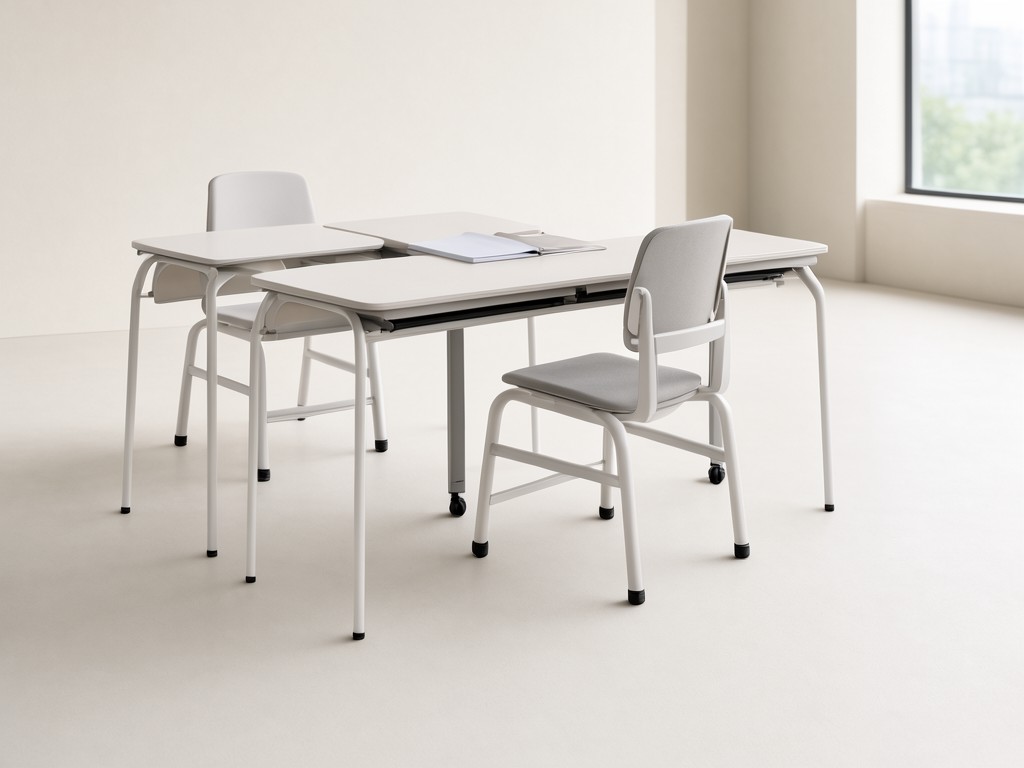
A set typically combines a student desk and chair, with options for a book or device compartment, cable routing, height adjustment, and a desk-mounted charging module. The desk may use a steel-tube frame with a laminated wood-based or molded top; the chair may pair a formed seat and back with a welded or bolted steel frame. Exact materials depend on the target price, classroom cleaning routine and expected service life.
For an importer or brand product manager, the supply definition should state whether the set ships assembled or as knock-down furniture, which fasteners and tools are included, and whether electrical components are part of the order. Artwork, carton labels, assembly instructions and spare-part quantities also belong in the approved specification rather than in email notes alone.
Comfort depends on the relationship between seat height, desk height, seat depth and the pupil age range. A fixed-height set costs less and has fewer adjustment parts, but it fits a narrower range of users. Adjustable legs or chair mechanisms add hardware and inspection points; they are worthwhile when one classroom serves several age groups or the furniture moves between rooms.
Freeze interfaces before sampling. Specify hole locations, tube sections, edge radii, fastener access and cable openings on dimensioned drawings. Changes to a hole pattern or molded detail after sample approval can affect existing jigs, tooling and packing fit, even when the visible change appears small.
Finish and panel choices also set practical limits. Powder-coated steel suits frequent contact, but coating thickness and coverage at welds and tube ends need visual inspection. A laminated top can offer a wipe-clean surface at a moderate cost; edge sealing and corner protection matter because moisture entry or impact can cause swelling and edge damage. Agree acceptable color variation against a physical reference, not a screen image.
A desk frame must resist side-to-side movement and repeated leaning; chair joints must tolerate daily sitting, dragging and occasional stacking or repositioning. Thin tube walls or poorly controlled weld locations can show up as rocking before a frame visibly breaks. A thicker section may reduce movement, but it adds material weight and freight cost, so the frame geometry and joint layout should be reviewed together.
Smart features add a separate use condition. Cable paths should avoid sharp edges and pinch points, while charging modules need a confirmed electrical configuration for the destination market. Functional checks can confirm module operation and cable fit on sampled units; they do not replace the buyer’s review of local electrical requirements or the supplier documentation required for the intended market.
| Use condition or complaint | Specification point to agree | Factory-side check |
|---|---|---|
| Desk or chair rocks on a hard classroom floor | Frame geometry, foot-pad material and allowable dimensional variation | Check assembled samples on a flat reference surface; inspect key frame dimensions |
| Loose joints or cracked panels after repeated handling | Joint design, fastener type, panel thickness and assembly method | Review fastener fit and conduct agreed sample load or repeated-use checks |
| Chipped coating or swollen top edges | Coating coverage, panel edge treatment and carton protection | Visual finish review and inspection of packed samples after handling checks |
| Charging or cable-routing complaint | Module, connector, cable length, routing clearance and market configuration | Confirm module identity, cable fit and agreed sample functionality |
Start with user height bands, room layout and the way furniture is stored between lessons. Then specify the desk footprint, seat dimensions, fixed or adjustable height, top material, frame finish, storage details and any power or device feature. A quote based on a reference photo alone leaves critical dimensions open and makes sample approval harder to judge.
| Parameter | Indicative range or choice | What the buyer should confirm |
|---|---|---|
| Desk top footprint | Often around 600 × 400 mm to 700 × 500 mm; project-specific | Room spacing, device size, writing area and carton dimensions |
| Seat height | Commonly specified in user-size bands; roughly 350–460 mm across configurations | Pupil age or height range and whether the chair must adjust |
| Desk and chair weight | Varies with frame section, top material, adjustment parts and electrical options | Request separate net weights and packed weights against the approved build |
| Frame and top construction | Steel tube with laminated panel or molded components; finish and thickness by design | Cleaning exposure, edge protection, color reference and target price |
These are planning ranges, not a substitute for a controlled drawing. Confirm finished dimensions, measurement points and tolerances on the quote package. Ask the factory to identify any dimensions that depend on a selected seat mold, desk-top tool or adjustment mechanism before approving a pre-production sample.
Cheaper stock options fail at the worst point in the season: just before classroom handover, when replacement stock and installation time are limited. A stock frame may look close to the approved model but differ in tube section, foot pads, fastener length or coating color. If the buyer approves only the appearance, those substitutions can pass unnoticed until assembly or daily use.
Another frequent source of claims is a sample that was approved without the final carton, label or electrical option. Record the sample version, drawing revision, finish reference, module details and packaging configuration together. Before repeat production, check whether any supplier-substituted component, material thickness or assembly detail changed from the signed reference.
Color, logo placement, storage features, top shape, frame finish and cable management can usually be specified around an existing design. New seat contours, custom molded housings or a distinct height-adjustment system may require dedicated tooling or design work. That cost is easier to justify when the same approved design carries into repeat orders, rather than changing details between batches.
Submit vector artwork with dimensions and placement, plus a physical color reference where color matching matters. For powered features, provide the destination market, intended module configuration and connector requirements early. Keep samples and approvals tied to revision numbers; an artwork proof confirms branding placement, while a finished sample confirms fit, feel and construction.
Capacity depends on how many components are custom, the number of size variants, material availability and the assembly configuration. A standard frame and panel combination is generally simpler to schedule than a program with new molded parts, several finish colors and market-specific charging modules. Ask for the production plan by configuration, not only a single total quantity.
Tooling ownership, maintenance, storage and permitted use should be recorded in the commercial terms when a project funds dedicated molds or fixtures. Build time also includes drawing review, sample manufacture, buyer feedback and final approval. To limit repeat-order variation, retain a signed reference sample and inspection record, then use the same component specification and approved artwork files for each reorder.
Provide overall dimensions, key tube and panel details, adjustment ranges, fastener locations, finish references, branding position and the intended electrical configuration if applicable. Mark dimensions that control fit or assembly, and ask the factory to flag any item that cannot be held with the proposed construction.
Use existing frame and molded-part designs where they meet the brief, then customize colors, labels or approved accessory details. Dedicated tooling adds an upfront charge and may affect minimum order quantities; request separate pricing for existing-tool and new-tool routes before selecting a design.
A repeat order still needs material and component availability, confirmed quantities, current artwork and the required pre-shipment checks. New colors, changed dimensions or a revised power module may require fresh samples or approvals. Ask the supplier to separate sample approval time, production time and packing or dispatch readiness in the schedule.
Request a tooling review before finalizing the target cost. Share your drawings, annual volume estimate, destination market and preferred sample timing so the factory can identify tooling reuse, open dimensions and approval steps before quotation.








