
Contact Fumei
No.20 Jiuqiao Road, Shijiang Industrial Area, Jiujiang Town, Nanhai District, Foshan City, China.
Custom training room desk and chair manufacturer - Bulk Supply and Specification Guide During a private-label launch with a fixed ship date, a training room package has to arrive with desks and chairs
During a private-label launch with a fixed ship date, a training room package has to arrive with desks and chairs that fit the same floor plan and carry the same finish across the order. A low unit price can lose its appeal if panel dimensions drift, chairs arrive in a mismatched colour, or replacement parts cannot be matched to the original batch. Keep the existing product geometry and agree the material, finish, pack-out, and approval sample before production starts.
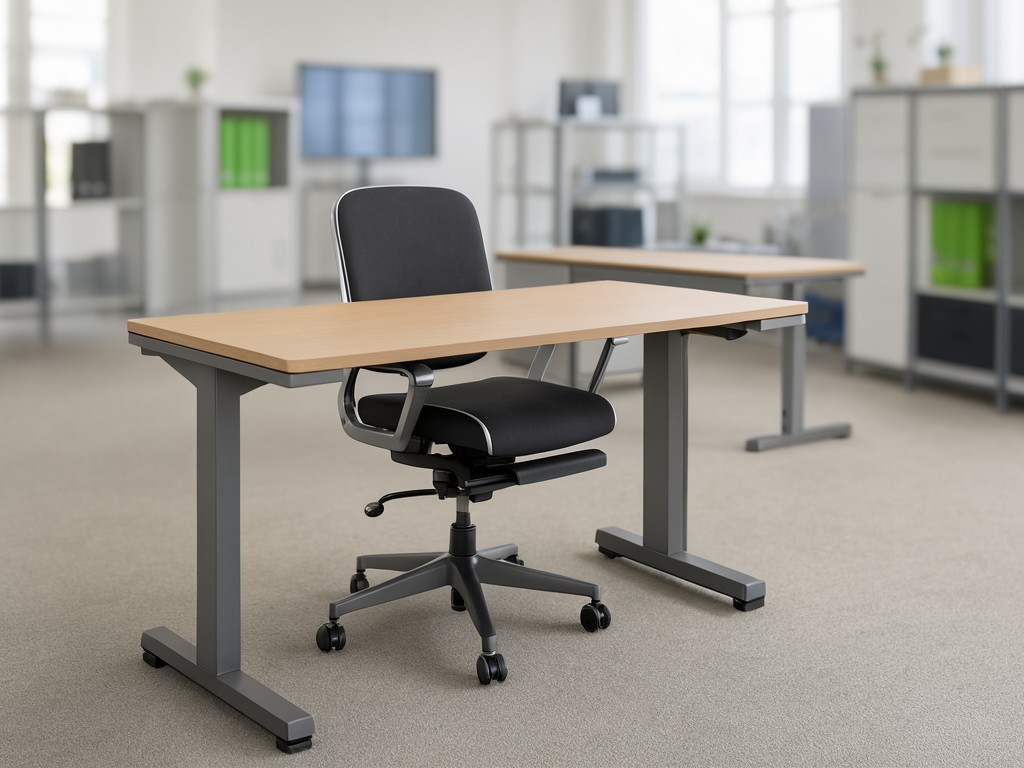
Training room desks and chairs are coordinated furniture for classrooms, corporate learning spaces, vocational centres, and other rooms where users need a defined work surface and a seat for repeated sessions. Common constructions pair a steel tube frame with a melamine-faced board top; chair options include moulded plastic seats and backs or upholstered panels. Desk size, chair footprint, and storage features should follow the room layout and the buyer’s established specification, not an untested redesign.
Factory production typically combines tube cutting and welding, surface preparation and powder coating, panel cutting and edge banding, then assembly and packing. For a private-label range, the critical decision is which existing dimensions and components must remain fixed so the next order still fits the same room plan and matches furniture already in service.
A small saving on the frame or panel can create a larger replacement cost if weld joints loosen, edge tape lifts, or chair legs become uneven under repeated movement. Thin or inconsistent coating can also show wear sooner at contact points; damp storage or condensation during transit can expose unprotected steel to corrosion. Compare the landed cost with the expected service conditions and the cost of handling returns, not with the ex-factory unit price alone.
Mixed components are another source of avoidable claims. A substitute panel thickness can alter desk height or fastener engagement, while a chair frame from a different production batch may sit unevenly beside the approved sample. Freeze the bill of materials and finish references for repeat orders; permit substitutions only after buyer approval.
Powder-coated steel tube offers a familiar frame construction for desks and chairs. Melamine-faced particleboard is a cost-conscious top option; MDF or plywood may suit a specification that prioritises a different panel feel or fastening requirement. Panel thickness, edge treatment, and frame gauge affect cost, finished weight, and resistance to damage during handling.
Moulded polypropylene seats and backs simplify wipe-down care and avoid fabric wear, while upholstery adds a softer contact surface at a higher material and labour cost. The choice affects appearance, cleaning routine, and replacement expectations. Confirm colour references and any texture requirement against a physical sample before the production run.
Furniture intended for indoor training rooms is not automatically suitable for outdoor exposure. Powder coating can help protect steel during normal indoor use and incidental cleaning, but prolonged rain, standing water, or damp storage calls for a different environmental specification and should not be inferred from the coating alone.
Private-label changes can usually be made around an established frame and panel design: colour, surface finish, edge banding, modest size adjustments, chair upholstery, logo placement, and carton artwork. Changes that affect tooling, weld fixtures, panel nesting, or packed dimensions need a separate cost and schedule review. A fixed ship date favours controlled changes to the existing design rather than a late structural revision.
For consistent reorders, record the approved sample, finish code or physical colour reference, panel and edge details, hardware, and label position in the order specification. Colour on a screen is not a dependable production reference; approve a physical sample where shade matching matters. Ask the factory to identify any proposed component change before it enters the batch.
A production partner starts with the buyer’s current specification and identifies which parts can remain unchanged. The factory can then align tube fabrication, panel processing, coating, assembly, and private-label packing around the approved configuration. For OEM orders, clear control of the reference sample and component list helps prevent an unapproved substitution from becoming the new batch standard.
Before shipment, agree the checks that matter to the order: key desk and chair dimensions, frame stability, finish appearance, hardware fit, and the count and condition of packed units. Records tied to the batch give the buyer a practical basis for resolving a damage or warranty query. The extent of checks and any sample plan should be confirmed with the factory before order release.
Tooling or fixture changes may be needed for a new frame shape or a substantial dimension change; colour, labels, and carton graphics generally require less engineering work. Share the target order quantity, delivery window, artwork, and required market labelling early so the quotation reflects the actual production route. Discuss an existing specification with the production team.
| Packaging approach | Suitable use | Trade-off to confirm |
|---|---|---|
| Knock-down components in an individual carton | Shipments where compact carton dimensions and local assembly are acceptable | More assembly at destination; protect panel edges and keep hardware identified with each unit. |
| Grouped cartons on a pallet | Bulk delivery to a warehouse or project site with pallet-handling access | Pallet dimensions, carton strength, and moisture protection must suit the route and storage conditions. |
| Retail or private-label cartons | Distributor stock or direct-to-customer fulfilment where branded packaging is required | Artwork approval and carton testing can add preparation time; confirm marks and labels before the print run. |
| Mixed desk-and-chair shipment | Room projects that require matched furniture in one delivery | Agree carton counts and loading sequence so the receiving team can reconcile the complete set. |
Repeat-order availability depends on retained materials, production capacity, and the time needed to replenish components; it should be agreed against a forecast rather than assumed from a catalogue listing. Buyers with seasonal or project-based demand can reduce supply gaps by sharing reorder timing early and keeping finish and carton specifications stable. Changes to a panel, coating colour, or packaging format may affect both lead time and order economics.
Usually, if you provide the current dimensions, material details, finish reference, and a sample or clear technical drawings. A physical finish sample helps confirm colour and surface appearance; structural differences may require fixture or tooling review.
New frame geometry, non-standard panel sizes, and custom colours can require additional setup or material purchasing. The effect depends on the requested batch and factory schedule, so confirm MOQ and lead time after the specification and artwork are reviewed.
Approve the artwork, product identification, carton marks, language, and any destination-market labelling. Also confirm how desk and chair cartons are identified as a set if the order will be received or sold as a coordinated package.
Confirm carton protection for panel corners and coated frame contact points, plus suitable moisture protection for the route and storage conditions. Review a packed sample or packing specification when the delivery includes long-distance handling or warehouse storage.
Send the current desk and chair specification, target quantity, preferred materials, finish references, packing requirements, and delivery window for a specification review. Request a private-label specification review.








