Contact Fumei
No.20 Jiuqiao Road, Shijiang Industrial Area, Jiujiang Town, Nanhai District, Foshan City, China.
Customized educational tables and chairs China Factory - Bulk Supply and Specification Guide Consistency is set at the forming stage: tube-bending fixtures, weld jigs and panel-drilling references det
Consistency is set at the forming stage: tube-bending fixtures, weld jigs and panel-drilling references determine whether table legs sit square and chair frames match across a shipment. A tighter fixture setup adds preparation time and tooling cost, but reduces assembly corrections when the order moves into volume. For a launch date with little schedule slack, confirm drawings, approved samples and carton configuration before production tooling is released.
Procurement teams for schools, daycare groups, education distributors and project contractors usually specify by pupil age, classroom layout and expected daily handling. A fixed classroom needs repeatable table heights and stable chair frames; a shared activity room may need stackable chairs and tops that tolerate frequent wiping. For sheltered outdoor teaching areas, specify moisture-resistant panels and a finish suited to damp conditions, since standard indoor board construction is not intended for prolonged rain or standing water.
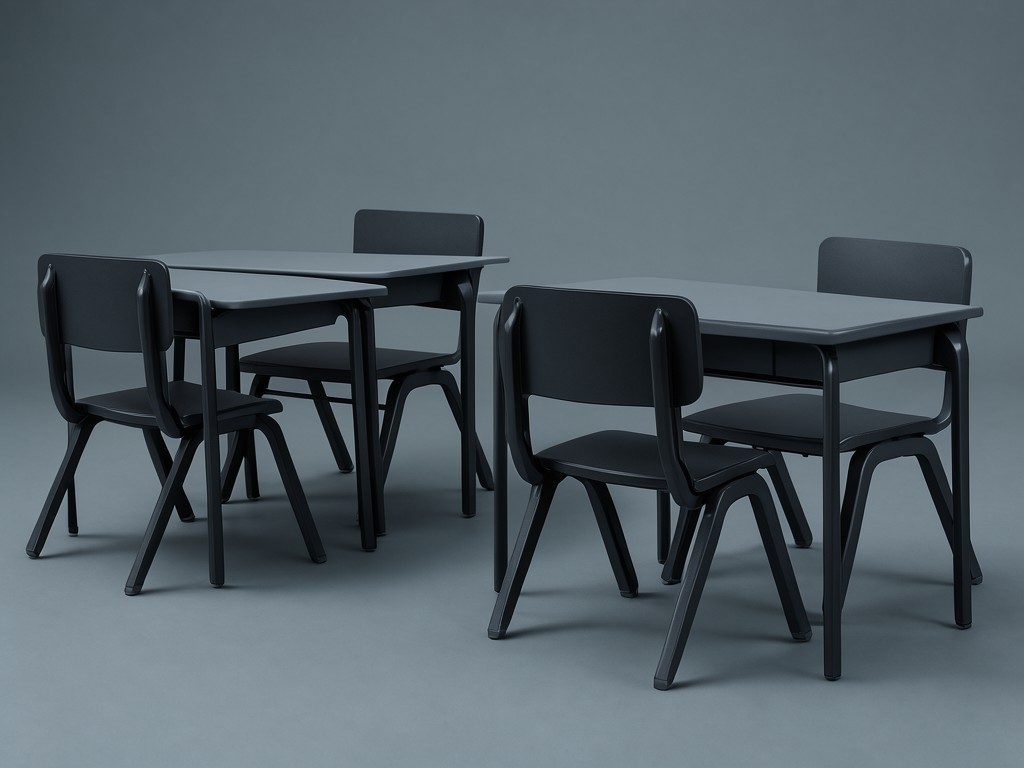
Grade-based height groups help buyers match table and chair dimensions to the intended users and room plan.
Rounded edges, cleanable surfaces and repeated handling are common specification points for shared-use rooms.
Consistent colour, carton identification and repeatable dimensions matter when replenishment orders must match a prior range.
First-article tooling determines how quickly a customized order can move from drawings to repeat production. A new bend radius, hole pattern or frame width may require fixture changes; shared dimensions across a range can reduce setup work and spread that cost across more units. Higher quantities can lower per-unit setup allocation, while extra colours, sizes or separate packing configurations add changeovers and may extend the production schedule.
For OEM and ODM programs, confirm the bill of materials, frame finish, tabletop edge treatment, seat colour, branding position and assembly method in one approved specification. A production sample should reflect the final material thickness and hardware, not just the intended appearance. Artwork supplied as editable vector files helps keep logo scale and placement consistent across tops, chair backs and cartons.
Schedule decision: freeze dimensions, finish samples and packaging artwork before ordering production materials. Late changes to a frame fixture or printed carton can affect the ship date more than a straightforward increase in quantity.
Tooling charges, minimum order quantities and lead times depend on the number of distinct configurations and whether existing fixtures can be used. Share the target order mix and launch date during quotation review so the factory can identify the longest approval or production step before confirming a schedule.
A frame that twists at the weld can leave a chair rocking on a level floor; a panel drilled from a shifted reference can misalign with the frame during assembly. Production checks therefore follow the same datums as the approved drawing: tube lengths and bend locations, hole centres, tabletop dimensions, edge finish and assembled fit. Batch records can link these checks to production lots and approved samples.
Melamine-faced particleboard can keep cost and weight down for indoor classrooms, while plywood with a laminate face generally carries a higher material cost and can suit projects that call for a different panel construction. Steel tube frames are common for bulk institutional furniture; coating choice should match indoor use or the specified sheltered, moisture-exposed setting. No panel or coating option should be treated as weatherproof without an agreed use condition and sample review.
| Parameter | Typical project basis | Construction and control point |
|---|---|---|
| Table size | Common classroom formats include approximately 1200 × 600 mm; final length, width and height follow the buyer's age group and room plan. | Panel dimensions and frame hole positions are checked against the approved drawing. |
| Chair size | Seat height and back dimensions are specified by user group; chair size should be paired with the selected table height. | Fixture references control frame symmetry and the position of seat and back attachments. |
| Panel construction | Melamine-faced particleboard for cost-conscious indoor programs; laminated plywood where the project specifies that panel construction. | Edge banding, surface finish and panel thickness are set by the approved sample and purchase specification. |
| Unit weight | Varies with panel size, frame section, chair design and hardware; record the approved sample weight as the batch reference. | Check sample and production units on the same scale and in the same packed or unpacked condition. |
| Frame and finish | Welded steel tube with a specified coated finish is a common bulk-production basis. | Check weld appearance, frame dimensions, coating coverage and colour against the approved sample. |
The listed dimensions are quotation references, not a substitute for a size schedule. Confirm all final measurements, unit weights and material grades on the approved drawing and sample before production begins.
A pre-shipment inspection should compare finished units with the approved sample and order specification, not just check appearance. Dimensional gauges or tape measurements can verify table height, panel size and chair geometry; a flat-floor check can identify rocking caused by uneven feet or frame distortion. Assembly trials reveal misaligned holes, missing hardware and fit issues before cartons are closed.
Surface review should cover sharp edges, laminate chips, exposed panel edges, coating gaps and colour differences between parts in the same lot. Where a project includes a specified load or stability requirement, agree the test setup and acceptance criteria before production; those limits should not be inferred from a generic product description. Keep the inspection record tied to the lot and the sample revision used for approval.
Inspection scope: specify sample quantity, measurement points, appearance criteria and any agreed load or stability checks in the purchase order. A clear scope prevents a launch-critical shipment from waiting on acceptance terms that were never defined.
Transit damage often starts where a panel edge meets a carton wall or loose metal parts rub against a finished surface. Separate hardware from coated frames, protect panel corners and prevent parts from shifting inside the pack. Final carton dimensions depend on assembly level and the destination's handling route, so approve a packed sample before confirming container loading plans.
| Pack component | Packing approach | Buyer confirmation |
|---|---|---|
| Tabletop and chair panels | Use surface separation and corner protection to limit abrasion and edge impact in transit. | Confirm protective material, pack quantity and any retail-ready presentation needs. |
| Frames and hardware | Secure parts against movement; bag hardware and keep it clear of coated surfaces. | Confirm assembly instructions, fastener count and whether parts ship assembled or knocked down. |
| Cartons and shipping marks | Set carton strength and outer dimensions to the packed unit and agreed transport route. | Approve labels, SKU details, destination marks and carton artwork before print release. |
Carton testing and pallet configuration should reflect the shipping method and handling conditions agreed for the order. A request for reduced carton volume may lower freight use, but can increase assembly work at destination or reduce the space available for protective inserts.
Request a quotation review
Send the size schedule, target quantities by configuration, finish references, branding files, destination and required dispatch date. The factory can review fixture needs, sample approvals, pack format and the production sequence against your launch window.
Discuss your educational furniture order