
Contact Fumei
No.20 Jiuqiao Road, Shijiang Industrial Area, Jiujiang Town, Nanhai District, Foshan City, China.
Durable ergonomic classroom desk and chairs B2B Supplier: What Buyers Should Check Before Ordering Weight and stiffness trade off against each other in classroom furniture. A heavier steel frame can r
Weight and stiffness trade off against each other in classroom furniture. A heavier steel frame can resist movement during daily use, but it raises freight cost and makes rooms harder to reset. A lighter frame lowers handling weight, yet thin-wall tubing or undersized joints can loosen under repeated leaning, chair movement and desk relocation. The useful comparison is not weight alone; it is the frame section, joint construction, floor contact and repair options behind that weight.
The limiting factor is rarely the headline specification. Desks and chairs face abrasion from bags and shoes, hand oils on touch surfaces, repeated cleaning with school-approved products, and occasional exposure to direct sunlight near windows. If a coating, edge or fastener fails early, the replacement may require a full unit rather than a low-cost component. Buyers focused on cost per unit sold should confirm how sizes, finishes and spare parts will stay consistent across the initial order and future replenishment.
Classroom furniture is commonly ordered by student age band, room layout and local size schedule. As a starting point, desk heights may fall around 550–760 mm, chair seat heights around 300–460 mm, and desk tops around 600 × 400 to 700 × 500 mm. These are planning ranges, not a substitute for the buyer’s approved size chart. Confirm the finished dimensions, including seat height and usable knee clearance, on a pre-production sample.
Frame tube dimensions and wall thickness affect both mass and resistance to racking. Steel tube around 1.2–1.5 mm wall thickness is a common starting range, subject to frame geometry, load requirements and target price. A powder-coated steel base pairs with a laminated board top for a cost-conscious fixed desk; molded polypropylene seat and back parts reduce the number of upholstered surfaces that need routine care. Adjustable frames add fit flexibility, but introduce moving parts that need tighter assembly control and a defined spare-parts plan.
Lock the size schedule, frame finish, top thickness, edge treatment and hardware before approving the sample. A change to any of these details can alter packed dimensions, assembly time, freight volume or the fit between desk and chair.
Choose the construction around the expected service pattern. Fixed-height furniture suits rooms with a defined student age group and regular classroom layouts. Adjustable furniture can cover a wider range of users, but the price premium only pays back when adjustment is used, maintained and understood by staff. For buyers with multiple school formats, keeping a shared frame finish and hardware set across sizes can simplify stocking and repairs.
Fewer adjustment parts keep assembly and inspection straightforward. Specify the seat-to-desk relationship by student size group, then check chair stability and knee clearance with the intended desk model.
Height adjustment supports shared or mixed-age rooms. It adds cost and service points, so confirm locking action, adjustment access and replacement-part availability before adding the feature across a full program.
Repeat loading drives the failure. A chair can pass a visual check and still develop looseness at a welded joint or fastener after repeated leaning and movement. Desk tops can chip at exposed edges when cartons shift in transit or when the edge band does not suit the use environment. Sample approval should therefore cover construction details and handling, not just colour and appearance.
Primary and secondary schools need desks and chairs that tolerate daily movement, bag contact and frequent surface cleaning. A buyer supplying shared learning rooms may favour stackable chairs or compact desk footprints, provided stacking does not scrape the finish or deform contact points. Training centres and tutoring operators often need repeatable size sets that can be moved between rooms; consistent dimensions and replaceable feet or fasteners help keep a room in service after local wear.
For rooms with strong sunlight, request finish and plastic colour samples that reflect the intended placement. Where cleaning routines include disinfectants, confirm chemical compatibility with the factory before artwork or production release. Storage conditions matter as well: cartons kept in damp areas can expose metal parts and board edges to moisture, so buyers should confirm dry storage instructions and inspect packaging before warehouse intake.
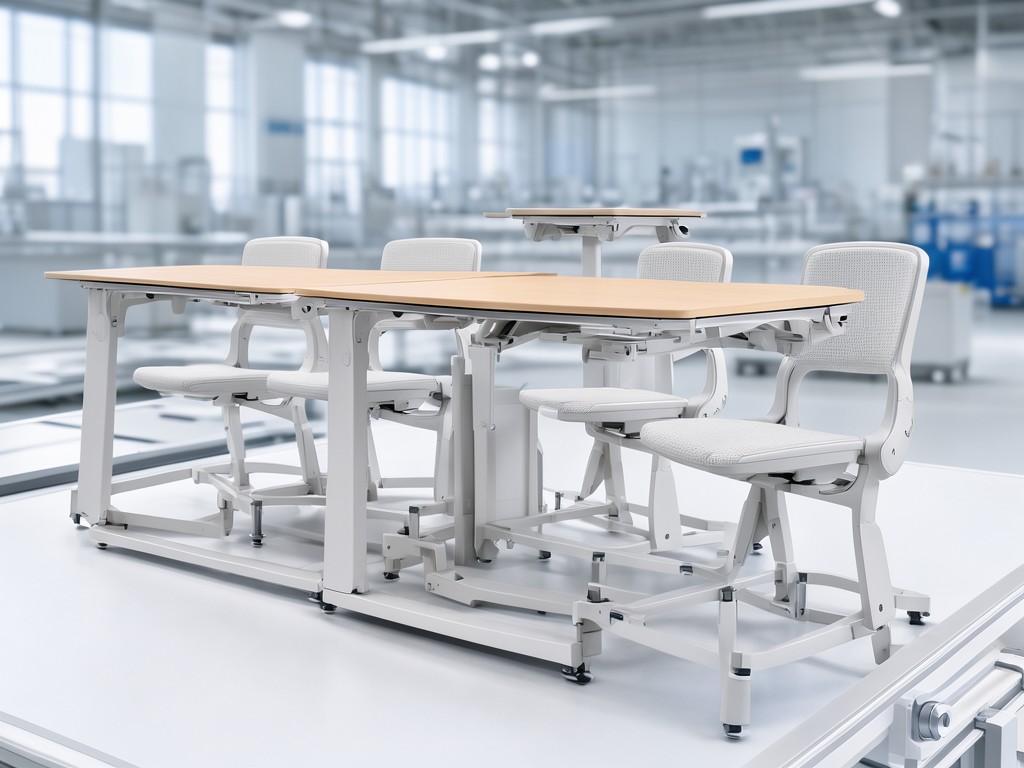
Brand product managers need a specification that remains recognizable from sample approval through reorder. Record the frame colour reference, plastic colour, board finish, edge profile, hardware and dimensional tolerances in one controlled specification. Procurement officers should compare landed cost against serviceability: replaceable feet, standard fasteners and accessible spare parts may reduce the cost of keeping a classroom set complete.
OEM and ODM work starts with a controlled product brief: size schedule, materials, finish, brand treatment, assembly method and packaging target. A factory can then confirm which parts use existing tooling and which require new development. Existing frame and component options usually shorten the approval path; a new molded part, custom colour or altered carton can add sampling and validation steps.
Before order release, align the inspection plan with the likely claim points: finished dimensions, frame joints, coating coverage, top edges, fastener fit, colour consistency and carton condition. Retain a signed sample or reference record for future batches. This gives procurement a practical basis for reorder checks and makes it easier to separate a production issue from damage after dispatch.
| Packaging Item | Buyer Check | Purpose |
|---|---|---|
| Carton layout and packed dimensions | Confirm the approved desk and chair combination, hardware pack and stacking orientation. | Supports freight planning and helps prevent parts from shifting into finished surfaces. |
| Corner and edge protection | Inspect protection around board corners, tube ends and exposed coated surfaces. | Reduces chips, scuffs and edge damage during handling and transport. |
| Labels and assembly information | Approve language, product identification, carton marks and included instructions. | Helps receiving teams sort size groups and gives installers a clear parts reference. |
For a project discussion, share the target user age range, quantity by size, preferred materials and finish, destination market, cleaning routine and packaging requirements. Discuss your classroom furniture specification before sample approval so the quote reflects the intended product and delivery configuration.








