
Contact Fumei
No.20 Jiuqiao Road, Shijiang Industrial Area, Jiujiang Town, Nanhai District, Foshan City, China.
durable metal frame student desk and chairs factory: Specification, Ordering and Quality Notes The limiting factor is rarely the headline specification; it is the joint that loosens after repeated cla
The limiting factor is rarely the headline specification; it is the joint that loosens after repeated classroom use or a coating that wears through where chair legs rub against desks. For distributors and importers working to a launch date, a small change in tube section, weld placement, or carton design can affect both service life and shipment readiness.
Weight and stiffness trade off against each other. A heavier steel frame can resist flex under daily use, but it adds freight cost and makes handling harder; a lighter section can lower landed cost but needs suitable bracing and joints. Set the use case, finished dimensions, and packing method before approving a sample, then hold those details for production.
Steel tube is cut, formed, and welded into the desk and chair frames; the tabletop and seat are fixed to the frame with the agreed fasteners. Stability depends on frame geometry, joint fit, and consistent assembly—not just tube size. Repeat loading drives the failure: loose fixings, weld cracks at stressed corners, and rocking caused by uneven feet are the complaints to prevent.
| Frame option | Use and trade-off | Points to confirm |
|---|---|---|
| Welded steel tube | A practical choice for frequent classroom use. Tube section and bracing can add stiffness, with added material weight and freight to match. | Tube dimensions, wall thickness, weld position, frame squareness, and foot contact. |
| Aluminum frame | Reduces frame weight, but the section and joint design must suit the intended loads. It may also require a different price point and repair approach. | Alloy and section selection, connection design, surface finish, and replacement-part availability. |
| Powder-coated steel | A coated steel option for indoor furniture. Film damage at edges or contact points can expose steel to moisture and cleaning residue. | Pretreatment, coverage at welds and edges, colour match, and the approved cleaning method. |
Returns often trace back to a sample that did not represent the production pack or the classroom floor. A chair can pass a visual review yet rock on uneven flooring; a desk can arrive with chipped corners after frames shift inside a shared carton. Approve the full item and its shipping configuration, not a frame-only sample.
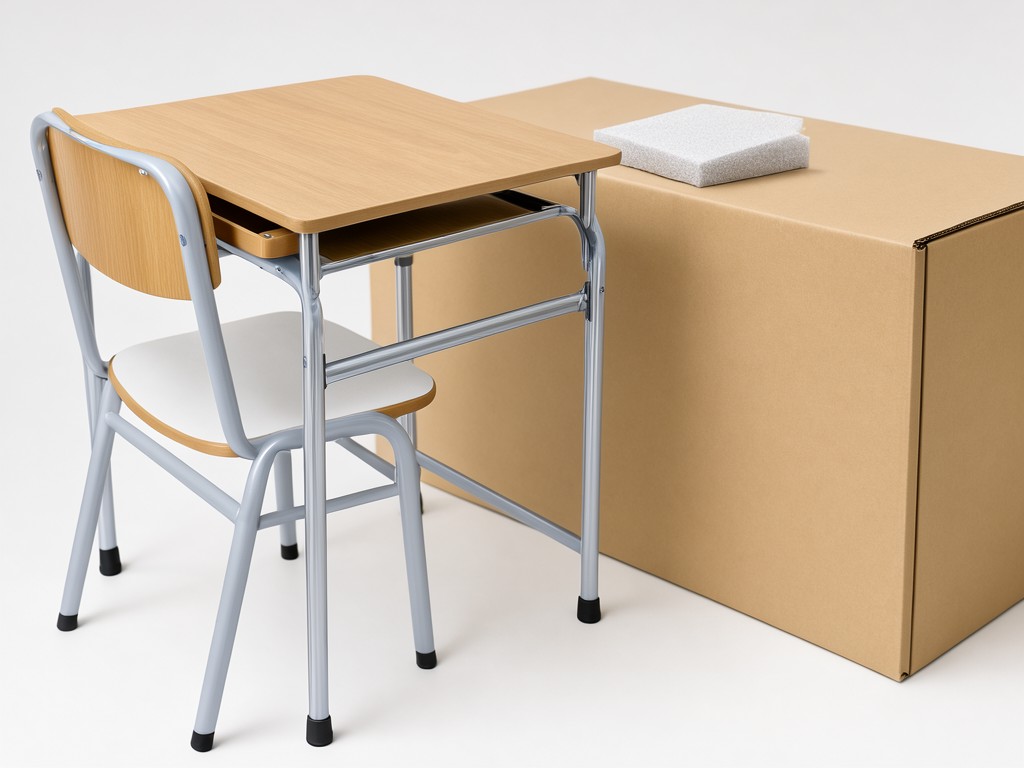
Schools and education suppliers need desks and chairs that tolerate repeated sitting, movement across floors, and routine wipe-downs. Tube joints, foot glides, and exposed frame edges deserve attention where furniture is moved several times a day.
Training centres and exam venues often rearrange furniture between sessions and store it in stacks or rows. Buyers should check the stacking or storage method against the frame shape, tabletop edges, and finish so contact during handling does not mark visible surfaces.
For rooms near bright windows, UV exposure can fade some finishes over time; agree on the intended indoor conditions and finish before ordering. Sweat is not usually the main exposure, but frequent hand contact and cleaning agents can affect coating appearance. If chlorine-based cleaners are part of the site routine, confirm dilution and contact time with the finish supplier rather than assuming every coating tolerates them.
Inspection should use the approved drawing, finish sample, and packing specification as references. A factory can check key dimensions, frame squareness, foot alignment, weld appearance, coating coverage, tabletop and seat fit, and carton contents against the order. Load and repeated-use checks should follow a sample protocol agreed with the buyer; the test setup and acceptance limits need approval before production.
For coated frames, inspect areas that commonly take impact during handling: welds, tube ends, corners, and contact points between nested or packed parts. Abrasion or corrosion checks can be set against the buyer’s service conditions, but an agreed method and acceptance level are needed before results can guide shipment approval.
Launch timing depends on more than factory capacity. Confirm the approved drawings, colour, hardware, carton artwork, and assembly format early; changes to any of these can affect material purchasing and packing. Stock status for steel, powder colour, panels, and packaging varies by specification, so request a production schedule against the actual bill of materials rather than a general lead-time estimate.
For repeat orders, retain the approved sample and revision-controlled drawings. Matching a previous coating shade or panel finish depends on the retained reference and the supplier batch; confirm whether a new batch needs fresh approval. Carton marks, labels, spare glides, and assembly instructions should also stay aligned with the destination market and the importer’s receiving process.
Pack design is part of the schedule decision: a knockdown configuration may improve container utilization, while assembled units can reduce buyer-side labour. Compare the freight savings with the extra assembly time and the protection needed for corners, legs, and tabletop surfaces.
Routine care can slow coating wear and keep joints serviceable. Use a soft cloth and a cleaner approved for the selected finish, then dry surfaces where moisture can collect around fasteners or damaged coating. Avoid abrasive pads and prolonged cleaner contact unless the coating supplier has confirmed compatibility.
Service life depends on load, handling, cleaning practice, and the condition of the floor and finish. Buyers who keep replacement glides and standard fasteners available can address common wear without replacing an otherwise serviceable set.
Send the target dimensions, frame and finish preferences, expected order volume, destination market, and required ship date. A sample request can then cover the item, assembly method, finish reference, and export packing details that affect approval and launch timing.








