Contact Fumei
No.20 Jiuqiao Road, Shijiang Industrial Area, Jiujiang Town, Nanhai District, Foshan City, China.
durable school classroom seating furniture company - Bulk Supply and Specification Guide Cost and durability pull in opposite directions once a school chair is specified for daily classroom use. For r
Cost and durability pull in opposite directions once a school chair is specified for daily classroom use. For retail and wholesale buyers matching an existing private-label specification, the economical route is usually to retain the established chair geometry and adjust materials, finishes or packaging only where the use case justifies the change.
A common construction pairs an injection-moulded polypropylene seat and back with a welded steel tube frame and powder-coated finish. That combination keeps the product straightforward to source in volume. Seat dimensions, frame geometry, colour and stackability still need to match the approved sample; changes to those details can affect tooling, assembly and carton fit.
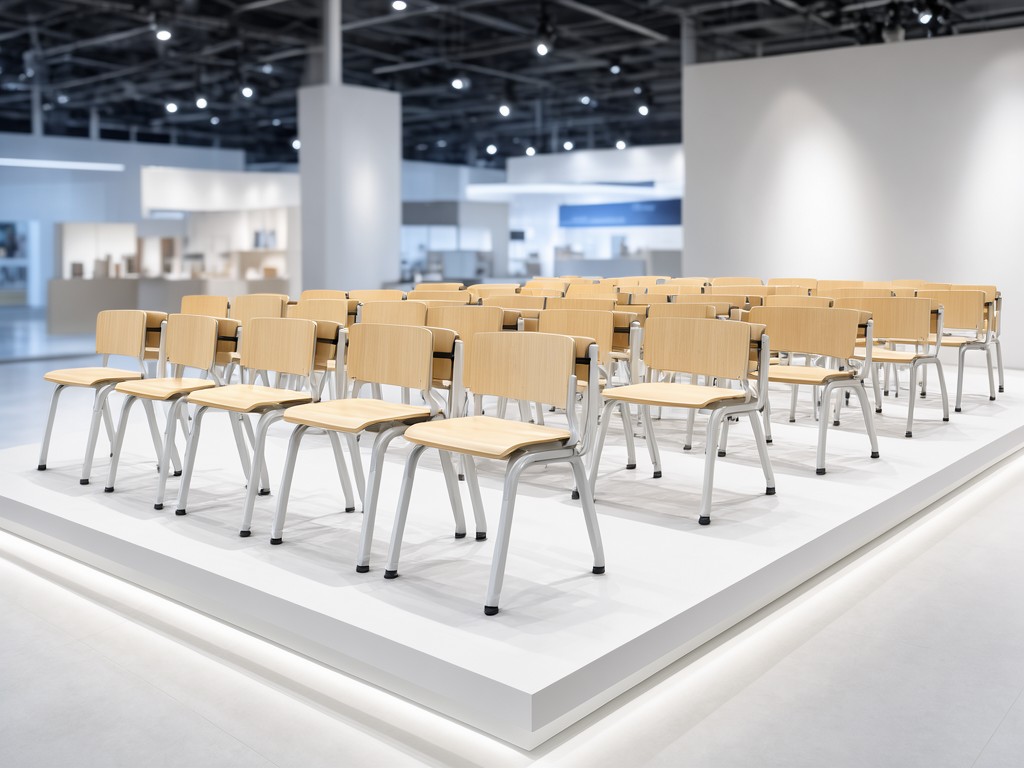
Supply can cover student chairs, classroom chairs for adult instruction spaces, or a coordinated range of seat sizes built around the buyer’s drawings or approved reference sample. A typical chair has a moulded seat and back, a steel tube base, welded joints, protective feet and a finish selected for the intended indoor environment.
Private-label matching works best when the specification separates fixed dimensions from selectable details. Keep seat height, back profile, frame footprint and stacking requirements fixed where interchangeability matters. Colour, logo placement and carton marking are usually easier to adjust without changing the product’s basic construction.
Chair service life depends on the interaction between frame geometry, tube specification, weld placement and the way the seat shell transfers load into the frame. A light frame can reduce material cost and freight weight, but underspecified joints or an unsuitable brace layout may loosen under repeated classroom movement. Matching an existing frame without checking its tube dimensions and joint positions can create a chair that looks right but behaves differently.
Set the target user load, seat height, frame dimensions and stacking method before confirming a cost-down change. The buyer and factory should agree on the approved sample and the inspection points that define a conforming reorder.
The shell also has to suit the frame. Changes to polymer grade, wall sections or rib layout can alter stiffness and fit at the fasteners. A more substantial shell or frame may add material and freight cost; it makes sense when the chair sees frequent repositioning, heavier users or repeated stacking, not simply because a thicker component sounds safer.
A purpose-specified classroom chair is a practical choice for school districts, education resellers and furniture retailers that need repeatable dimensions across multi-room or multi-site orders. The buyer can set a common shell, frame finish and label format, then reorder the same specification without reopening the design.
Compared with general-purpose household seating, classroom models can prioritise stackability, a compact frame footprint and surfaces that are straightforward to wipe. Those features matter in rooms where staff rearrange furniture between lessons or store chairs between terms. A padded or decorative chair may suit a reception area, but it can add cleaning and replacement costs in a high-turnover classroom.
Most private-label adjustments fall into two groups: changes that use existing moulds and fixtures, and changes that require new tooling or substantial setup work. Colour changes and carton artwork typically avoid shell redesign. A new seat outline, back profile or mounting pattern can require mould changes, sample rounds and added tooling cost.
For an accurate quotation, provide the approved dimensions, material and finish requirements, target packing method, branding files and expected order volume. Where a drawing is unavailable, a signed sample with marked measurement points can serve as the reference for repeat production.
Select the construction against the room’s handling pattern, then check how much of the order can use existing tooling. The cost difference between options is shaped by material consumption, fabrication steps, setup and how tooling expense is spread across the order.
| Selection point | Existing-tooling configuration | Revised or reinforced configuration | Order and cost effect |
|---|---|---|---|
| Seat and back shell | Moulded polypropylene shell in an available profile and colour. | Changed profile, mounting details or material specification to meet a defined use or fit requirement. | Colour changes can often use existing tooling. Geometry changes may add tooling charges and sample approval steps; minimums depend on the factory setup and material run. |
| Steel frame | Established tube sizes, weld locations and powder-coat finish. | Adjusted tube specification, braces or joint layout for a stated load and handling pattern. | New fixtures or frame setup can raise initial cost. Larger, repeat orders help distribute setup expense; production timing depends on approved drawings, material sourcing and batch size. |
| Private-label and freight preparation | Existing carton format with buyer label and agreed protective packing. | Custom carton print, revised pack count or added protection for the shipping route. | Artwork approval and packaging minimums affect order setup. Final MOQ and lead time are quoted against the chosen materials, packaging and order quantity rather than assumed from the chair alone. |
A product photo is not a usable dimensional specification. Small differences in seat height, frame width or shell attachment can prevent a chair from matching an existing range or fitting the buyer’s storage plan. Ask for measured drawings or approve a physical sample before placing a repeat order.
Another common cost error is requesting a new mould for a small colour or branding change that existing tooling can accommodate. The reverse also occurs: buyers approve a close visual match without checking fit, stackability or frame details. Confirm which specifications are fixed, and treat any change to those points as a sample-approval item.
Finally, do not compare unit prices without checking the included packing method and order quantity. A lower quoted price may reflect a different carton count, finish or frame specification. Compare like-for-like samples and packaging details before evaluating a cost reduction.
Carton design should reflect whether chairs ship assembled, partly assembled or nested for shipment. Stacking orientation, frame contact points and protective material affect carton dimensions and the risk of scuffs or finish damage in transit. Confirm the pack count and assembly state before freight costing, since either can change the space required per order.
Retail buyers can specify product labels, carton marks, barcode placement and private-label artwork. Provide print-ready files and confirm the label position against the approved sample. For wholesale distribution, agree on carton identification and batch references so incoming stock can be checked against the purchase order.
Usually, if the buyer supplies dimensioned drawings or an approved sample and the required shell and frame can be made with available tooling. Confirm material, finish, fasteners and packing separately; a visual match alone does not define a reorder specification.
A new mould is worth reviewing when the required seat profile or fit cannot be achieved with an existing shell. Compare the tooling charge and approval work against the planned volume and expected reorder quantity. If the order is small, an existing profile with custom colour or packaging may keep the unit cost lower.
Request a quote against the exact shell colour, frame finish, carton configuration and branding method. Minimums and production timing vary with material runs, setup requirements, order volume and sample approval. A confirmed schedule should follow agreement on the specification and packaging.
Approve the final artwork, label location, product identification, pack count and assembly state. Check those details against the chair and carton sample to avoid mismatches between the order, retail listing and delivered goods.
For a private-label specification review, share your drawing or reference sample, target order volume, packaging requirements and fixed dimensions. Contact the team to review the specification and quotation basis before committing to tooling or a production order.