
Contact Fumei
No.20 Jiuqiao Road, Shijiang Industrial Area, Jiujiang Town, Nanhai District, Foshan City, China.
Specifying durable school desks and chairs wholesale for Wholesale and OEM Orders Before comparing quotations, check what each supplier includes in the frame, panel, finish and packout. A lower desk-a
Before comparing quotations, check what each supplier includes in the frame, panel, finish and packout. A lower desk-and-chair set price can conceal thinner tube, unsealed panel edges or hardware that loosens after repeated classroom moves. For a second source, compare the same approved bill of materials and acceptance checks—not just the same product description.
Two suppliers quoting the same specification can still deliver different results if frame fixtures, weld locations or panel drilling vary. Set the reference sample, dimensions, finish and hardware in writing before placing a production order; then retain those controls for repeat batches.
A school set takes repeated side loads as pupils sit, stand, shift position and move furniture between rooms. Tube joints and fasteners take that movement first; panel corners, seat edges and floor-contact points show wear next. Specify the frame joint layout and hardware for the expected handling pattern, then agree a practical assembly and load-check protocol against the approved sample.
Wobble usually points to uneven leg geometry, a loose joint or inconsistent floor contact. Weld cracking can follow poor fit-up or a short weld at a high-stress junction, while chipped coating exposes steel to corrosion during damp cleaning or storage. At the work surface, swelling often starts at an unsealed edge after repeated spills; specify edge treatment and panel construction to suit the school’s cleaning routine.
Unit price settles the question only after the buyer has costed likely repairs, replacement parts and packaging damage. A fixed-height welded frame has fewer adjustment points to loosen, while a replaceable bolted panel can simplify service when a desktop is damaged. Choose the arrangement that matches the buyer’s repair capability and classroom use.
A typical production route starts with tube cutting and bending, followed by jigged frame assembly and welding. After weld cleanup and surface preparation, frames receive a powder-coated finish. Desktop panels are cut, edge-finished and drilled to the assembly pattern; chairs are assembled with the specified seat and back components, then packed with hardware protected from abrasion.
Jigs hold leg spacing and frame squareness across a batch, but only if the fixture and weld sequence stay controlled. Drilling templates matter just as much: hole-position drift can force installers to pull a panel into place, which adds stress at the fastener and can lead to a split edge or a loose desktop later. Ask the factory to lock the approved drawings, fixture references and hardware list to the order revision.
Powder coating adds a finish step and cost compared with a basic painted finish, but it creates a repeatable coated surface when pretreatment, coverage and curing are controlled. Panel choice affects price and service life differently: moisture resistance at the face does not protect a vulnerable cut edge by itself. Specify the panel and edge treatment together.
The desktop panel is often the main cost and service-life variable between otherwise similar school sets. Compare the whole construction, including edge protection and the cleaning conditions, rather than choosing by face material alone.
| Configuration | Construction and trade-off | Best fit and checks |
|---|---|---|
| Welded steel tube frame, powder coat, melamine-faced MDF desktop, molded polypropylene chair seat and back | A cost-conscious standard build with a finished work surface. The MDF edge needs sound sealing; prolonged moisture at a damaged edge can cause swelling. | For routine classroom use with prompt spill cleanup. Inspect edge finish, panel flatness, welds and seat-to-frame fasteners. |
| Welded steel tube frame, powder coat, HPL-faced plywood desktop, molded polypropylene chair seat and back | Typically carries a higher panel cost. The plywood core and HPL face can suit heavier daily use, but exposed edges and bond quality still need attention. | For buyers prioritizing panel service life or more frequent cleaning. Confirm panel thickness, edge treatment, drilling and fastener engagement on the sample. |
Both options can share a chair construction, which helps simplify sourcing. Keep the frame finish, seat colour and hardware specification fixed if the goal is a second source with interchangeable replacement parts.
For a price-led school tender
Keep the frame and chair components to a proven standard configuration, and control the desk size, tube dimensions, coating colour and carton count. A simpler fixed-height frame can reduce assembly points and replacement hardware, provided the buyer selects the correct size range for its pupil group.
For a private-label range
Budget for colour matching, logo placement, packaging artwork and a retained reference sample. Custom colours or a new panel layout can add approval steps and component minimums; avoid changing these during a repeat order unless the revision is formally approved.
Confirm finished dimensions and the intended age or grade range before approving production. A frame that fits one market’s desk-height schedule may not suit another market’s classroom, so buyers should provide target dimensions or a reference unit instead of relying on a generic size label.
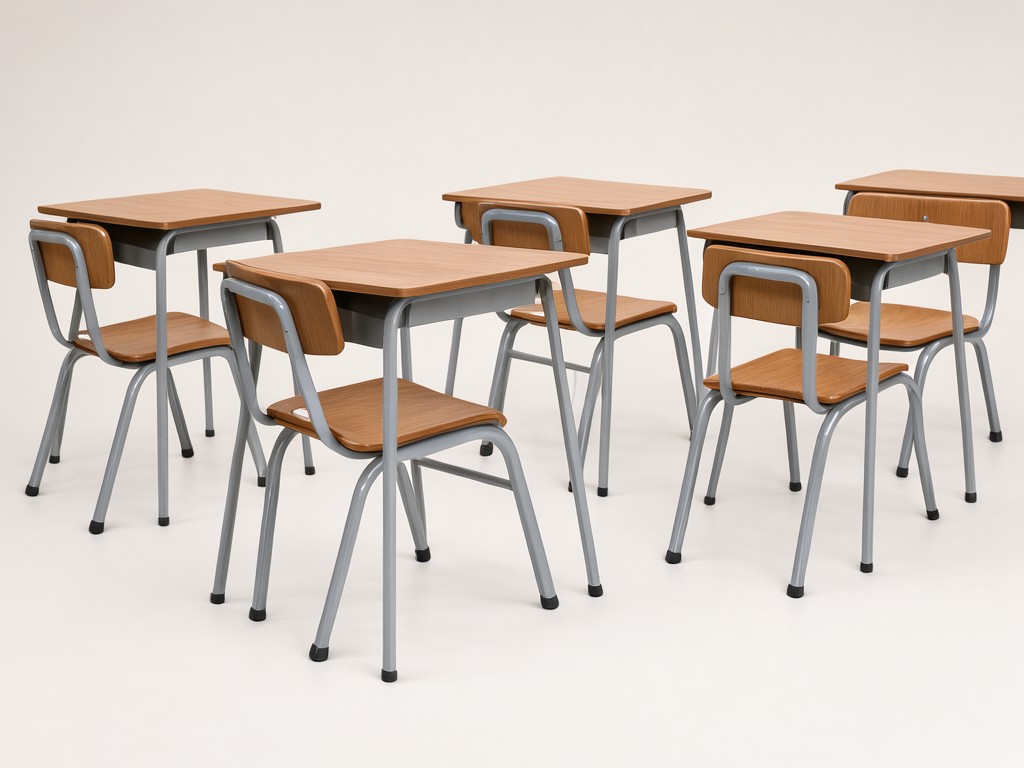
In shared classrooms, chairs are dragged across hard floors and desk corners meet walls, carts and neighbouring furniture. Specify leg-end protection and carton separation where floor scuffing or coating rub is a recurring complaint. For humid storage or long export routes, protect steel surfaces and keep panel edges clear of trapped moisture inside the pack.
Start with the current product drawing, bill of materials, approved finish references, packaging specification and inspection criteria. If the buyer has no production drawing, the supplier can develop a drawing from a physical sample or agreed dimensions; confirm ownership, revision approval and any tooling charges before that work begins.
OEM work typically uses the buyer’s product definition and brand requirements. ODM work may begin with a supplier’s existing frame or panel platform, then add agreed dimensions, colours or branding. Custom tooling, non-stock colours and dedicated packaging can raise minimum quantities; retain standard components where possible to keep replacement parts and reorders manageable.
A useful inspection plan follows the points where complaints start: frame geometry, weld condition, coating coverage, panel edges, drilled holes and assembly fit. Record the agreed check method and acceptance criteria against the approved sample; do not leave terms such as “standard finish” or “strong frame” open to interpretation.
During production: check tube and panel dimensions, frame squareness, hole locations, weld appearance, coating coverage and colour against the agreed references. Sample assembled units to identify rocking, misalignment or fasteners that do not seat correctly.
Before shipment: check carton contents, hardware counts, labels and pack protection. A buyer may also agree sample-based checks for assembly stability and surface damage, using a written protocol that reflects the intended classroom use.
For second-source qualification, compare the supplier’s production sample with the retained reference before approving a full run. Keep batch identification tied to the order, product revision and finish lot. That record helps isolate a later complaint to a component or batch instead of reopening the entire specification.
Lead time depends on whether the order uses stock materials and an existing frame pattern or requires new colour, artwork, panel drilling or packaging. The ranges below are planning references only; confirm the production slot and minimum order by SKU after the specification and packout are approved.
| Order stage | Indicative planning window | MOQ and timing factors |
|---|---|---|
| Pre-production sample | Often 1–3 weeks after complete specification approval | Depends on material availability, sample scope and whether a new fixture or artwork proof is needed. |
| Repeat production order | Often 4–8 weeks after order details and sample approval | Factory capacity, panel and tube supply, finish schedule, quantity and export packing affect the confirmed slot. |
| MOQ by configuration | Quoted by SKU and production setup | Standard materials may allow a lower starting quantity. Custom colour, branding or dedicated packaging can require separate minimums; mixed models need confirmation. |
Share the destination, shipment quantity, delivery window and preferred carton configuration when requesting a production plan. Flat-pack and assembled options affect carton volume, labour at the destination and transit protection, so confirm which format the quotation covers.
Send the current drawing or sample details, target quantity, preferred panel and frame finish, branding needs and destination market. A specification review can identify the open points that affect second-source comparability, MOQ and lead time before quotation.
Discuss your school desk and chair specification







