
Contact Fumei
No.20 Jiuqiao Road, Shijiang Industrial Area, Jiujiang Town, Nanhai District, Foshan City, China.
Specifying Factory Direct stackable chairs and desks for schools suppliers for Wholesale and OEM Orders Measured Performance in Real Use Surface or component Common options Buyer trade-off Chair seat
| Surface or component | Common options | Buyer trade-off |
|---|---|---|
| Chair seat and back | Molded polypropylene in standard or matched colours | A standard resin colour avoids custom colour setup; a special match may add material minimums and production separation. |
| Chair and desk frame | Welded steel tube with powder-coated finish | A standard coating colour simplifies batching; a custom finish can require a separate run and added changeover time. |
| Desk top | Laminate-faced board or another approved panel construction | Panel thickness, edge treatment and surface finish affect material cost, impact resistance and freight weight. |
Consistency is set at the forming stage. Chair shells depend on controlled mold temperature, material flow and cooling; frame alignment depends on tube-bending fixtures and repeatable weld positions. If those steps drift, buyers see rocking legs, uneven seat heights, desks that do not nest cleanly or coatings that wear first at sharp edges.
For wholesale cost per unit sold, inspect the usable life of the assembled set rather than the ex-factory price alone. A lower-cost frame may reduce the initial quote, but poor weld alignment or thin coating can increase returns and replacement shipments. Final dimensions and load criteria should be agreed against the intended design and destination-market requirements.
First-article tooling determines how much of the initial cost sits in the molded shell, forming fixtures and setup work. A larger repeat order spreads fixed tooling and setup costs across more sellable units; a small mixed order can carry a higher unit cost because each colour or frame variant interrupts the run.
A molded polypropylene chair shell pairs with a welded, powder-coated steel frame. Desks use a steel base with a laminate-faced panel. This route suits buyers who need familiar materials and a controlled range of sizes and colours.
Keeping shell colour, frame finish and panel selection to established options reduces changeovers. The compromise is less freedom to match a distinctive brand palette or alter geometry.
A buyer can specify shell geometry, frame details, desk dimensions and coordinated finishes. New shell geometry may require a dedicated mold; revised frame geometry may need bending or welding fixture changes.
The additional setup has more value when forecast volume supports tooling amortisation and repeat orders. Low-volume runs can carry a higher per-unit charge and a longer approval path.
Costing rule: request separate pricing for existing tooling and new tooling, then compare the unit price at forecast order volumes. The break-even point depends on mold and fixture cost, order mix, colour changes and whether the design will carry into repeat production.
For bulk purchasing across several room layouts, prioritize repeatable dimensions, stack or nest clearance, and the availability of replacement components. A chair that stacks securely but scuffs at the contact points may cost less initially and more after repeated setup and storage cycles.
For wholesale buyers, the useful comparison is landed cost divided by units that remain saleable—not just the price on the purchase order. Include packing volume, damage exposure, component replacement and the likelihood of matching a later batch.
Colour, panel finish, frame coating, selected dimensions and branding can usually be discussed against the factory's process capability. A custom shell profile is a different cost decision: the mold, sample iterations and approval time belong in the project budget, not only in the per-piece quote.
Existing tooling limits the changes that can be made without affecting fit, stack clearance or structural behaviour. A surface colour change does not automatically require a new mold, but a change to shell geometry, frame interface or mounting points may require tooling or fixture revision. Confirm artwork placement and branding method on a production-representative sample before authorising a full run.
Do not approve a finish or geometry from a digital rendering alone. Colour appearance can shift between resin, powder coating and laminate; approve each material against its own physical reference.
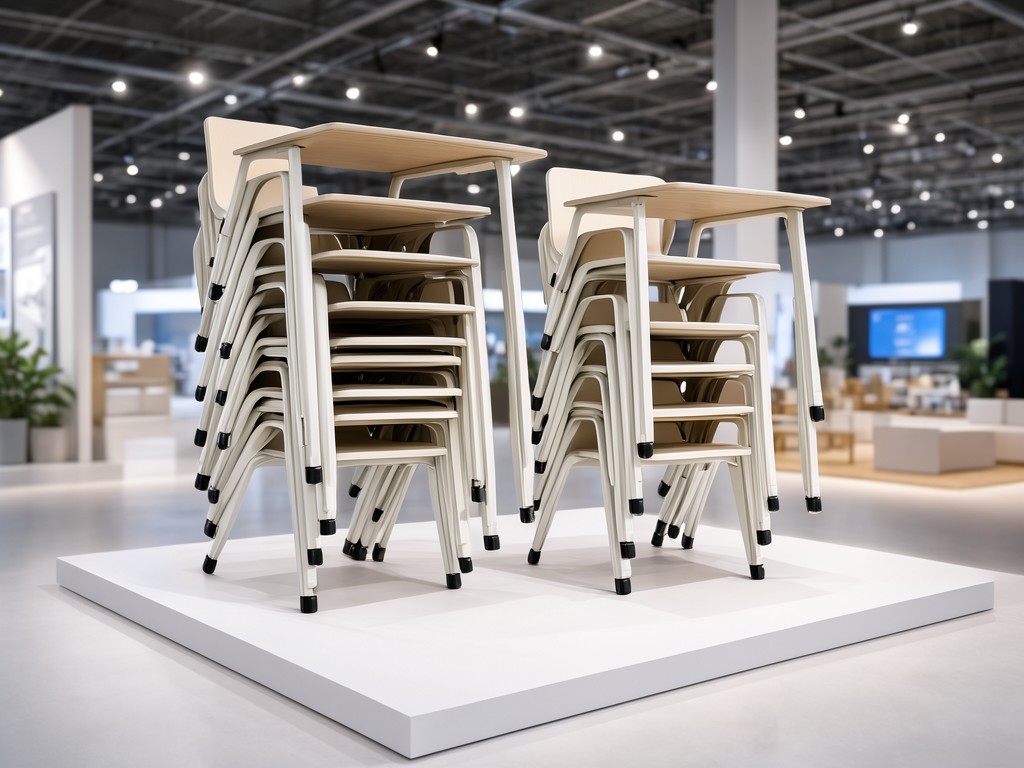
Complaints usually point to variation that escaped between operations: a chair rocks on a flat floor, a weld cracks near a joint, a coating chips at an edge, or a desk top arrives with a damaged corner. Inspection should connect each issue to a measurable check and a defined reference sample.
| Inspection point | Factory check | Buyer control |
|---|---|---|
| Dimensions and fit | Measure agreed dimensions; check shell-to-frame fit and stacking or nesting clearance. | Approve a reference sample and drawing with tolerances before batch release. |
| Frame and welds | Review weld appearance, joint alignment, sharp edges and assembled stability. | Set acceptance criteria for visible finish and confirm intended load requirements for the design. |
| Coating and colour | Check coverage, adhesion, handling marks and colour against the approved material reference. | Record finish and colour references for repeat orders; specify any destination-market test requirements. |
| Panel and packed unit | Inspect panel edges, surface condition, fasteners and protective packing before dispatch. | Agree carton marks, pack count and batch identification before shipment. |
The inspection plan should name the approved sample, the features checked, the sampling approach and the buyer's acceptance criteria. If the destination market requires specific product tests or documentation, provide those requirements before quotation so the factory can confirm capability and cost.
Transit damage often appears at frame contact points, panel corners and exposed coating edges. Stackable units need separators or another agreed protection method where surfaces touch; desk tops need corner and face protection that holds through loading, transfer and warehouse handling.
Confirm the pack count, stacking orientation, carton dimensions and gross weight before booking freight. A compact pack can lower freight cost per unit, but excessive compression or unprotected metal-to-panel contact can create damage that erases the saving. Include carton labels, SKU or batch references and any handling marks required by the importer.
The order schedule depends on whether production uses existing molds and fixtures, how many colour or size variants are included, and when the buyer approves samples. A new mold adds engineering and trial stages; a repeat order on approved tooling can avoid those steps, though raw-material scheduling and order volume still affect dispatch timing.
Not if the order is split across many low-volume variants. Larger runs usually spread setup and tooling costs more effectively, while extra colour changes, mixed frame designs and separate packing instructions can add changeover and handling cost. Ask for a price breakdown by configuration and forecast volume.
Provide drawings or a physical reference, target dimensions, stack or nesting requirements, material preferences, finish references and forecast quantities. The factory can then separate tooling, sample, production and packaging costs rather than hiding setup expense in a single unit price.
Confirm it after the configuration, sample approval, order mix and packaging method are fixed. Tooling trials and artwork approval can extend the schedule; a repeat order with unchanged specifications generally has fewer approval steps, but the factory should confirm timing against the actual production plan.
Request a specification review with your drawings, target order mix, finish references and packing requirements. A factory-side review can identify which items use existing tooling, where a new fixture or mold changes the economics, and what must be approved before the production slot is set.
Send the specification for review







