
Contact Fumei
No.20 Jiuqiao Road, Shijiang Industrial Area, Jiujiang Town, Nanhai District, Foshan City, China.
low price classroom desk and chair supplier: Specification, Ordering and Quality Notes Consistency depends on fixing the desk and chair dimensions, frame construction and finish before the purchase or
Consistency depends on fixing the desk and chair dimensions, frame construction and finish before the purchase order enters production. For a private-label range, the lowest-cost route is usually to match an existing product and approve its drawing and sample, rather than introduce changes that affect tooling or assembly.
A written specification should identify the intended student age or size group, desktop and seat materials, frame finish, colour references, packaging format and inspection points. Drawings establish dimensions and tolerances; a signed sample resolves details that a drawing cannot show clearly, such as edge finish, colour appearance and fit between parts.
Balance and load analysis shows where a low-cost construction can become a service issue: a light frame may shift during daily classroom use, while an unnecessarily heavy frame adds material and freight cost. Typical production uses cut and bent steel tube, welded frame joints, a protective powder-coated finish, and a separate desktop and seat assembly. The economical choice is to match tube size, joint layout and panel material to the buyer’s intended use, then confirm the details against an approved sample.
Agree the reference drawing, sample and inspection limits before the first production run. A change to frame geometry, panel thickness or finish after approval can affect fit, packing dimensions and the quoted unit price.
| Classroom Use Condition | Complaint to Prevent | Specification or Check |
|---|---|---|
| Daily movement across hard floors | Wobble caused by uneven feet or frame geometry | Check assembled stability on a flat reference surface; define foot cap type and frame dimensions on the approved drawing. |
| Repeated desk use with books and school materials | Top flex, edge damage or loosened attachment points | Approve the panel construction, thickness, edge treatment and fixing pattern; use a load check against the agreed use condition. |
| Frequent stacking or moving between rooms | Scratched coating, chipped corners or poor stacking fit | Confirm stack clearance, coating appearance and protective packing with a pre-production sample. |
The usable size range must suit the age group and local purchasing specification, not just the carton. Common product families cover desk heights of roughly 520–760 mm and chair seat heights of roughly 300–460 mm; desktop dimensions often fall near 600–700 mm wide by 400–500 mm deep. These are planning ranges, not a substitute for a dimensioned buyer drawing.
Dimensional and weight checks, weld appearance review, coating inspection and assembled stability checks can be included in the agreed inspection plan. Define sample quantity and acceptance limits before production; otherwise, a difference in measuring method can create a dispute even when the product is usable.
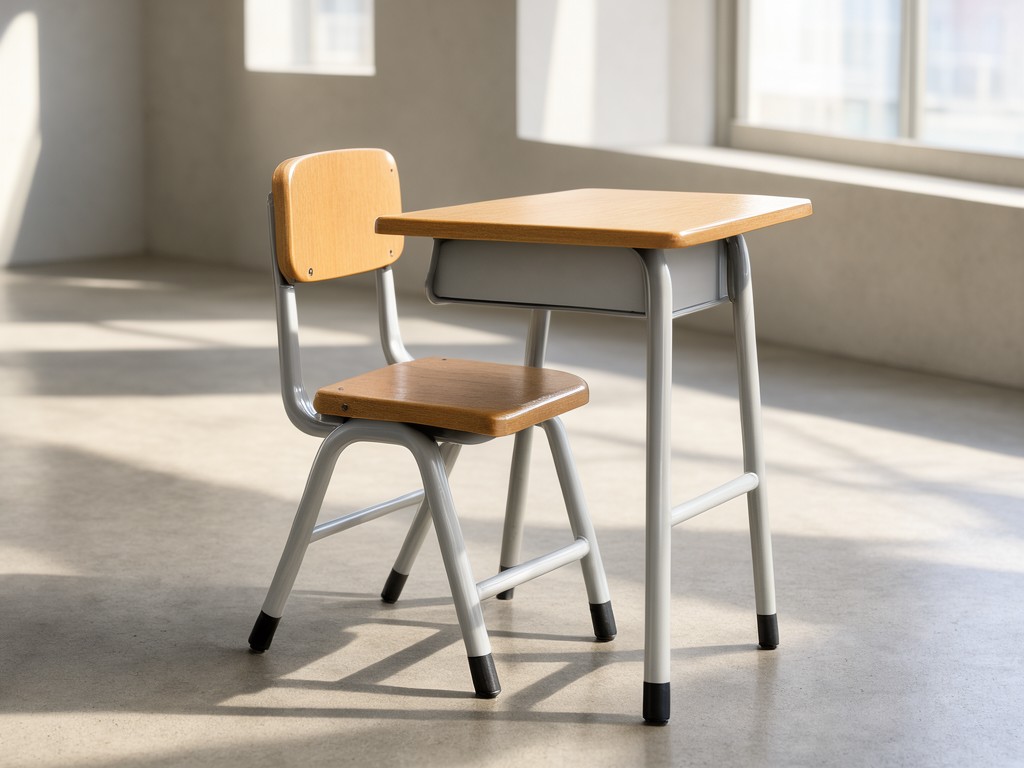
The interface between parts determines whether an approved desk and chair can be assembled consistently at the factory and remain stable in use. Panel material changes the price, edge finish and resistance to routine marks; the frame and fixing details must suit that panel rather than rely on appearance alone.
| Construction Choice | Cost and Use Trade-Off | Approval Point |
|---|---|---|
| Laminated wood-based panel | Can suit a cost-led specification with a finished surface; edge protection and resistance to moisture at exposed edges need attention. | Approve panel thickness, laminate colour, edge profile and attachment details on a physical sample. |
| Moulded polypropylene seat or top | Moulding can provide rounded edges and repeatable shapes; colour, mould tooling and part geometry affect cost and available choices. | Check colour against the agreed reference and confirm fit, fixing points and visible surface finish. |
Choose the construction that matches the buyer’s current product requirement and target landed cost. Keep the approved sample, drawing revision and colour reference linked to the purchase order so repeat lots do not drift from the accepted version.
Production timing depends on confirmed quantities, material availability, finish requirements and whether the order follows an existing approved specification. Standard frame and panel combinations usually require fewer setup decisions than a revised size or colour; agree the drawing and sample first to reduce rework and protect the planned shipment window.
For a firm schedule, submit the quantity by size and colour, destination, packaging requirement and requested delivery date. The supplier can then confirm material purchasing, production allocation, inspection timing and dispatch milestones against the actual order rather than a generic lead-time estimate.
Availability can vary by size, top or seat material, frame colour and packed configuration. A catalogue item is not necessarily held as finished stock, so confirm the quantity and shipment-ready status for each specification before committing to a delivery date.
For repeat orders, retain the approved drawing number, sample reference, colour code, carton details and inspection criteria. If a component or finish changes between lots, request written approval before shipment; this helps distributors keep replacement units compatible with earlier classroom installations.
Packaging must protect coated frames, panel edges and moulded surfaces through loading, transfer and warehouse handling. Flat-packed sets can reduce freight volume, but the carton layout must keep metal parts from rubbing against finished surfaces and prevent hardware from marking panels.
Approve the packing method with a sample carton or packing layout, including hardware bags, protective separators, carton marks and retail or importer labels where required. Confirm carton dimensions and gross weight against the shipping plan; a packing change after quotation can alter pallet count and freight cost.
To match an existing private-label specification, send the current drawing, product photographs, target quantity and artwork files for review. Request an artwork and branding review before sample approval so label placement and print details are settled before production.








