
Contact Fumei
No.20 Jiuqiao Road, Shijiang Industrial Area, Jiujiang Town, Nanhai District, Foshan City, China.
odm student classroom desk and chair set china factory: Specification, Ordering and Quality Notes What This Product Is and Where It Fits Fatigue appears at the stress concentration where a desk leg, c
Fatigue appears at the stress concentration where a desk leg, crossbar, or chair frame meets its joint. An ODM student classroom desk and chair set is a coordinated furniture package for schools, education distributors, and private-label buyers; its value depends on stable dimensions, comfortable seating, and a frame that tolerates repeated daily use. Fixed-height sets simplify purchasing and replacement, while adjustable frames suit mixed-age classrooms at a higher unit cost. Choose the configuration against the grade range and the buyer’s expected replacement cycle.
Typical construction pairs a welded or mechanically joined steel-tube frame with a laminated desk panel and a molded polypropylene chair seat and back. Panel thickness, tube section, joint design, edge treatment, and surface finish affect both price and service life. A factory-developed model can adapt dimensions, colours, branding, and packing, subject to tooling and order-volume limits.
Repeat loading drives the failure: loose fasteners, cracked weld areas, chipped coating, swollen panel edges, or a chair back that flexes beyond its intended range. A small saving on tube wall, joint reinforcement, or edge sealing can raise the number of service calls and replacement units across a school year. Compare landed cost with the cost of replacements and field repairs, not just the factory unit price.
Cleaning routines matter too. Frequent wiping with approved classroom cleaners can dull a weak surface finish, while water left at exposed panel edges may cause swelling. Direct sunlight can shift some colours over time, and abrasive pads can mark molded plastic or laminate. Specify cleaning agents and exposure conditions before approving the surface, then check the production sample against those conditions.
A fixed frame has fewer moving parts and suits classrooms with a defined student age band. It generally keeps assembly and purchasing simpler; confirm the seat and desk heights against the intended users before setting the order quantity.
Height-adjustable legs or seat positions can serve a wider user range, but add hardware, assembly steps, and points that need inspection. Select adjustment only where multiple height settings will be used in practice.
Weight and stiffness trade off against each other. A heavier frame may resist movement under classroom use, but adds freight cost and handling effort. Request the factory’s proposed tube dimensions, panel construction, set weight, and adjustment details with the quotation so competing offers use the same configuration.
| Item | Common ODM Options | Cost or Feasibility Note |
|---|---|---|
| Desk and chair dimensions | Select from existing size groups or develop dimensions for a defined age range. | Non-standard dimensions can require new drawings, samples, or tooling review. |
| Frame and finish | Tube profile, frame colour, and powder-coat finish can be specified by model. | Unusual colours may have a minimum batch or added colour-change cost. |
| Panel and plastic parts | Panel decor, edge finish, and available molded-part colours may be matched to the order. | Custom molded colours or shapes depend on resin, tooling, and minimum quantities. |
| Branding and pack-out | Carton artwork, labels, assembly instructions, and selected logo applications. | Artwork must be approved before print; placement on molded parts may need tooling. |
The approved drawing and sample define the order. A colour chip or digital rendering alone does not confirm the final look of a powder-coated frame, laminate, or molded plastic part. Record the selected materials, dimensions, hardware, and finish in the purchase specification before production.
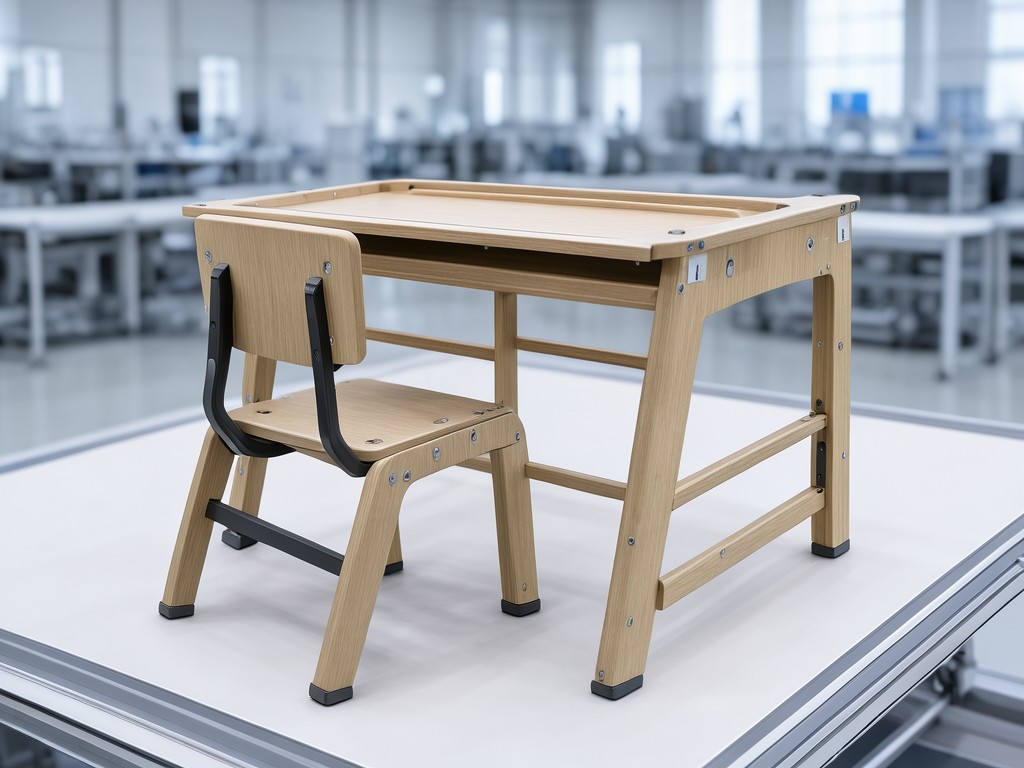
For rooms with strong window exposure or frequent wet cleaning, agree on the cleaning method and finish expectations before selecting colours and panel edges. No surface choice removes the need to wipe spills promptly or avoid cleaners that attack the coating or plastic.
Keep the approved drawing, finish references, hardware list, carton plan, and sample record under one revision.
Confirm lead time for frames, panels, molded parts, and printed packaging; their supply schedules may differ.
Share forecast quantities and delivery windows early, especially for non-stock colours or custom packaging.
Stock availability depends on the selected model and component plan. Existing frame profiles and standard colours are usually easier to repeat than a new size, special finish, or custom molded colour. Ask the factory to identify which components are held for replenishment and which are purchased against each order.
Use a pre-shipment inspection plan tied to the approved sample and purchase specification. The checks below focus on practical order consistency rather than an unverified universal pass figure.
| Inspection Point | Factory Check | Buyer Reference |
|---|---|---|
| Dimensions and assembly fit | Measure desk and chair dimensions; check hole alignment and fastener fit on assembled samples. | Approved drawing and sample. |
| Frame and joint condition | Inspect weld appearance, joint security, frame alignment, and stability on a level surface. | Agreed construction details and sample condition. |
| Panel, edge, and finish | Check for exposed edges, surface defects, coating damage, and colour differences within the agreed batch. | Approved finish and defect limits in the order specification. |
| Packing and identification | Verify set count, hardware packs, labels, and carton condition against the pack-out plan. | Approved carton artwork and packing instructions. |
A compact pack-out lowers freight volume only if the parts remain protected and assembly is straightforward for the receiving channel. Confirm the packaging configuration with a packed sample or documented pack plan before a full production run.
Assemble each set on a level surface and tighten fasteners to the factory’s assembly guidance. Recheck joints after initial classroom use, then follow a scheduled inspection routine for looseness, sharp edges, damaged coating, cracked plastic, or panel swelling. Clean with a soft cloth and a compatible cleaner; avoid scouring pads and standing water at panel edges.
For easier service, list replaceable feet, fasteners, chair parts, and panels in the order specification. Confirm which items the factory can supply later and whether they share the same revision as the original set. Share the approved model details and required quantities for a quotation review through our product inquiry team.
For an ODM quotation, provide target student age range, set quantity, preferred dimensions, material and finish choices, branding files, destination market, and packing preference. Those details let the factory compare configuration and landed-cost options on the same basis.








