
Contact Fumei
No.20 Jiuqiao Road, Shijiang Industrial Area, Jiujiang Town, Nanhai District, Foshan City, China.
Specifying oem classroom chairs for students factory for Wholesale and OEM Orders Moving from sample orders to container loads changes the cost of a small fit difference. A seat that suits one student
Moving from sample orders to container loads changes the cost of a small fit difference. A seat that suits one student in a showroom can feel too deep or too high across a full classroom, while a colour or frame-finish shift between production lots is visible across an entire school order. Lock the approved chair dimensions, material, and finish before scaling the order.
For OEM programmes, the practical choice is usually a moulded polypropylene seat and back on a formed steel-tube frame, or a plywood seat and back where the buyer wants a firmer feel. Tooling, tube preparation, welding, coating, and final assembly each affect repeatability. The best value comes from controlling those variables against one approved sample, not from selecting the lowest unit price.
A thinner steel tube can reduce freight weight and material cost, but it leaves less room for welding and frame alignment variation. Loose joints, uneven feet, and a chair that rocks on a level floor create service complaints that can erase the initial saving. Buyers should compare frame dimensions, weld consistency, and the factory’s agreed load-check method alongside the quoted price.
Lower-cost seat shells may also flex differently from the approved sample, or show sink marks and colour variation across moulding runs. Powder coating helps protect a steel frame during ordinary indoor use and humid transit, but it will not prevent corrosion where the coating is chipped or the chair is stored wet. Specify the finish and handling conditions together; classroom chairs are not a substitute for outdoor furniture.
Student age range sets the seat height and depth; desk height and legroom then constrain the frame geometry. A compact shell can suit younger pupils but may feel restrictive for older students. A deeper seat can improve support for larger users, yet it may prevent smaller students from sitting back with their feet supported.
A one-piece seat and back simplify cleaning and colour matching. The steel frame takes the main structural load; tube diameter, wall thickness, joint placement, and coating all affect cost and rigidity. Confirm shell flex and edge feel on the production-intent sample.
Plywood gives a firmer seating feel and a different appearance, but edge sealing and surface finish need close control. Moisture exposure can affect exposed edges, so this option needs suitable finishing and dry storage through distribution.
For either build, agree the floor-contact details, weld appearance, surface colour, and acceptable dimensional variation before production. Changes to shell tooling or frame geometry after sample approval can affect fit and reorder consistency.
Use the approved drawing and sample as the production reference. Available dimensions depend on the selected chair size and existing tooling; a custom shell or a major frame change can add tooling work and extend sampling. Confirm which options can be changed without altering the base design.
| Specification Area | Common OEM Options | What to Confirm Before Order |
|---|---|---|
| Seat and back | Moulded polypropylene or finished plywood; selected colour and surface texture | Seat height, depth, shell flex, edge feel, and colour reference |
| Frame | Formed steel tube with welded joints and a specified coating colour | Tube dimensions, foot design, weld locations, and coating finish |
| Branding and identification | Label, carton print, or approved mark on the chair where the construction allows | Artwork file, placement, colour, and approval sample |
| Inspection reference | Approved sample, dimensional drawing, and agreed batch checks | Measurement points, visual limits, and any agreed frame or stability checks |
Keep one signed sample or controlled reference sample for production comparison. A colour chip alone does not define shell gloss, texture, or the appearance of the finished frame.
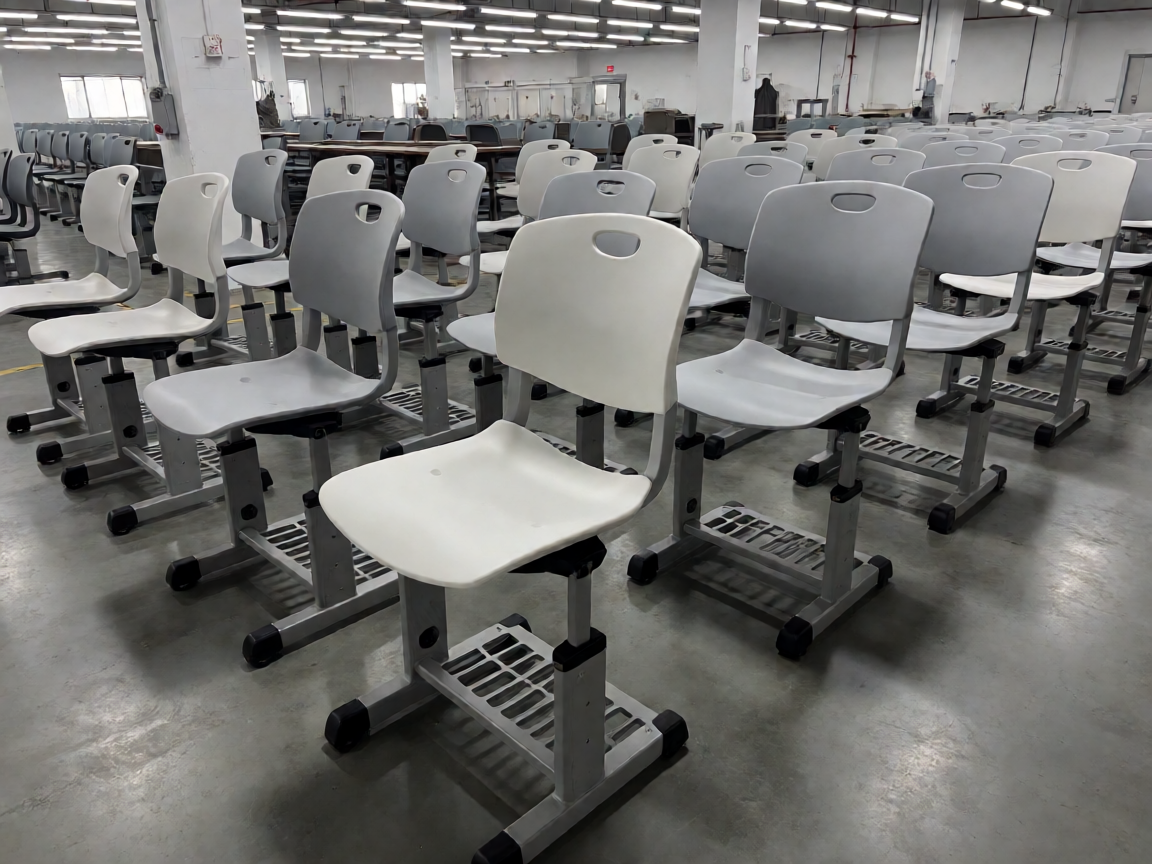
Ordering from a photograph without checking seat height and depth is a common source of fit complaints. A different frame can also change the usable seat height even when the shell is unchanged. Approve a complete chair, check it against the intended desk, and record the measured dimensions in the purchase specification.
Buyers also lose control of repeat orders when they approve substitutions informally. A new resin colour, coating supplier, tube section, or carton layout can alter appearance, feel, or transit damage rates. Any change that affects the chair or its protection should be documented and checked against the approved reference before shipment.
For importers supplying primary schools, prioritize age-appropriate seat dimensions, smooth edges, easy-to-clean surfaces, and a frame finish suited to daily indoor use. A school furniture distributor may need several chair sizes under one private label, so colour, carton marking, and measurement references must remain distinct across SKUs.
Procurement teams outfitting secondary classrooms often favour a firmer seat feel and a frame that tolerates frequent movement between rooms. For facilities with humid storage or long export routes, focus on dry packing, coating coverage, and protection at exposed frame points. Keep outdoor exposure outside the stated use case unless the chair has been specifically designed and assessed for it.
Lead time depends on whether the order uses existing shell tooling, the number of colour changes, frame production capacity, and packaging approvals. New mould work or a revised frame drawing adds sampling and review stages before a bulk run. Set the production window only after the sample, artwork, and packing configuration are approved.
A larger batch can lower per-chair production and packing costs, but it also ties up inventory if several sizes or colours move at different rates. Share the SKU split and delivery schedule early; the factory can then plan moulding, frame finishing, assembly, and inspection around the required shipment lots.
Stock status is specific to the shell colour, frame finish, chair size, and packaging version; a stocked component does not necessarily mean a finished chair is ready to ship. For repeat orders, record the approved bill of materials, colour references, label files, and inspection points under the same product code.
Reorders with unchanged materials and artwork are easier to compare with the previous batch. If a component or finish has changed, request confirmation before release rather than assuming the original specification remains available. Batch records and retained samples help investigate a colour, fit, or assembly complaint without confusing lots.
Carton design must protect coated frame surfaces and chair shells from rubbing, impact, and moisture during handling. Confirm whether chairs ship assembled, partly assembled, or nested, since each arrangement changes carton dimensions, packing labour, and the risk of contact marks. Validate the packing method with a shipment-ready sample before approving the full run.
| Packing Detail | Order-Level Decision | Check Before Dispatch |
|---|---|---|
| Chair configuration | Assembled, partly assembled, or nested where the design permits | Assembly hardware, contact protection, and pack-out sequence |
| Carton marking | Private-label artwork, product code, size, and quantity details | Approved print proof and correct SKU identification |
| Freight protection | Inner separation, surface protection, and pallet configuration as agreed | Carton condition, load stability, and protection against moisture during transit |
Send the approved specification, target quantity by SKU, artwork, and preferred freight configuration for a quotation review. Submit your OEM classroom chair requirements for confirmation of tooling, sampling, inspection, and shipment details.








