
Contact Fumei
No.20 Jiuqiao Road, Shijiang Industrial Area, Jiujiang Town, Nanhai District, Foshan City, China.
top quality easy maintainable classroom furniture company - Bulk Supply and Specification Guide What This Product Is and Where It Fits Construction options diverge as soon as weight matters. Classroom
Construction options diverge as soon as weight matters. Classroom desks, chairs, and storage units commonly pair formed steel frames with laminate-faced work surfaces; the right balance depends on room layout, student age, cleaning routine, and how often furniture moves.
For wholesale and private-label orders, repeatability matters as much as the first sample. A stable tube profile, consistent weld locations, controlled powder-coat coverage, and repeatable panel dimensions help each shipment match the approved configuration. Edge treatment and replaceable feet also affect the cost of keeping a room in service.
Material choice sets the maintenance profile. A smooth laminate surface and sealed panel edges simplify routine wipe-downs. Confirm cleaner compatibility against the selected finish, since concentrated chemicals and long dwell times can affect coatings, edge bonds, and surface sheen.
Cost and durability pull in opposite directions once a specification moves from a sample room to several hundred seats. Thicker steel sections and added bracing can limit frame flex, but they add material, handling weight, and freight volume. A lighter frame lowers shipping cost, although its joint design and intended load need review before it is assigned to daily classroom use.
Work surfaces bring a similar trade-off. A particleboard core can suit a price-led desk when edges are sealed and the furniture stays indoors. Plywood or another specified core may better suit repeated relocation or sites where edge damage is more likely, but the price increase only pays back if it reduces replacement frequency. Specify the panel thickness, edge detail, and frame attachment together; changing one can alter fastener hold and assembly fit.
Bolted joints allow some field repairs, such as replacing a leg or tightening a connection, but fasteners need a defined inspection and service approach. Welded joints reduce loose-fastener points; a damaged welded frame is harder to repair on site. Select the joint method against local labor availability and the buyer’s warranty process, not purchase price alone.
A serviceable specification earns its place when the buyer can replace worn feet, accessible fasteners, or damaged components without scrapping an entire desk or chair. That advantage depends on parts availability and a consistent construction revision across reorder batches.
Compared with low-cost furniture that has exposed panel edges or loosely controlled frame dimensions, sealed edges and documented assembly points can reduce avoidable returns. The purchase price may be higher. The buyer’s useful comparison is cost per unit kept in service, including replacement parts, labor, freight for warranty claims, and classroom downtime.
For OEM and private-label programs, a retained approved sample, drawing revision, finish reference, and packaging specification give the factory and buyer a common basis for repeat orders. These records help identify whether a complaint comes from a changed component, transport damage, or use outside the agreed application.
Use the selection path below to narrow the build before artwork, tooling, and bulk pricing are confirmed. Each change should be recorded against the approved sample so subsequent batches follow the same construction.
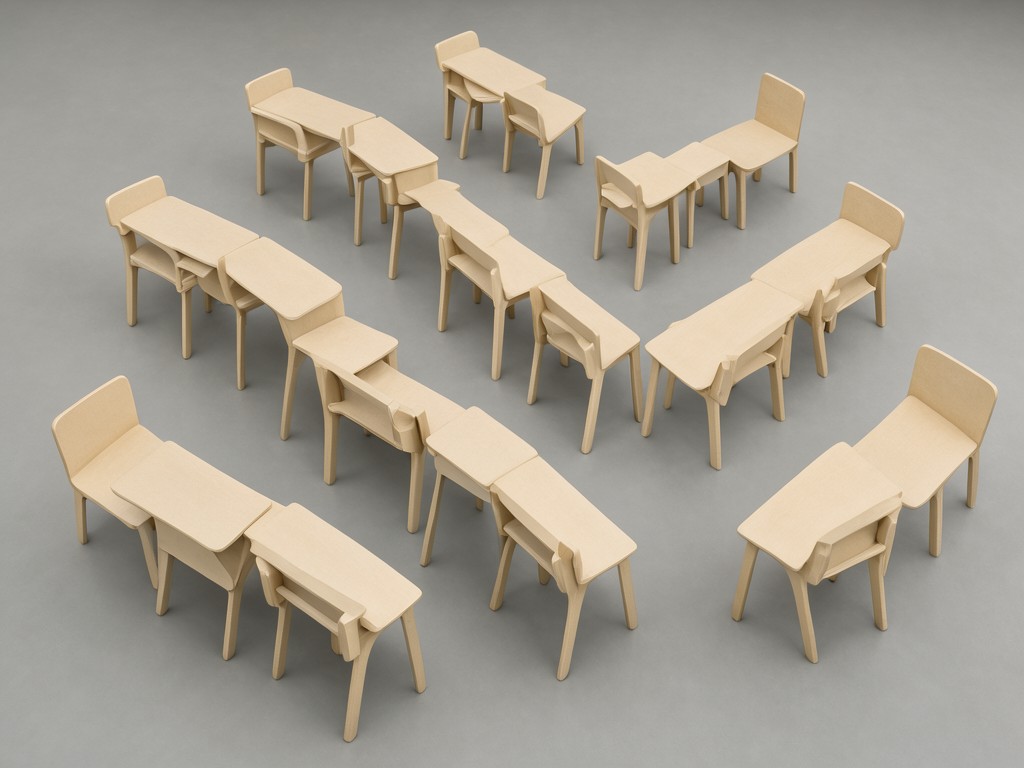
| Customization choice | Common options | Buyer’s cost and service consideration |
|---|---|---|
| Panel core and edge | Particleboard or plywood core; specified laminate and sealed edge treatment | A tougher edge or core can raise unit cost but may lower replacement and warranty expense where impact is frequent. |
| Frame and joint | Formed steel sections; welded or bolted connections | Match frame weight and repair access to how often furniture moves and who performs maintenance. |
| Finish and branding | Powder-coat color, laminate decor, labels, and approved logo placement | Confirm color references, artwork files, and packaging marks before production to limit batch variation and relabeling work. |
Inspection starts with the approved drawing and sample. Factory staff can check key dimensions, panel fit, frame squareness, fastener position, and finished-unit mass against the agreed specification. The buyer should identify which dimensions affect assembly or classroom fit, then set acceptance tolerances before the first bulk run.
A practical shipment review also covers weld appearance, coating coverage at edges and joints, surface defects, laminate condition, edge adhesion, and rocking on a level surface. Load checks should follow the buyer-approved design requirement; do not treat an unspecified load test as a rating. For cleaning-sensitive programs, assess the selected surface with the intended cleaner and use conditions before approving the finish.
Keep the batch reference with the order record. Record the sample approval, drawing revision, material and finish selections, inspection findings, carton marks, and any approved deviation. This gives both sides a traceable starting point for warranty review and the next reorder.
Export packing should protect corners, panel edges, and coated frame surfaces from movement inside the carton. Confirm stack orientation, hardware bagging, assembly instructions, and shipping marks against the destination’s handling and retail-label requirements before the packing method is released.
Send the target furniture type, room use, order quantity, branding files, carton needs, and expected cleaning routine for a specification review. Aligning the sample, inspection points, and reorder controls before production helps buyers compare total service cost rather than unit price alone.








