
Contact Fumei
No.20 Jiuqiao Road, Shijiang Industrial Area, Jiujiang Town, Nanhai District, Foshan City, China.
Specifying wholesale budget friendly student desk and chair factory for Wholesale and OEM Orders A second source needs to reproduce the desk-and-chair configuration, not merely match its catalogue app
A second source needs to reproduce the desk-and-chair configuration, not merely match its catalogue appearance. For private-label buyers, the design decision is where to spend: frame joints and exposed edges determine service life, while simplified parts and pack-flat construction help control landed cost.
| Area under review | Cost-led construction | Reinforced construction | What the buyer should check |
|---|---|---|---|
| Desk-frame deflection | Fewer cross-members and lighter-gauge tube reduce material use. | A cross-member or larger tube section limits movement under repeated leaning and loading. | Compare movement at the work surface under a consistent distributed load. |
| Chair joints | A simple frame reduces part count and assembly time. | Braced joints or a more supported seat connection resist loosening from repeated movement. | Inspect weld continuity or fastener seating, then repeat the check after load cycling. |
| Top and exposed edges | A laminated board top with edge banding keeps the part economical. | Better-sealed edges and protected corners slow moisture entry and chipping. | Check edge adhesion after abrasion and routine wipe-downs. |
Deflection under load governs the desk’s day-to-day feel. A lighter frame can meet a lower price target, but excess flex transfers stress to joints and fasteners; select the reinforcement level against the expected classroom load and service interval.
Consistency depends on repeatable tube cutting, jigged welding, board sizing and edge application. Powder coating can resist ordinary scuffs better than an uncoated frame, but chips at contact points still expose steel to corrosion. Set acceptance checks around dimensions, rocking, sharp edges, coating coverage and fastener fit rather than finish appearance alone.
The interface between parts determines whether a low-cost set stays in service or becomes a stream of replacement requests. District and school buyers usually prioritize stability, cleanable surfaces and parts that can be replaced without discarding a complete set. Private-label buyers also need consistent carton presentation, repeatable colour and a clear boundary between standard production and order-specific changes.
Daily shifts, frequent chair movement and routine surface cleaning call for a stable frame, protected board edges and fasteners that remain accessible for inspection. Specify approved cleaning agents and wipe-down practice; concentrated chlorine products or prolonged wet contact can damage finishes and exposed board edges.
Retail and education channels need approved colour references, legible labels and packaging that protects corners through export handling. Confirm the artwork version, carton marks and assembly instructions against the approved sample before the production run.
Sunlight near classroom windows can fade exposed colour over time, while sweat and repeated wiping affect chair contact surfaces. Keep UV exposure and the intended cleaning routine in the sample review; do not treat indoor school furniture as suitable for outdoor or poolside use.
A second-source programme works best when the approved reference covers both appearance and assembly. Start with a sample set that fixes desk dimensions, chair fit, frame geometry, board finish, edge treatment, colour and hardware. The factory can then confirm which parts use existing production tooling and which changes require new fixtures, revised cutting patterns or a separate approval sample.
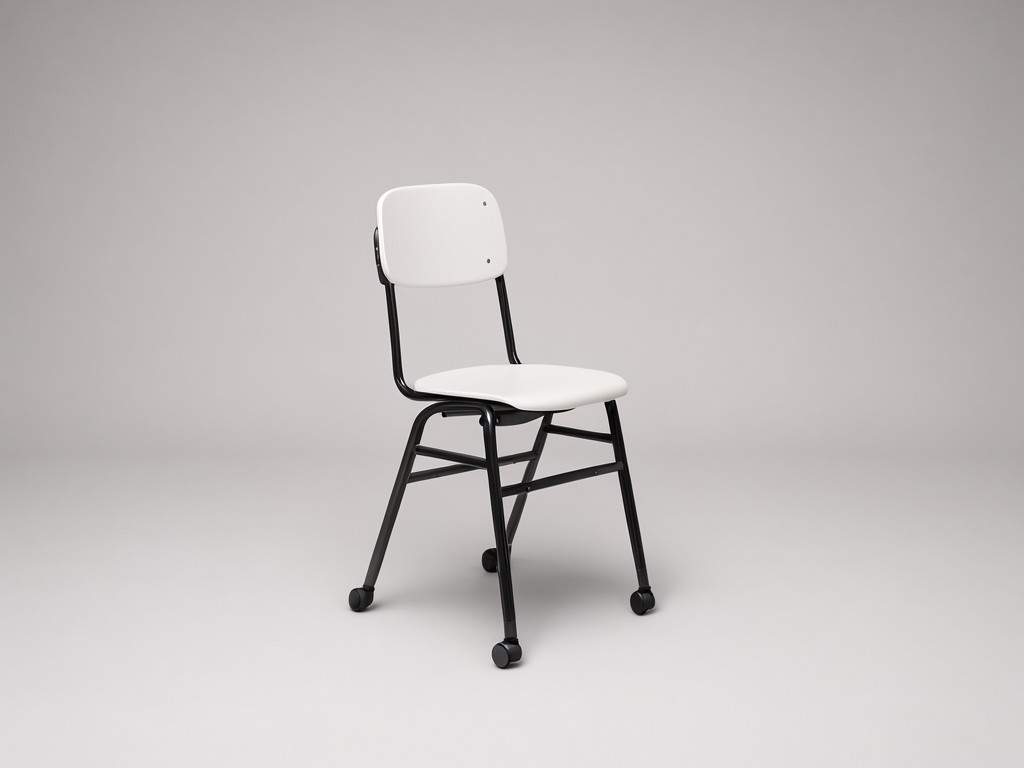
ODM development can use an existing desk-and-chair structure as the cost base, then adjust details such as surface colour or branding. Keep structural revisions separate from artwork approval so a visual change does not conceal a change to the load path or joint design.
Production timing depends on the approved design, board and frame availability, branding work and order quantity. The ranges below are planning guides rather than a production commitment; confirm the schedule after the sample, packaging and order details are reviewed.
| Programme stage | Indicative basis | Main schedule variables |
|---|---|---|
| Existing design, standard finish | Often planned around a 300-set minimum and roughly 30–45 days after approvals and material confirmation. | Component availability, order mix, artwork approval and pack-out requirements. |
| New fixture or non-standard finish | Allow additional sample and setup time; MOQ and timing require project review. | Fixture fabrication, finish matching, sample revisions and confirmation of the production reference. |
| Repeat order | Can follow the established configuration and approved packing plan, subject to current material supply. | Forecast timing, reserved components, packaging changes and any revision to the approved artwork. |
Tooling for tube cutting and welding fixtures supports repeatable frame geometry; board cutting and edge-processing setups affect fit and visible finish. Before order release, agree on sample sign-off, in-process checks, final inspection scope and the point at which changes require a new approval.
Common frame components and standard board finishes can make replenishment simpler, but finished-goods stock should not be assumed without confirmation. A buyer qualifying a second source should compare the approved bill of materials, production slot, component lead times and carton specification before setting a reorder point.
For cost control, keep core dimensions and standard finishes stable between orders. Revisions to colour, branding, fasteners or pack configuration may trigger fresh material checks or sample approval, even when the desk and chair structure remains unchanged.
Assembly errors can create wobble that buyers later attribute to the frame. Provide a sequence that seats all joints before final tightening, and specify the correct fastener positions in the instruction sheet.
Check coating wear and board edges during routine maintenance, especially at floor contact points and corners that meet during stacking or storage. Replace a damaged component when its fit or stability is affected; surface cleaning cannot correct a loose joint or swollen edge.
Send the desk-and-chair configuration, artwork files, colour references, label placement and carton-marking requirements for review. The production team can confirm sample requirements, MOQ and a schedule based on the approved scope.
Request an artwork and branding review







