
Contact Fumei
No.20 Jiuqiao Road, Shijiang Industrial Area, Jiujiang Town, Nanhai District, Foshan City, China.
Wholesale classroom desk and chair set China Factory - Bulk Supply and Specification Guide Selection trade-off: a lower-cost fixed-height set can suit a standard classroom with uniform users. Where on
Selection trade-off: a lower-cost fixed-height set can suit a standard classroom with uniform users. Where one room serves several age groups or sees frequent rearrangement, spend on the dimensions, frame joints and replaceable parts that limit repeat complaints and early replacement.
Replacement rate, not unit price, decides the cost per student served. On a desk-and-chair set, the first complaints often concern loose joints, chipped top edges, rocking legs or a chair that no longer sits level. Each problem can take a set out of use, prompt a repair visit or leave a classroom short while a replacement is sourced.
Thin panel edges are vulnerable to knocks from bags and chairs; once the edge band lifts, moisture and cleaning residue can reach the board underneath. Light-gauge tubing and small weld areas can deform at joints under repeated side loads. A low-cost finish may also show scratches quickly, especially where desks are pushed together or stacked. These issues are most expensive when they affect a whole delivery batch, because repair parts, freight and classroom downtime add to the original purchase cost.
A classroom set must balance purchase cost against daily movement, cleaning and the needs of the intended age group. A fixed-height design reduces parts and assembly steps, so it is often the economical choice for a room planned around one student size range. Adjustable legs add hardware and assembly checks, but can make a mixed-age room more practical if the adjustment range matches its actual users.
The desk top, frame and chair should be specified as a working pair: usable top area, seat height and clearance beneath the desk affect whether students can sit and write comfortably. A thicker top can improve resistance to dents, but it also adds weight and freight volume. A heavier steel frame may reduce movement under ordinary classroom use, yet it raises material cost and shipping weight. Confirm finished dimensions and the intended user group before choosing between these options.
Fewer moving parts simplify assembly and reduce the number of joints that need periodic adjustment. Choose fixed heights where classroom users fall within a defined size band and the room layout is stable.
Telescopic legs accommodate more than one user group, but add adjustment points and fasteners. Specify how adjustment is secured and check that staff can reset the height without special tools.
A common factory route starts with steel tube cutting and bending, followed by jigged welding, surface preparation and powder coating. Jigs help keep leg geometry consistent; that matters because small differences in frame angle can leave a desk or chair rocking on a flat floor. Weld placement and tube dimensions affect stiffness, while the coating process affects coverage at corners and around joints.
Desktop panels are typically cut from a board substrate, faced with a decorative surface and finished with edge banding. The substrate and facing should suit the expected cleaning routine; standing water at an exposed edge can damage board material. Chair seats and backs may use molded plastic or a formed panel, depending on the design and price target. Plastic parts reduce the number of upholstery and fastener details, while panel construction can offer a different appearance and repair route.
Assembly method changes what can be repaired after delivery. Knock-down connections reduce carton volume and simplify export packing, but their fasteners need clear instructions and correct tightening. Factory-assembled frames cut on-site work, though they take more space in the container. Confirm the chosen construction before finalising the carton plan.
For classroom furniture, useful checks start with dimensions, level contact and joint stability rather than a single headline material claim. Desk height, chair seat height, top size and frame squareness should match the approved drawing. A sample set can be assembled on a flat reference surface to check rocking, alignment and fit before production quantities are released.
Set acceptance around the failure points. Agree on the inspection method and acceptance limits for panel dimensions, edge adhesion, coating coverage, weld appearance, fastener fit and finished-set stability. Load or durability checks should use buyer-approved conditions for the intended users and duty cycle; do not treat an unspecified load claim as a substitute for a test plan.
Cleaning chemicals, repeated dragging and impacts at the top edge all affect service life. A surface that looks consistent on a new sample can still show wear at exposed corners after routine handling. For that reason, review a production-intent sample and define which visible marks, loose joints or dimensional differences count as rejects before bulk inspection begins.
A distributor supplying schools with standard classroom layouts may prioritise fixed dimensions, neutral finishes and a compact carton. An importer serving multiple age groups may need more than one size or an adjustable option, even if that adds parts and sorting work. For a classroom where furniture moves between lessons, check the frame's resistance to lateral movement and the protection on feet that contact the floor.
Finish choice also affects replenishment and matching across room expansions. Confirm the approved colour reference and sheen on a physical sample, particularly where a later order must sit beside furniture already in service.
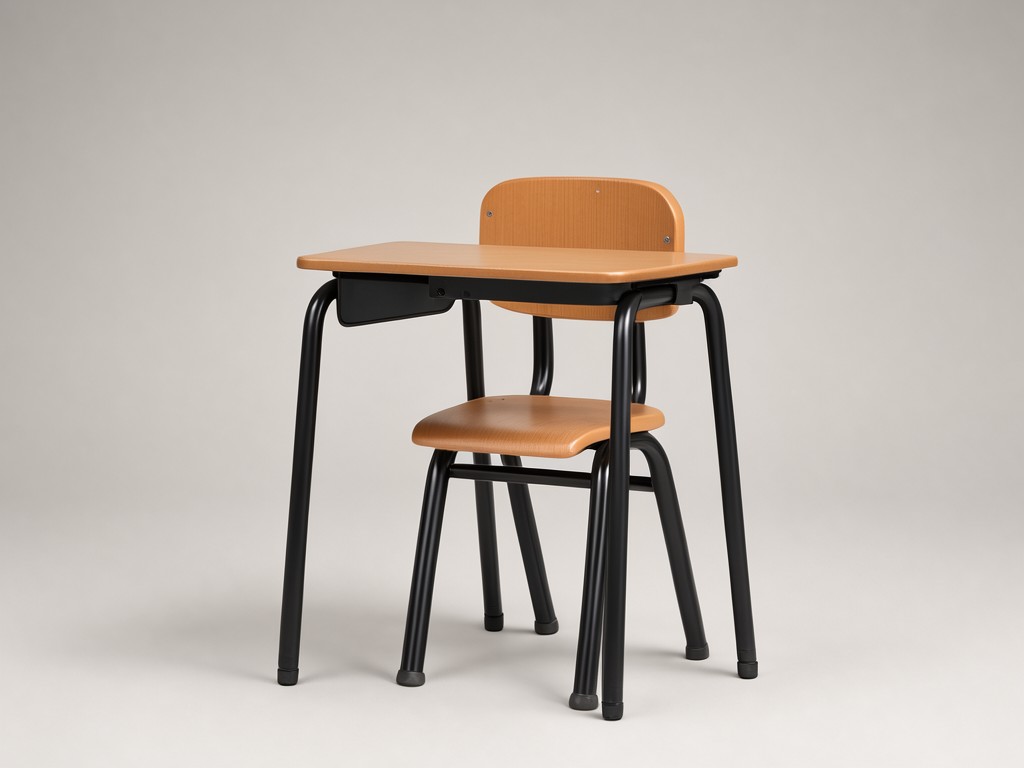
| Finish or Colour Choice | Common Application | Buyer Check |
|---|---|---|
| Neutral powder-coated frame | General classroom supply and repeat orders | Approve the colour and sheen together; inspect coverage at welded joints and corners. |
| Wood-look or solid-colour desktop surface | Projects with a defined interior palette or buyer branding | Check a physical swatch, edge-band match and batch-to-batch shade tolerance before confirming production. |
| Custom frame or panel colour | Programmes with a specified room scheme or private-label range | Confirm minimum order, colour approval timing and whether the same materials remain available for replenishment. |
Batch consistency depends on controlled references, not visual judgement at the end of production. The approved sample, drawings, material description and colour references should travel with the order record. Incoming checks can compare tube dimensions, board thickness and hardware against the agreed specification; production checks can then focus on frame geometry, weld position, edge finish and assembly fit.
A change in panel supplier, coating powder or plastic formulation can alter colour, fit or surface appearance. Buyers should require notice and approval before a material substitution, especially for repeat orders that need to match installed sets. Keep a retained reference sample or signed finish sample where colour continuity matters.
For bulk inspection, specify sampling scope, defect categories and the records required before the shipment is packed. A clear boundary between cosmetic variation and a functional defect helps avoid disputes over scratches, coating marks, loose fasteners or uneven feet.
Availability depends on the configuration, not just the product family. Standard frame colours and panel finishes may fit a planned production run, while custom colours, height options or branding can require material reservations and additional approval time. Confirm stock status and production timing against the exact bill of materials and order quantity; do not assume a sample configuration is available in bulk.
For school tenders and seasonal projects, allow time for drawing approval, sample review, production, inspection and export booking. Reorder planning is easier when the original finish references, carton details and configuration are retained. If the next purchase may be smaller, ask whether the selected materials can be reserved or whether a minimum quantity applies to the custom finish.
Packaging must protect panel corners, coated frame surfaces and loose hardware through container handling and onward distribution. Knock-down sets can reduce shipping volume, but separated legs and fasteners need secure compartments so metal parts do not rub against the desktop. If desks or chairs nest, check contact points for abrasion and confirm that the stack remains stable inside the carton.
Agree carton dimensions, pack count, assembly instructions, hardware labels and outer-carton marks before shipment. A drop or transit check on the packed configuration can reveal whether corner protection and internal restraint are adequate for the intended route. The buyer should also confirm whether cartons need retail labels, shipment marks or language-specific assembly sheets.
Request a specification review. Share the target user group, desk and chair dimensions, preferred frame and panel finishes, order quantity, destination and packing preference. A configuration review before sampling can identify cost drivers and reduce avoidable changes after production starts. Contact the factory team to review your classroom set specification.








